A New Metric Measures Collision Risk in Low Earth Orbit
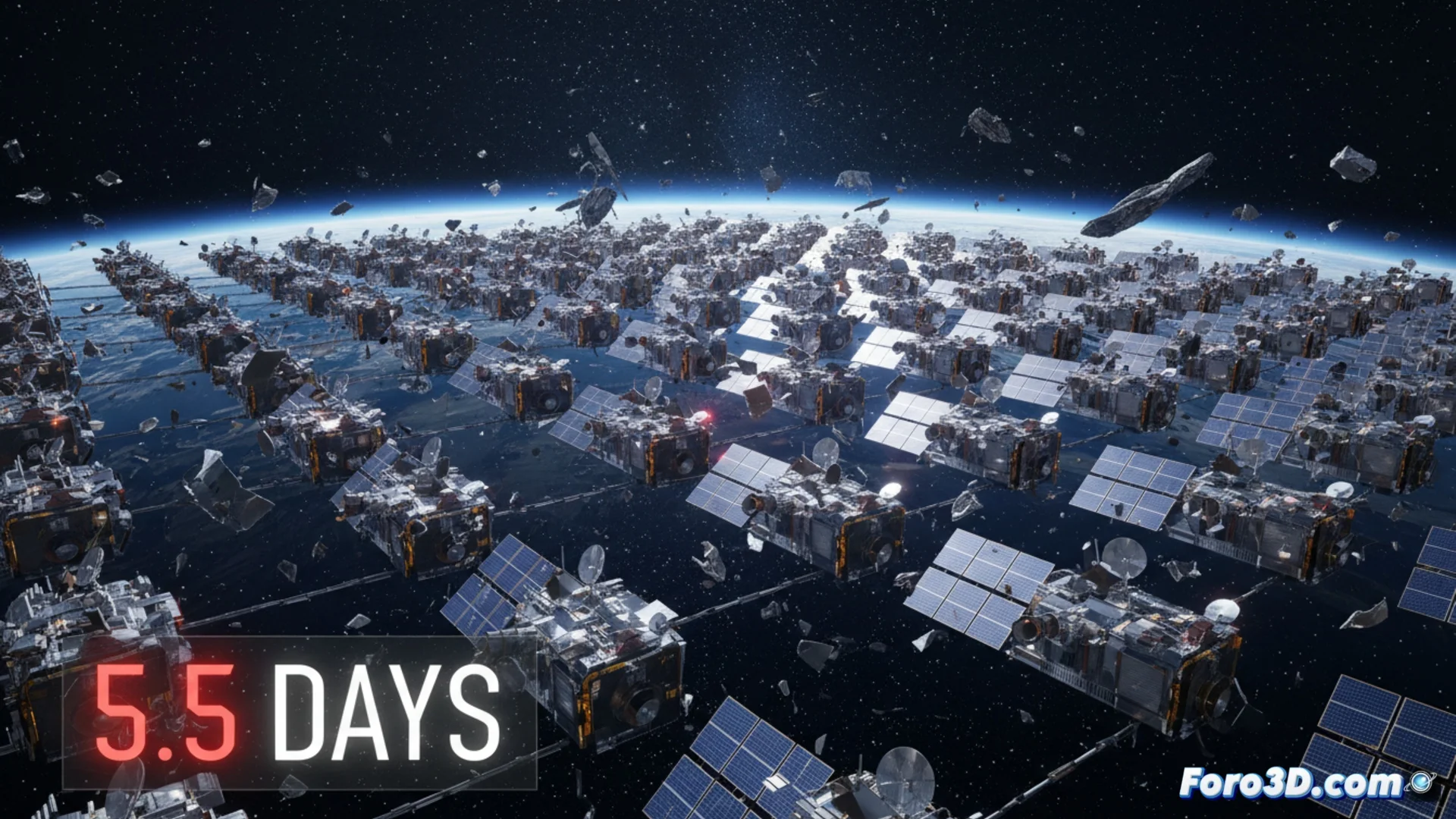
An indicator known as the CRASH Clock has emerged to assess the fragility of the space environment. This theoretical clock calculates how much time would pass until a serious impact occurs between satellites and orbital debris fragments if operators completely lost their ability to perform evasive maneuvers. At this moment, the needle points to around 5.5 days. This figure highlights the extreme density with which thousands of artifacts cluster in the low layers surrounding Earth and how much orbital peace depends on humans making impeccable decisions constantly. 🛰️⏱️
The Kessler Syndrome Is Not Imminent, But the Margin for Error Is Minimal
This metric does not suggest that the Kessler Syndrome –a chain reaction of collisions– is about to unleash in the short term. However, it indicates that tolerance for errors in the current space environment is extremely low. A single critical failure, perhaps triggered by a powerful solar storm or a widespread software issue, could initiate a significant collision. The growing congestion increases operational risks and economic costs for large satellite constellations operating in this zone.
Factors Reducing the Safety Margin:- The number of active satellites and inactive debris increases relentlessly.
- Stability depends on control and tracking systems functioning without interruption.
- Every fragment not removed reduces the available safe space for maneuvering.
In space, 'keeping your distance' is no longer a courtesy rule, but a complex orbital calculation that demands absolute precision.
Orbital Safety Is a Dynamic and Fragile Balance
The current situation highlights that being safe in space is not a fixed condition, but a delicate balance that operators must actively maintain. Every successful evasive maneuver completed pushes back the moment indicated by this hypothetical clock. This conceptual framework helps visualize the constant pressure on control centers and how the progressive accumulation of objects without removal erodes the safety buffer.
Key Elements Sustaining the Balance:- Nearly perfect human decisions in trajectory planning.
- Reliable surveillance and propulsion technology to execute deviations.
- International coordination protocols to avoid conflicts.
A Reminder of the Vulnerability of Our Space Infrastructure
The CRASH Clock serves as a powerful reminder of the inherent vulnerability in our growing dependence on near space. It underscores that the long-term sustainability of low orbits is not guaranteed and requires active, cooperative, and forward-looking management. The metric turns an abstract risk into a tangible time frame, emphasizing the urgent need to improve practices for managing space traffic and cleaning up existing debris. 🚀⚠️