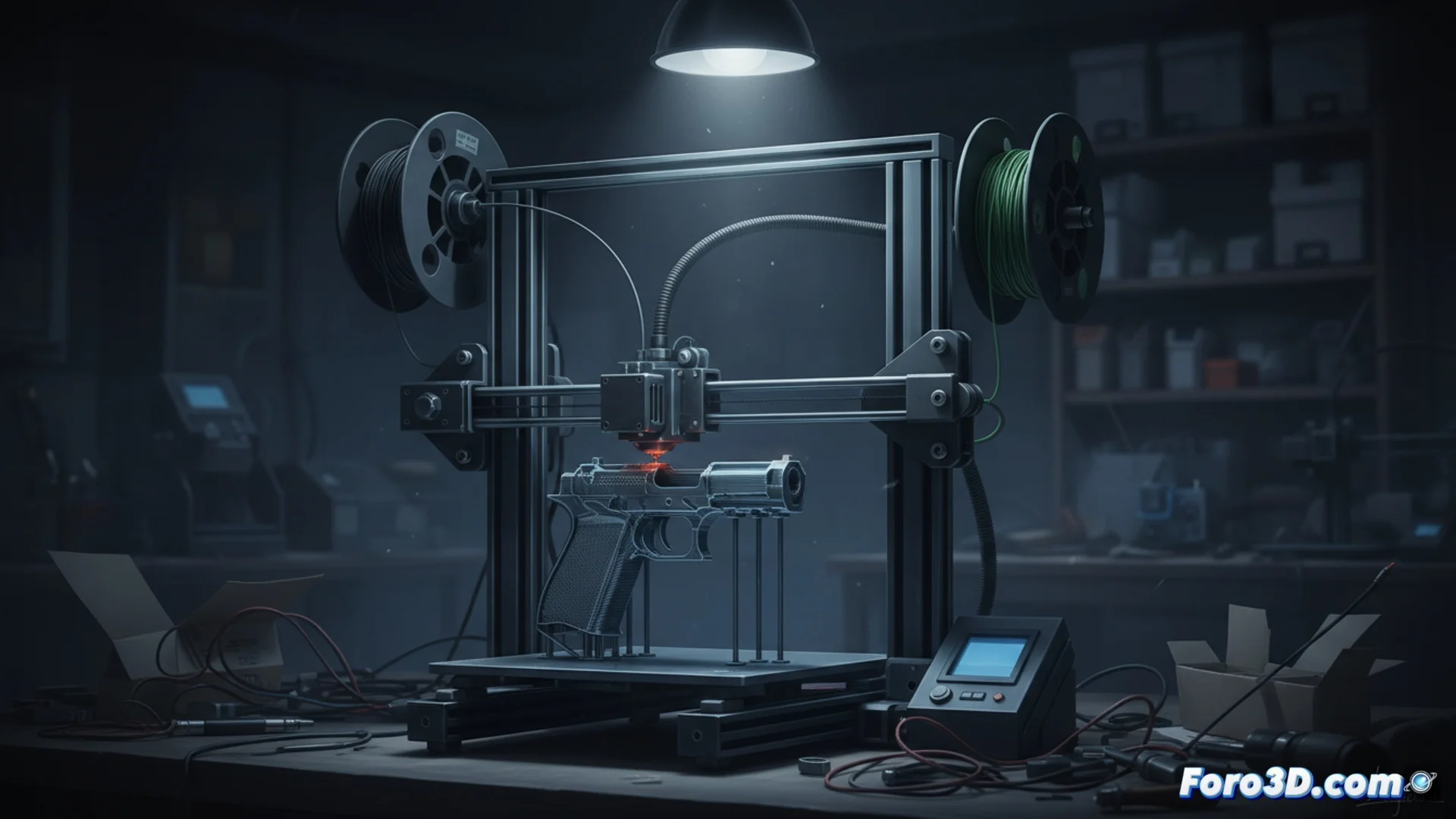
A new bill seeks to limit files for printing 3D weapons
The United States Congress is examining a legislative initiative called Preventing the Distribution of 3D-Printed Firearms Act of 2025. This text aims to impose rules on those who share digital designs for manufacturing firearms with 3D printers. The proposal requires verifying the age of majority of those downloading the files and incorporating a unique identifier in the blueprints. However, since its presentation, experts point out nearly insurmountable obstacles. 🚫
Legal barriers threatening the proposal
Legal analysts highlight that the initiative stumbles upon recent rulings. In 2023, the country's highest court ruled that distributing these files constitutes protected speech under the First Amendment. Any effort to censor this digital information will likely face rejection by judges, following the path of previous state norms that were invalidated. The legal foundation of the bill appears weak in this context.
Key points of the legal conflict:- A 2023 Supreme Court ruling protects sharing the files as freedom of expression.
- Previous state attempts to regulate these designs have already been overturned by courts.
- The legal basis of the new law is considered fragile and possibly unconstitutional.
The nature of digital information and its protection under the First Amendment create a minefield for any regulation.
Technical problems in enforcing the rule
Beyond the courts, applying this law in the real world poses an enormous challenge. The decentralized structure of the internet, along with the use of peer-to-peer networks and anonymous platforms, makes tracking the files an almost impossible task. Requiring a serial number in a digital file is a measure easily circumvented, as anyone with basic knowledge can alter the code to remove it. The regulation does not seem to deter those who really seek these blueprints.
Practical challenges of implementation:- The internet operates globally and decentrally, making control extremely difficult.
- Files can be easily modified to remove any identifier.
- Anonymous networks and specialized forums allow the flow of information outside any supervision.
An anachronistic view of the web
It seems that some promoters of the law still perceive the internet as a centralized space, similar to a library where every copy can be monitored. They ignore the reality that digital data is replicated and shared instantaneously across the globe, without physical borders. This disconnect between the proposed legislative framework and the current technical functioning of the web raises serious doubts about the ultimate effectiveness of any such measure. The debate between security and digital freedom remains open. 🌐