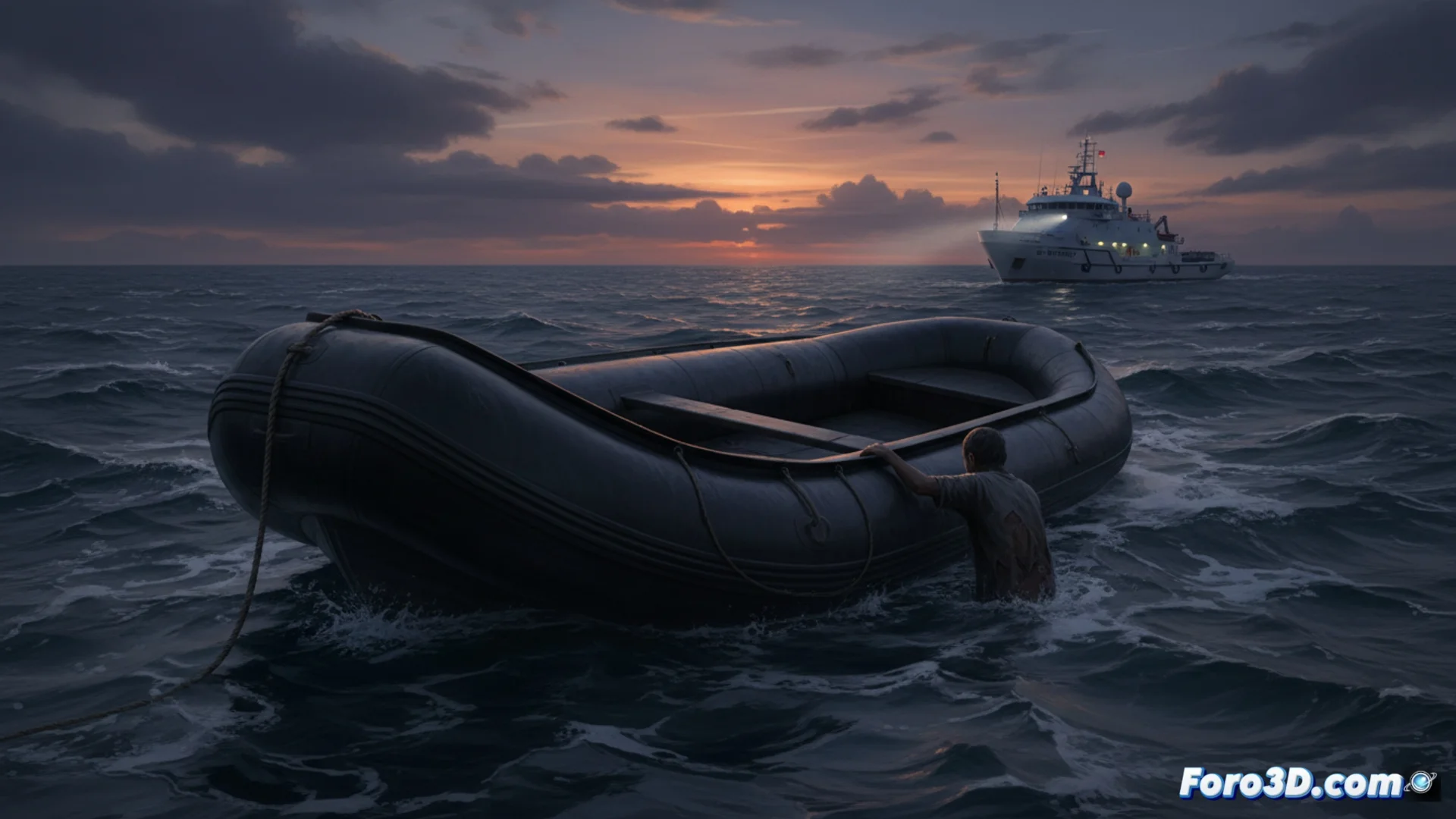
A Migrant Narrates His Survival as Dozens Disappear in the Mediterranean
A 22-year-old from Cameroon managed to survive after a tragic shipwreck in the central Mediterranean Sea. He was located and brought on board the Geo Barents ship, operated by Médecins Sans Frontières, after spending hours drifting at sea. His account exposes the harshness of a route that claims more and more lives 🌊.
The Survivor's Account and the Operation to Save Lives
The migrant said that the inflatable boat he was traveling on with about sixty other people began to lose air. This failure caused many to fall into the water and not be seen again. Italian authorities indicate that at least fifty people from that vessel are now considered missing.
Details of the Rescue Mission:- The Geo Barents ship managed to rescue eleven people alive, all adult men.
- The rescued received immediate medical attention on the ship's deck.
- The rescue operation took place in international waters, within the area where Libya coordinates search and rescue.
The sea, which historically united cultures and enabled trade, now acts as a liquid border where hope confronts the coldest statistics.
A Migration Route with a High Human Cost
Attempting to cross the central Mediterranean, from North Africa to the coasts of Italy, remains one of the most dangerous journeys on the planet. Although humanitarian organizations and coast guards work in the area, shipwrecks are common. Poorly maintained vessels and adverse weather conditions constantly increase the risk ⚠️.
Factors that Increase the Danger:- Use of low-quality inflatable boats that cannot withstand the journey.
- Overcrowding of people on each vessel, far exceeding its capacity.
- Lack of basic safety equipment such as life jackets.
The Persistent Context of the Tragedy
This incident is not isolated; it adds to several others recorded in the same waters in recent weeks. Figures from international agencies reveal that in recent years, thousands of people have lost their lives or vanished in this sea. The paradox is evident: what was once a pathway of connection is today a passage where many seek a better future and find a statistical tragedy. The need for safe pathways and political solutions remains more urgent than ever.