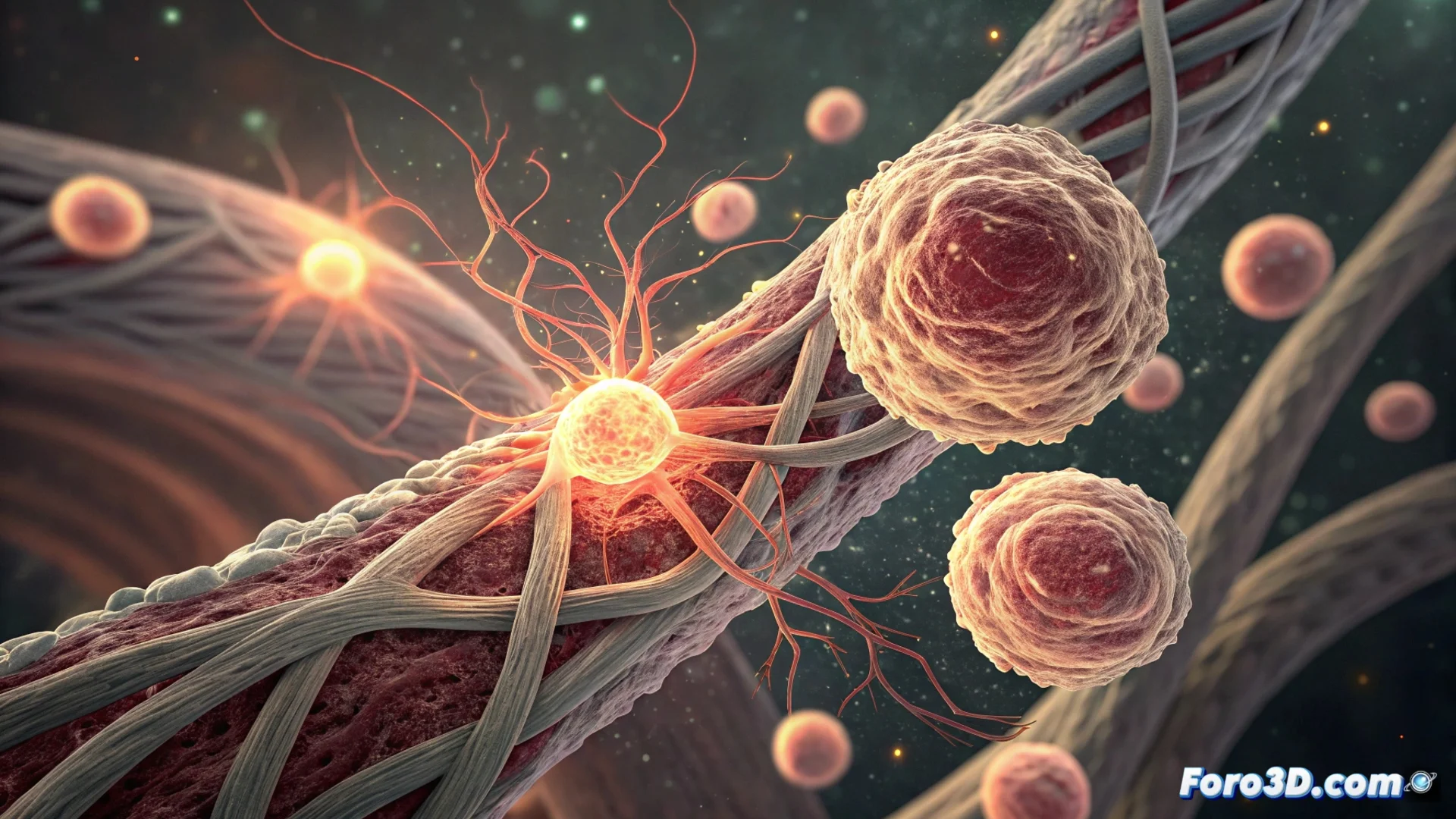
A Key Molecular Mechanism Explains Tendon Pain
Science now defines a specific cellular process that activates when tendons are subjected to intense and continuous stress. This discovery clarifies why conditions like tendinopathy arise, where available treatments are scarce and mainly palliative. Understanding this pathway is the initial step to devise solutions that resolve the origin of the damage. 🔬
Inflammation That Damages Instead of Repairs
Research shows that tenocytes, the tendon cells, when receiving constant mechanical stress, release signaling molecules. These signals attract immune cells, triggering a persistent but low-intensity inflammatory response. Instead of helping to heal, this state degrades the collagen matrix, weakens the tissue, and perpetuates a vicious cycle of discomfort and functional failure. Interrupting this communication chain could break that cycle. 🌀
Key Details of the Process:- Tenocytes release chemical signals under mechanical pressure.
- These signals recruit immune system cells to the tendon.
- A chronic inflammation is established that damages the collagen structure.
Blocking this signaling pathway could interrupt the cycle of tendon pain and dysfunction.
Precise Targets Identified for New Medications
By deciphering the exact sequence of biochemical events, researchers were able to pinpoint specific proteins within the inflammatory cascade that act as master switches. These molecules are emerging as ideal targets for designing novel drugs. The goal is to produce treatments that inhibit these signals selectively, allowing the tendon to regenerate without the interference of constant inflammation. 💊
Potential Future Applications:- Design drugs that target specific signaling proteins.
- Create therapies that enable clean regeneration of tendon tissue.
- Transform the management of overuse injuries in athletes and patients.
A Future with Smarter Treatments
This advance suggests that, in the future, managing a tendon injury might not be limited to recommending rest. Instead, a doctor could administer a compound that silences quite literally the molecular alarm that the affected tendon won't stop emitting. This represents a paradigm shift: moving from managing symptoms to resolving actively the underlying biological cause. 🎯