A Fossil Deposit in China Shows How Deep-Sea Life Recovered
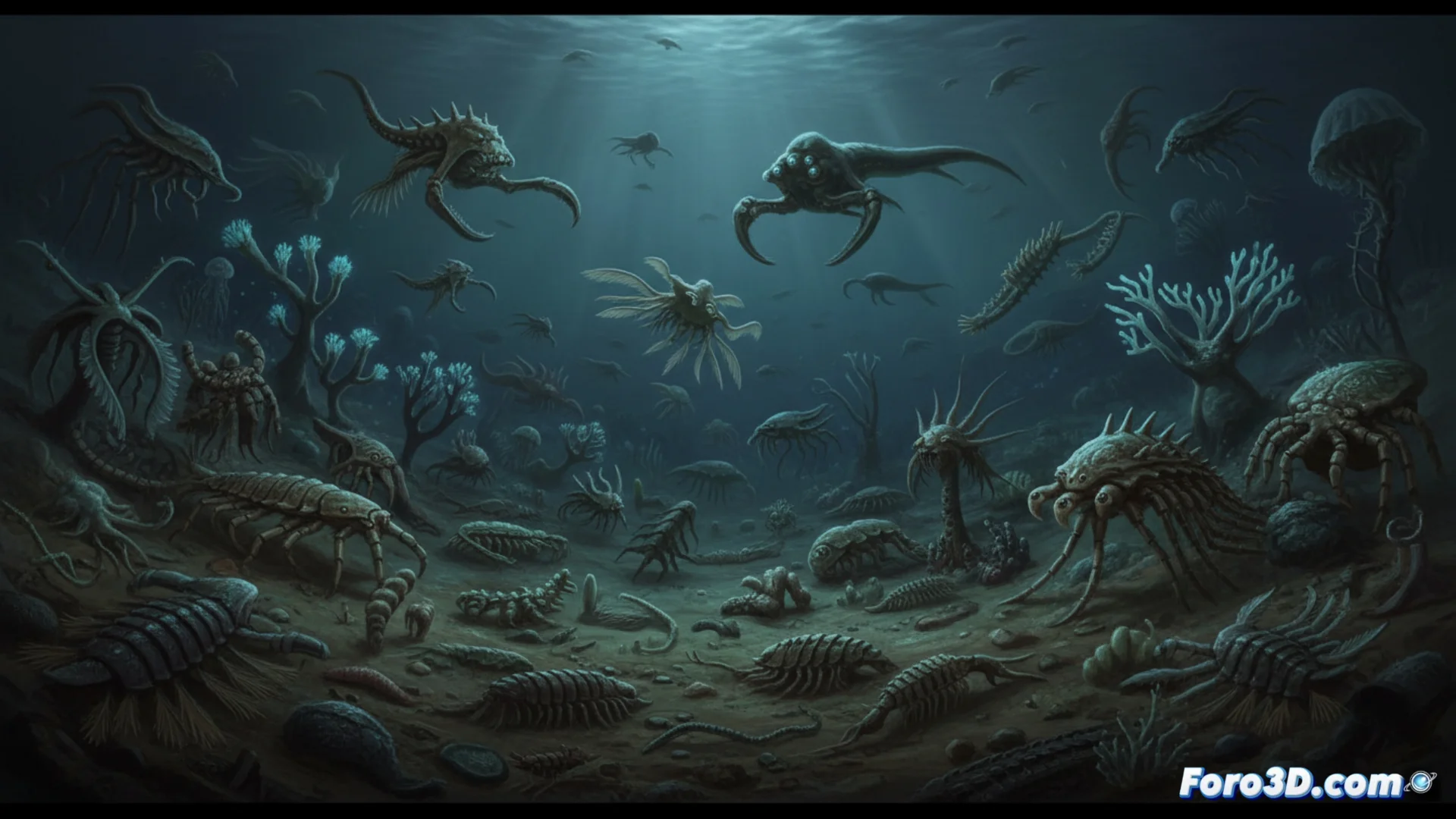
A team of scientists located in Hunan province, China, an extraordinary deposit of fossils dating back about 512 million years. This site, named the Huayuan biota, captures with unusual detail an ancient deep-water marine ecosystem. The discovery is situated right after the so-called Sinsk event, one of the first major extinctions that affected animal life. It provides a unique window to understand how communities inhabiting the ocean depths managed to repopulate and diversify with remarkable speed after that global crisis 🌊.
Thousands of Specimens with Exceptional Preservation
The paleontologists analyzed 8,681 individual specimens, which represent a total of 153 distinct species. Of all of them, 91 are completely new to scientific knowledge. The fossil remains span 16 major animal groups, ranging from sponges and cnidarians to various arthropods. The most striking thing is that many of these specimens, including primitive predators like radiodonts, retain impressions of their soft tissues with extraordinary fidelity. This type of preservation is extremely rare and enables studying the anatomy of these ancestral organisms with an unprecedented level of detail.
Key Data from the Deposit:- Number of Specimens Studied: More than 8,600.
- New Species Identified: 91.
- Main Animal Groups Represented: 16, including arthropods and sponges.
- Unique Feature: Preservation of soft tissues in many fossils.
The Huayuan biota forces us to rethink the resilience of life in the depths after the planet's first major perturbations.
A Complex Community that Emerged Rapidly
The Huayuan biota reveals a complex and highly diverse biological community that thrived in a deep marine environment. The fact that it existed so shortly after the Sinsk extinction event suggests two possibilities: either these deep environments were not as affected as shallow waters, or their capacity to recover was much faster. This discovery indicates that the mass extinctions that occurred during the Cambrian period did not completely halt animal evolution, but perhaps accelerated the radiation of new forms of life in particular ecological niches.
Implications of the Finding:- Shows an accelerated recovery in deep ecosystems post-extinction.
- Suggests that deep waters acted as an ecological refuge.
- Indicates that extinctions can drive diversification in new niches.
The Resilience of Life in the Depths
In conclusion, this fossil deposit acts as an exceptional time capsule. Not only because of the quality of the preservation, which allows studying soft anatomies from over 500 million years ago, but also because of the story it tells. It evidences that, even in the dawn of complex animal life, deep marine ecosystems demonstrated remarkable resilience. It seems that the strategy of "taking refuge in the depths" to continue evolving when the surface became hostile is a very ancient lesson that life had already learned 🐚.