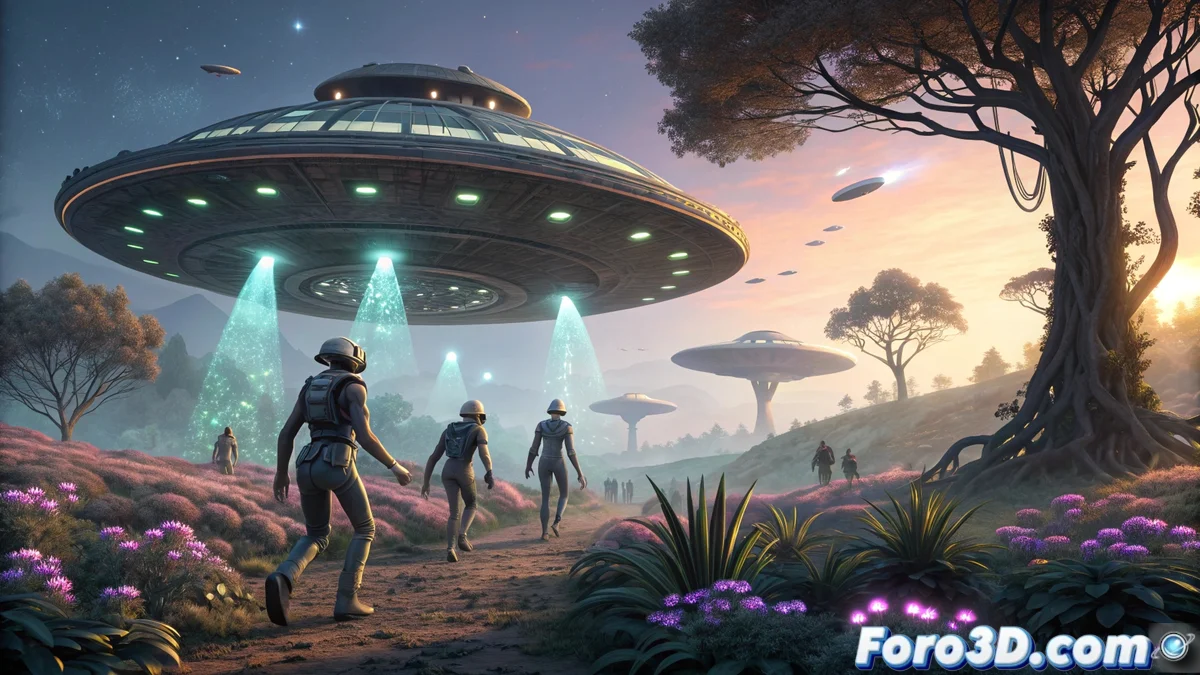
A Dystopian Script Reinterprets Columbus's Arrival in America
A key historical scene is reinvented as a futuristic parable. Instead of caravels, a corporate ship from a devastated Earth lands on an intact alien world. The exchange of mirrors and beads is replaced by a technological offer that masks a new form of domination. 🚀
Colonization Operates Through Digital Addiction
Brute force becomes obsolete. The colonizing corporation employs software as its main weapon. VR helmets deliver to the natives a hyperrealistic simulation, a digital eden without conflicts. This environment is designed to generate deep dependency, releasing pleasure compounds in the user's brain. The aliens, once immersed, refuse to disconnect, abandoning their culture and physical environment. While they dream, machines extract minerals, fell bioluminescent forests, and dump toxic waste. The conquest is consummated without violence, only with code and promises.
Control Mechanisms:- Simulated Paradise: A virtual world that satisfies every desire and neutralizes any hint of resistance.
- Asymmetric Exchange: Rights to exploit the planet's natural resources in exchange for an illusion.
- Abandonment of the Real: The natives completely neglect their tangible world, allowing exploitation without opposition.
The dystopia lies in the fact that exploitation is perfected, becoming silent and voluntary.
The Historical Parallelism Underlines a Social Critique
The script establishes a direct parallelism with 15th-century colonialism. VR helmets are the new trinkets, the digital paradise replaces the promise of salvation, and the planet's resources are the new gold. Exploitation is perfected, becoming silent and voluntary. The settlers do not steal the land; they convince its owners to give it away. The ship does not raise a flag, but a corporate logo.
Elements of the Parallelism:- New Trinkets: Virtual Reality helmets instead of glass beads or mirrors.
- New "Gold": The pristine natural resources of the alien planet.
- New Flag: The corporation's logo replaces national banners.
The Irony of a Repeated Cycle
The narrative culminates with a profound irony. Humans flee a ruined Earth due to their own greed, only to repeat the same destructive pattern in a new world. Technology does not serve to avoid the mistake, but to make the conquest process cleaner and more efficient, diluting moral responsibility. The final scene amplifies this idea: an alien smiles with his helmet on, oblivious to the shadow of an excavator looming over his home. The cycle of exploitation continues, now masked by a digital mirage. 🤖