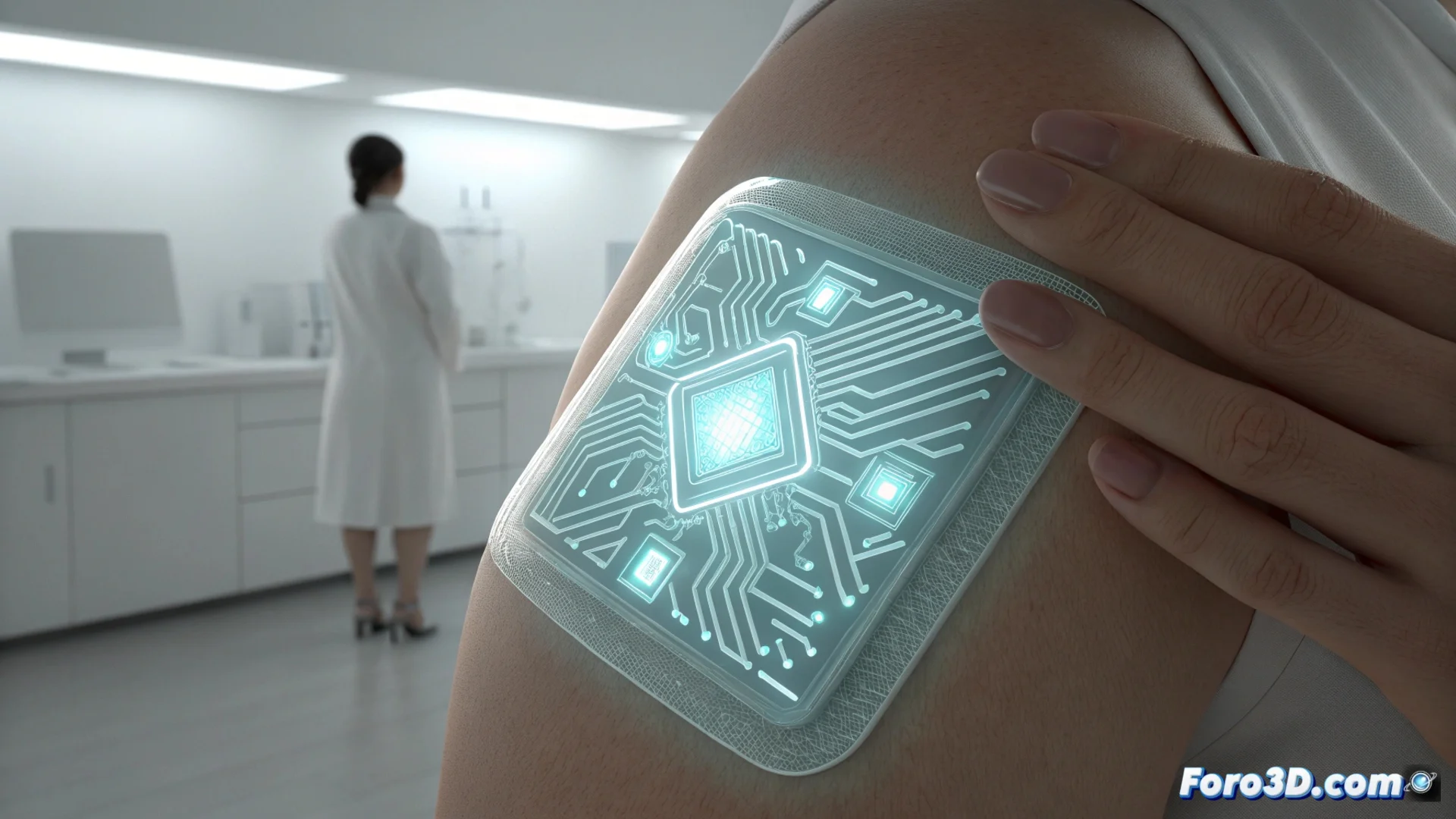
A Discrete Battery is Installed at the Edge of Life
A group of researchers has created a new concept for generating energy that does not rely on chemical batteries. Their method harnesses the natural electrical potential difference that exists between any living organism and the atmosphere surrounding it. This approach opens the door to autonomous electronic implants that never need to be recharged externally. 🔋
The Mechanism that Exploits a Natural Gradient
The core of the system is a conductive hydrogel that is placed in contact with the skin or an internal tissue. This material captures charged ions from the body. By connecting the other end of the circuit to the air, an ionic concentration difference is established. This imbalance, which the organism's biological activity constantly maintains, drives a usable electron flow. Thus, a small but stable electric current is produced.
Key Components and Operation:- Implantable Electrodes: Inserted into the organism to make electrical contact.
- External Circuit: Connects the internal electrode to the gaseous environment, closing the electrical cycle.
- Maintained Gradient: The living being's own physiology replenishes the ions, sustaining energy generation.
Energy, in the end, is always borrowed. If the organism dies, the device shuts down as well.
Future Applications in Medical Monitoring
The main utility of this technology is directed toward the biomedical field. By eliminating bulky batteries, smaller and less invasive devices can be designed for the patient. The continuous current generated is ideal for powering very low-consumption sensors.
Potential Practical Uses:- Patches for Measuring Glucose: Constant monitoring of blood levels without changing batteries.
- Vital Signs Devices: Sensors that record heart rate, temperature, or blood pressure.
- Smart Systems for Drug Delivery: Implants that release medications based on the data they collect.
Toward Integrated and Perpetual Electronics
This advance represents a significant step toward always-on electronics. The possibility of a biomedical sensor operating for years, powered solely by the body's natural processes, could transform how we manage chronic diseases and monitor health. The device acts as a discrete battery at the very boundary between the biological and the technological. ⚡