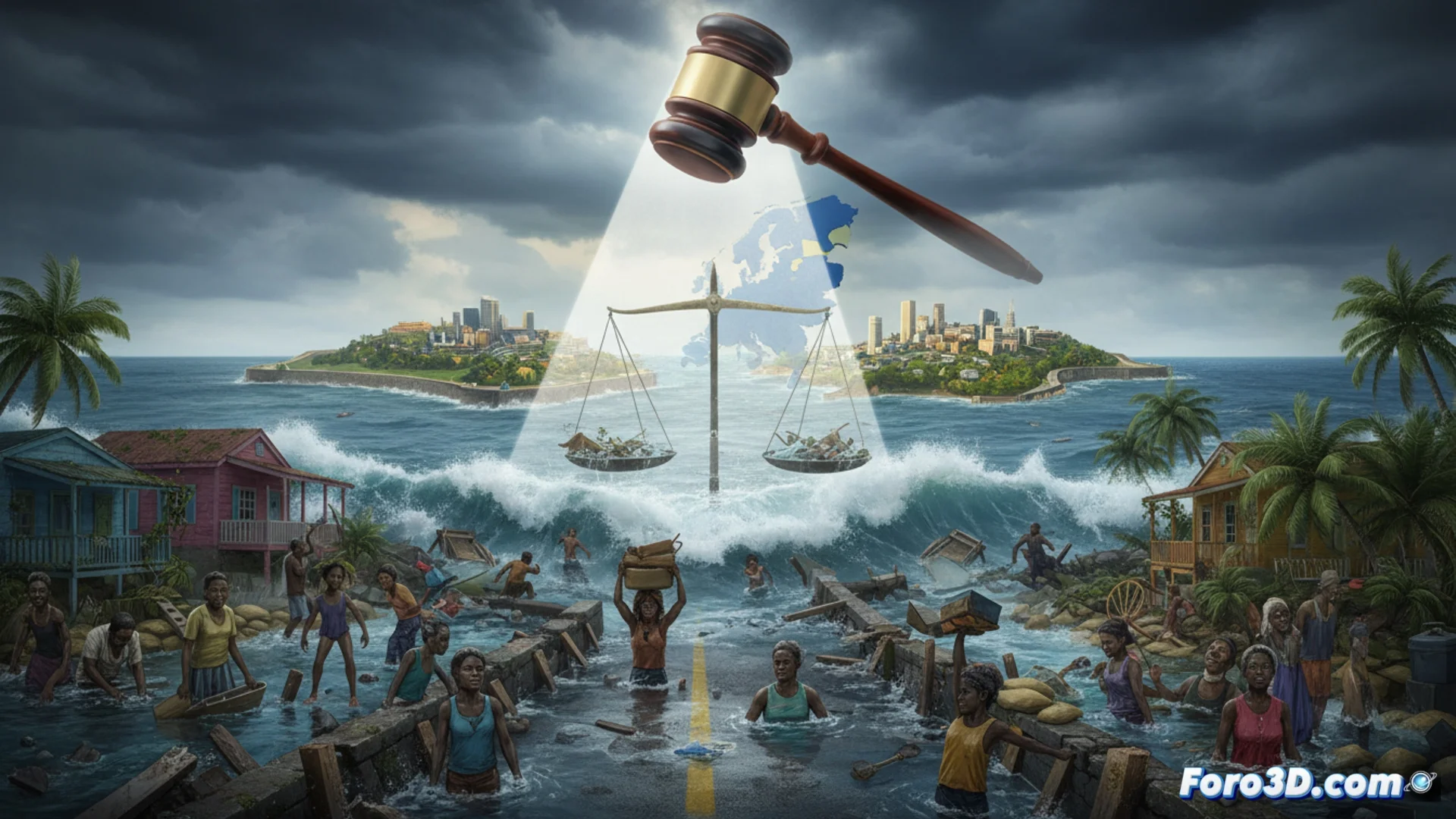
A court orders the Netherlands to protect Bonaire from climate change
A court in The Hague has issued a historic verdict, determining that the authorities of the Netherlands do not adequately protect the approximately twenty thousand inhabitants of Bonaire, an island in the Caribbean, from the consequences of global warming. The court found that the State treats these citizens unequally compared to those residing in the European part of the country, infringing on their fundamental rights. 🌍⚖️
A ruling that orders immediate action
The judicial sentence is clear and direct. It specifically points out the lack of effective measures to counteract threats such as sea level rise, recurrent flooding, and extreme temperatures. As a result, the court has ordered the Dutch government to take concrete and urgent actions.
The court's specific orders:- Establish binding targets to reduce greenhouse gas emissions.
- Develop a detailed plan with defined deadlines so that Bonaire can adapt to the effects of climate change.
- Ensure that the protection offered is equivalent to that provided in the European territories of the Kingdom.
This ruling has the backing of Greenpeace and is analyzed as a precedent that could influence similar cases in other parts of the world.
Implications that transcend borders
The decision underscores a fundamental obligation of governments: protect all their population equally from global threats. By determining that there was discriminatory treatment toward the residents of a special territory, the court establishes a powerful legal basis.
Key points of the legal precedent:- Reinforces the concept of climate justice, linking state inaction with human rights violations.
- Provides a legal argument that other citizens in vulnerable situations could use to demand that their States act.
- Demonstrates that judicial systems can be an effective avenue to force governments to fulfill their environmental duties.
Climate justice advances step by step
This verdict illustrates how, at times, a firm court ruling is needed for a government to carry out the necessary actions. The Bonaire case marks a milestone, showing that the fight for equity and environmental protection can be won in the courts. Climate justice advances, but its pace is often set by judicial rulings like this one. ⚡