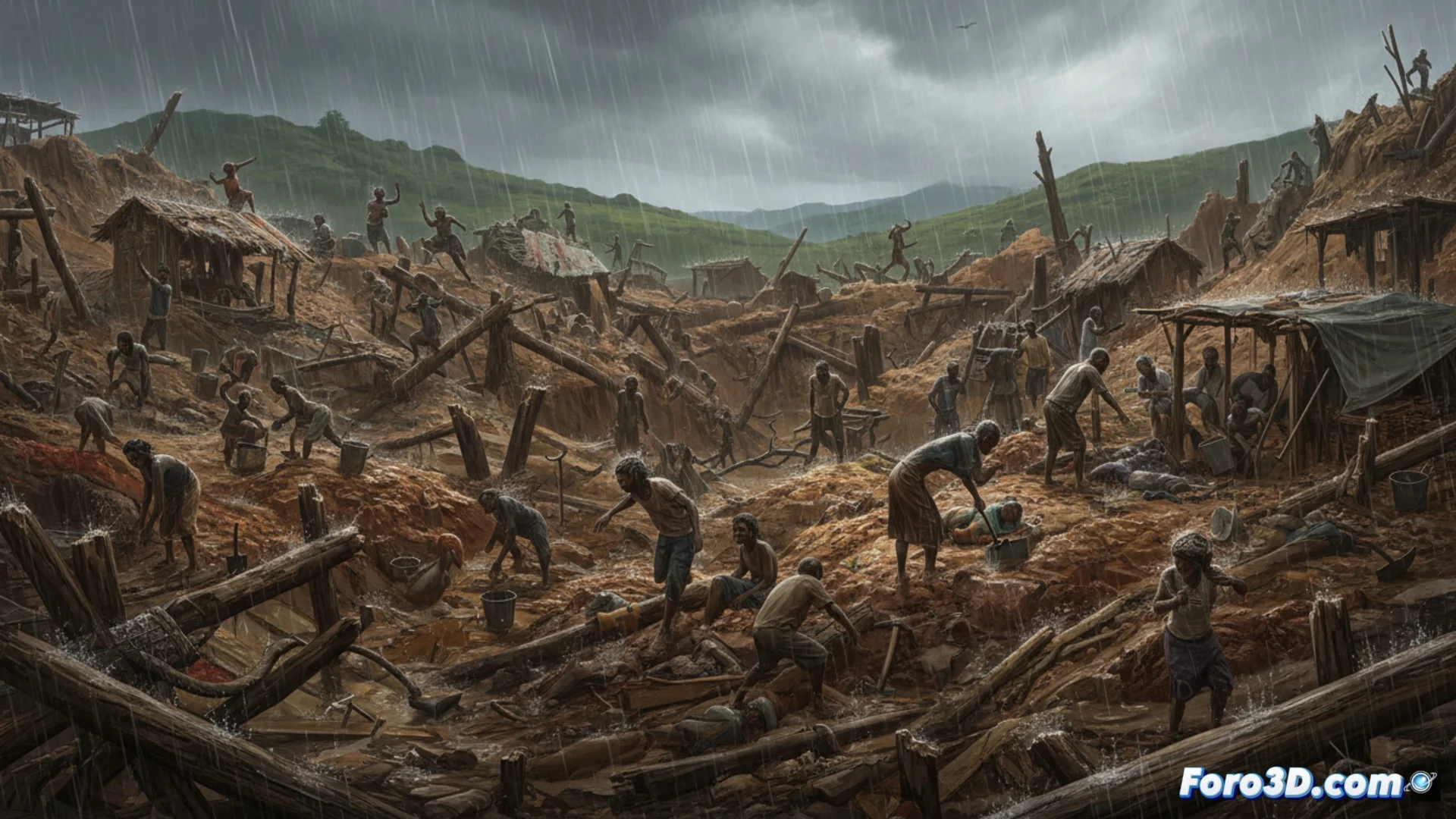
A collapse in a coltan mine in the Congo leaves more than 200 dead
A mine where coltan is extracted in the locality of Rubaya, in the east of the Democratic Republic of the Congo, collapsed this Friday due to landslides triggered by torrential rains. The incident leaves a preliminary toll of at least 200 people dead, including workers, women, and children, with numerous injured treated in local health facilities. Authorities of the M23 rebel group, which administers the area and exploits the mineral, confirm the figures. 🏚️
Activity suspended and forced relocation
In immediate response to the disaster, the factions controlling the territory have halted all mining extraction in the affected area and ordered the evacuation of residents living near the collapse. This action aims to prevent further accidents while the ground's stability is assessed. However, the final number of victims could increase, as rescue groups continue extracting people from the remains. The crisis underscores the ongoing dangers faced by populations living off informal mining in conflict regions. 💔
Factors that amplified the catastrophe:- Rudimentary mining: Operations in Rubaya completely lack basic safety protocols, leaving workers and their families in extreme vulnerability.
- Weather conditions: Intense rains, common in the area, saturate the soil and undermine the precarious excavation structures.
- Rebel control: The region and its resources have been under M23 group control since 2024, a context that prioritizes mineral extraction over protecting human lives.
It seems the only safety protocol they know here is praying that the hole doesn't collapse on them.
A crucial mineral with a high human cost
This area produces approximately 15% of the world's coltan, a mineral essential for manufacturing electronic components like mobile phones and computers. The mineral extracted under these risky conditions ends up integrated into the global supply chain. This tragic event is not an isolated incident but the direct consequence of an exploitation system operating outside any norms. 🔌
Immediate and structural consequences:- Production interruption: The mining suspension affects the area's main economic activity, deepening the humanitarian crisis.
- Lack of infrastructure: The absence of access roads, adequate rescue equipment, and safe shelters greatly complicates rescue and recovery efforts.
- Opacity in the chain: The tragedy once again highlights the opacity and ethical issues in the origin of minerals used in everyday technology.
A reminder of systemic vulnerability
The Rubaya collapse serves as a stark reminder of the inhumane conditions persisting in artisanal mining in resource-rich regions plagued by violence. As long as global demand for coltan remains high, the pressure to extract it quickly and at low cost will likely maintain these unacceptable risks. The tragedy highlights the urgent need to audit and humanize the supply chains of critical minerals. ⚖️