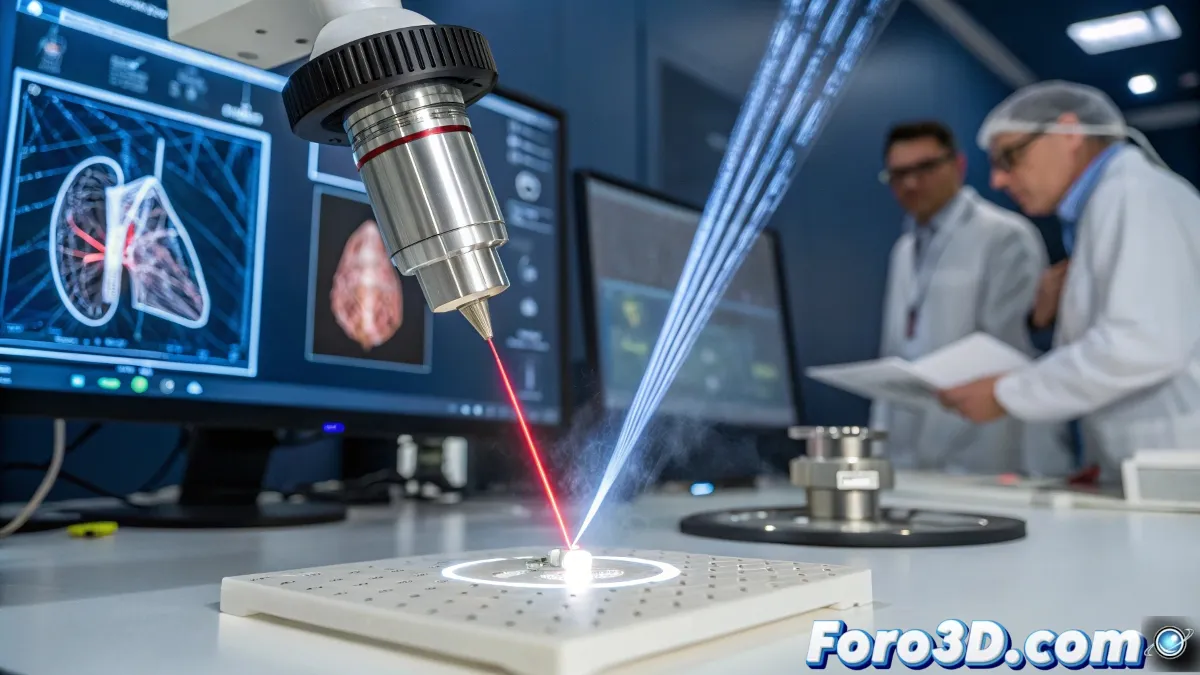
Cutting-Edge Technology for Precise Imaging
A team of researchers from the University of Adelaide has developed a 3D-printed micro-lens that measures less than 0.26 millimeters in diameter. This tiny device, printed directly onto an optical fiber, is designed to examine blood vessels and aid in the detection of coronary diseases. The team, led by Jiawen Li from the Institute of Photonics and Advanced Sensors (IPAS), has collaborated with the German company Nanoscribe and the University of Stuttgart to create this innovative tool.
Promising Results in Initial Tests
The micro-lens uses a special light beam known as a Bessel beam, which maintains its focus over longer distances compared to traditional light beams. This feature allows for high-quality images even in confined spaces, such as the narrow blood vessels of the heart. According to Jiawen Li, this technology overcomes the limitations of conventional optical systems and offers exceptional imaging capabilities, particularly useful for identifying high-risk plaques that can trigger heart attacks.
"This technology overcomes the limitations of conventional optical systems and offers exceptional imaging capabilities, particularly useful for identifying high-risk plaques." - Jiawen Li
Next Steps: Toward Clinical Application
Tests conducted on preclinical models have shown that the micro-lens provides superior spatial resolution and depth of focus compared to standard imaging probes. This advance is particularly relevant for visualizing the interior of coronary arteries, where plaque buildup can go unnoticed with current technologies. The results suggest that this device could become a key tool for detecting cardiovascular problems before they become medical emergencies.
A Promising Future for Medical Diagnosis
The research team is preparing to conduct a clinical trial at the Royal Adelaide Hospital. This study aims to evaluate the effectiveness of the 3D-printed micro-lens in identifying patients at high risk of cardiac events. If the results are positive, this technology could mark a before-and-after in the prevention and treatment of coronary diseases, providing doctors with a more precise and reliable tool to save lives.
- Innovation: 3D-printed micro-lens for cardiovascular diagnosis.
- Precision: Use of the Bessel beam for high-quality imaging in confined spaces.
- Collaboration: Joint project between the University of Adelaide, Nanoscribe, and the University of Stuttgart.
In summary, this 3D-printed micro-lens represents a significant advance in the field of medical diagnosis, offering an innovative solution for early and accurate detection of coronary diseases. With its potential to revolutionize preventive medicine, this technology could save countless lives in the future.