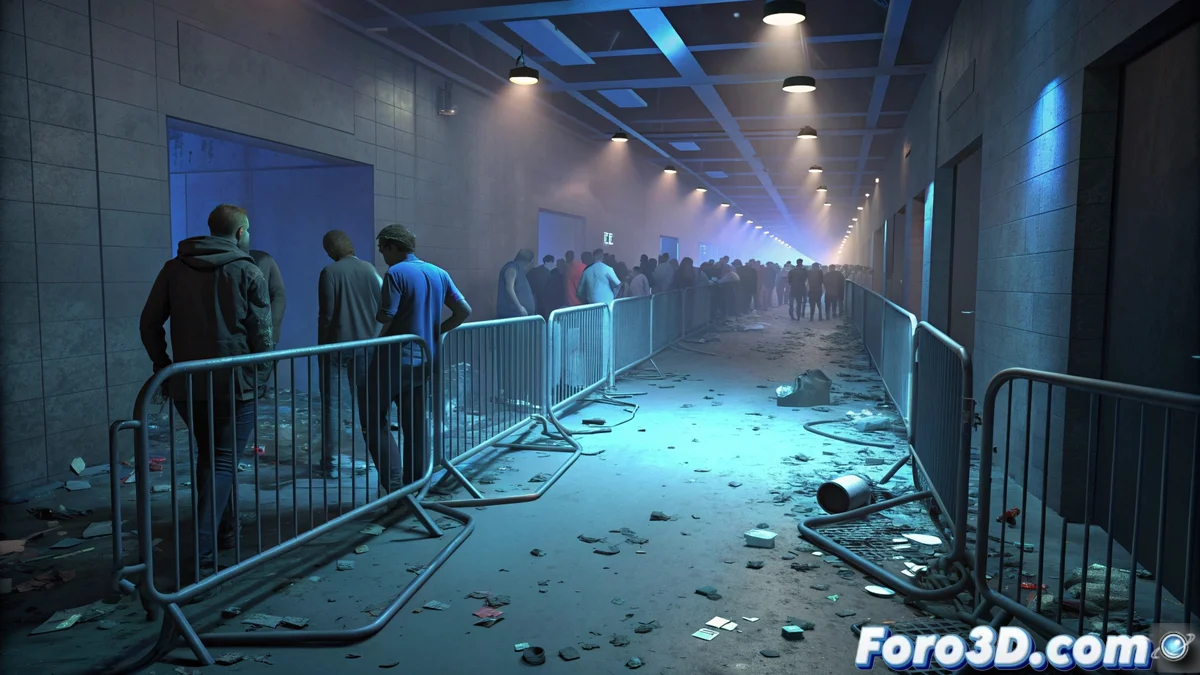
A 3D Forensic Pipeline Analyzes the Dynamics of a Human Stampede
After a tragedy at a mass event, experts turn to digital technology to clarify the facts. A 3D forensic workflow allows for accurately recreating the moments leading up to the collapse, transforming physical data into an interactive virtual model. This methodology demonstrates how space design and human behavior interact under pressure. 🔍
Documenting the Scene with Millimeter Precision
The process begins with capturing the reality of the incident site. A high-speed laser scanner, such as the Leica RTC360, is deployed, recording millions of measurements per second. In minutes, it generates a 3D point cloud that replicates every detail: the width of corridors, the slope of stairs, the location of railings, and any objects obstructing passage. This geometric foundation eliminates guesses about the physical environment.
Key data captured by the scanner:- Exact geometry and dimensions of corridors, doors, and exits.
- Topographical elevations and changes in the pavement.
- Position and condition of architectural elements and furniture.
The 3D point cloud serves as an infallible digital testimony of the scene's state, free from subjective interpretations.
Recreating Crowd Behavior in a Virtual Environment
With the definitive 3D model, investigators import it into crowd simulation software. Tools like MassMotion or Pathfinder allow for programming virtual agents with specific parameters: total number, entry and exit points, and preferred movement speed. The simulation calculates how these agents move, interact, and react when trying to evacuate a saturating space.
What the simulation reveals:- Formation and location of critical bottlenecks.
- Areas where person density exceeds dangerous thresholds.
- How a stumble or initial panic can propagate a fatal chain reaction.
From Planning to Forensic Evidence
The paradox of this technology is its dual use. The same tools that architects use to plan safe spaces and optimize flows become the means to irrefutably prove how a poor design or inadequate crowd management can turn a place into a trap. 3D forensic analysis not only reconstructs the past but provides crucial lessons to prevent future catastrophes at concerts, stadiums, and large gatherings. ⚖️