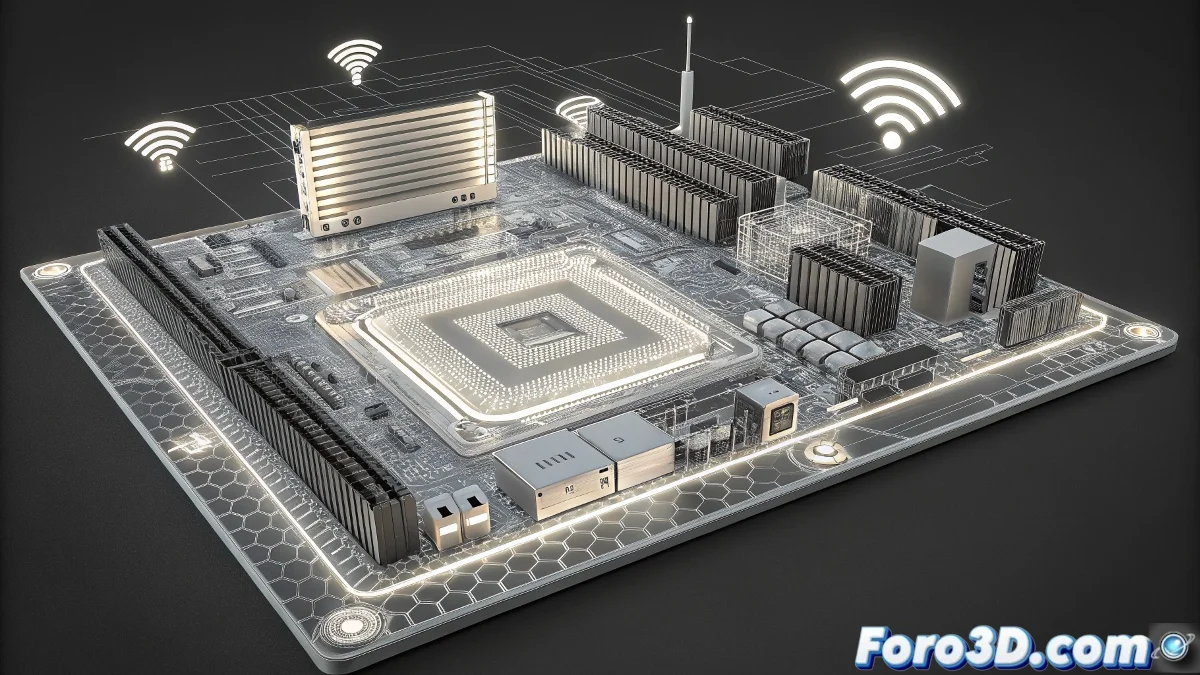
When 5G Turns Your PC into a Universal Connectivity Node
The 5G revolution is transcending smartphones to fundamentally redefine how we conceive connectivity in personal computers. Hardware manufacturers are integrating native 5G capabilities into motherboards, laptops, and components to leverage speeds that challenge traditional wired connections. This evolution is not just about adding another type of connection, but rethinking the entire system architecture for a world where mobility and massive bandwidth are the new standards.
5G integration represents a paradigm shift from connectivity as an additional feature to connectivity as the system's backbone. While Wi-Fi 6E and Ethernet remain relevant for specific scenarios, 5G offers the promise of ubiquitous connectivity with consistent performance regardless of physical location. Users could eventually work, play, and create with the same network experience in a café, a train, or their home. 📡
In the 5G era, your next PC could have better connectivity than your home fiber optic
The Components Evolving for 5G
Adapting to 5G requires modifications at multiple levels of traditional hardware. It's not just about adding a modem.
- Motherboards with integrated antennas designed for 5G millimeter frequencies
- Improved thermal management systems to dissipate heat from high-power modems
- Optimized power architectures that maintain energy efficiency in persistent connections
- Specialized expansion interfaces for 5G cards with guaranteed bandwidth
Manufacturers like ASUS, MSI, and Gigabyte are already presenting solutions that integrate 5G modems directly into the motherboard, eliminating the need for external dongles or additional PCIe cards.
Applications That Will Transform PC Usage
For professional and creative users, 5G enables scenarios that were previously impossible or required complex infrastructure.
- Real-time cloud rendering with latencies so low it feels local
- Collaboration on massive 3D projects without needing to download full assets
- Game and VR streaming with 4K/120fps quality without cables
- Continuous project backups without impacting system performance
Content creators could work on 8K projects directly from cloud storage, while distributed teams collaborate as if they were on the same local network.
The Challenge of Perfect Integration
Although the technology is available, mass implementation faces significant obstacles that require solutions.
The additional cost of 5G components, energy consumption in mobile systems, and band fragmentation between regions are challenges that manufacturers must overcome. Additionally, the true revolution will only arrive when mobile data rates adapt to the massive usage that a PC can generate. The promise of 5G in PCs is immense, but its widespread adoption will depend on resolving these obstacles. 🌐
And if 5G fulfills its promise, we could soon download 100GB games in the time it takes to make a coffee... though data plans will probably need to be more generous than ever 😉