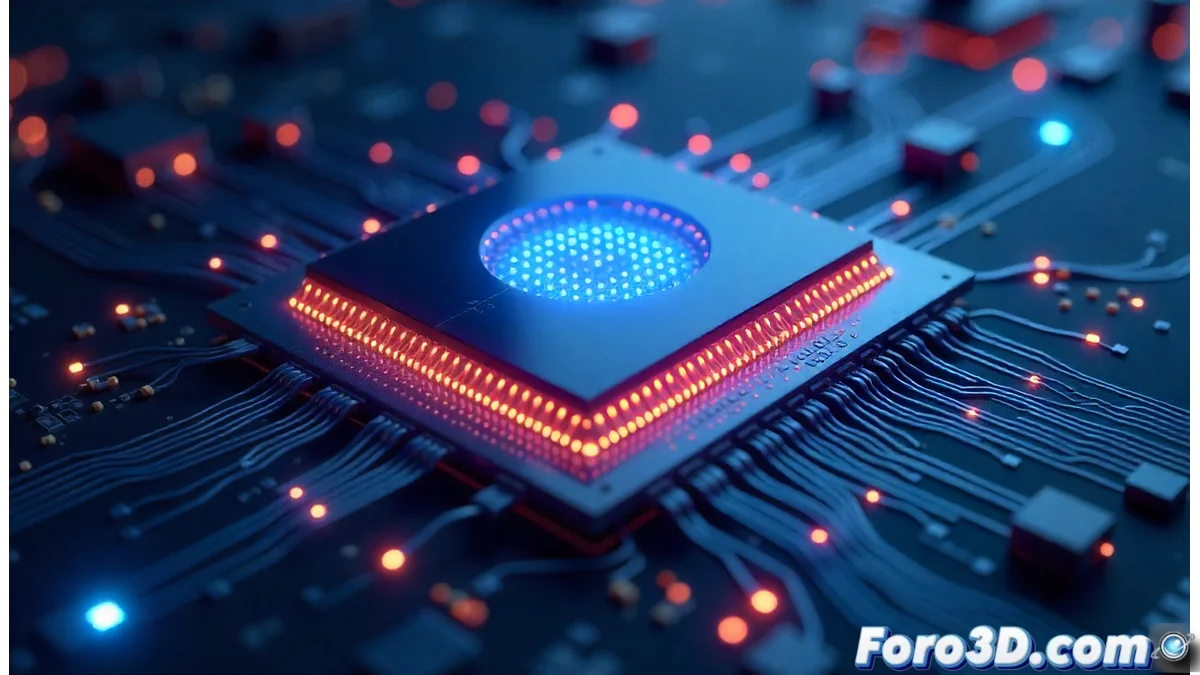
3D V-Cache Technology: Innovation in Processor Architecture
The 3D V-Cache technology marks a milestone in processor design by incorporating additional L3 cache memory through three-dimensional stacking directly over the CPU cores. This advancement allows for a substantial increase in available cache capacity without modifying the physical dimensions of the chip, optimizing performance in applications where memory latency is critical. 🚀
Advantages in Software Performance
The main benefit of 3D V-Cache is evident when processing cores require immediate access to data. With more L3 cache available, the CPU minimizes queries to the main RAM memory, which is notably slower, resulting in tangible improvements such as high frame rates in video games, reduced rendering times in 3D, and greater agility in programs that manage large datasets in real time. 💻
Applications that benefit:- Video games with high demands for textures and complex models
- 3D rendering and modeling software like Blender or Maya
- Development tools that handle extensive compilations
The management of the additional cache is handled at the hardware level, so no adjustments are needed in the operating system or applications to take advantage of its benefits.
Implementation and Compatibility Requirements
Currently, this technology is integrated into select AMD Ryzen processors, where the extra L3 cache is connected to the cores via high-density silicon interconnections. Compatibility with existing motherboards varies depending on the socket and chipset, often requiring a BIOS update to recognize these processors. Although the hardware automatically manages the cache, not all applications are optimized to use it efficiently. 🔧
Compatibility considerations:- Verify motherboard socket and chipset compatibility
- Update the BIOS to the latest version
- Evaluate if the software used takes advantage of the additional cache
Final Reflections on the Technology
Although expanding cache memory seems like the ideal solution, its effectiveness depends on how applications manage data. Some programs, for example, do not optimize the use of available cache, prioritizing accesses to slower RAM instead of leveraging the immediate resource. The 3D V-Cache technology represents a significant advancement in processor architecture, but its real impact varies depending on the usage context and software optimization. ⚡