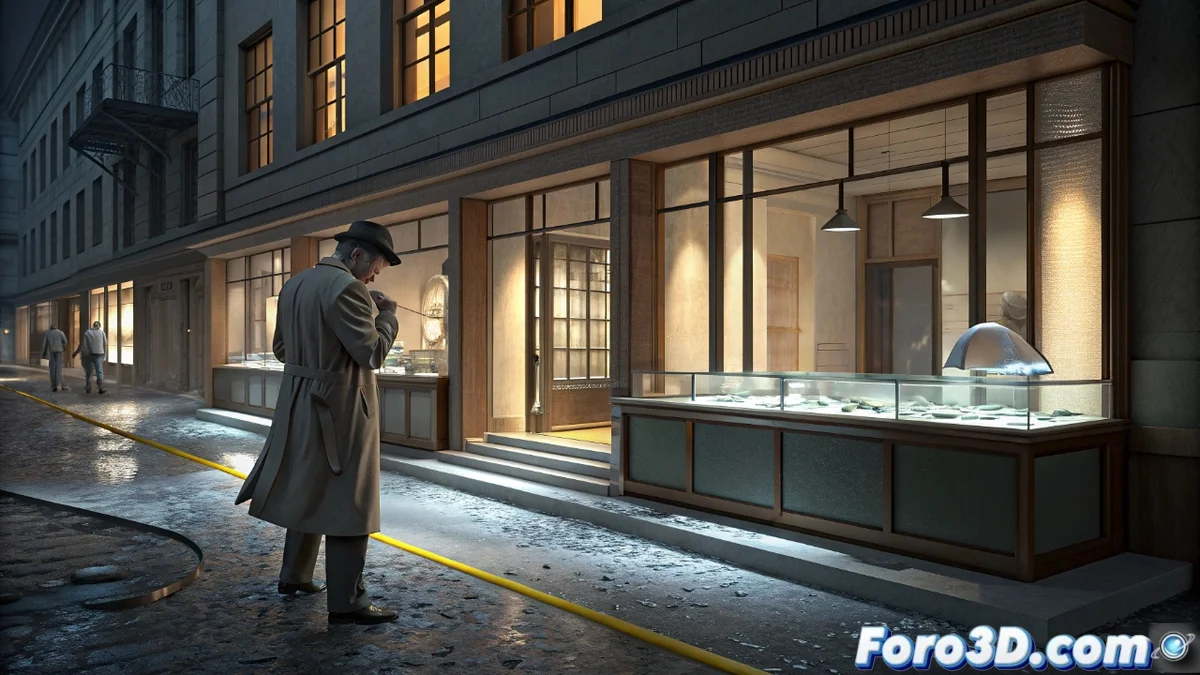
3D Technology Revolutionizes Testimony Validation in Forensic Investigations
Contemporary criminal investigation is integrating three-dimensional methodologies to contrast eyewitness statements with irrefutable scientific evidence. In an emblematic case of a jewelry store robbery, a witness's claims of having identified the perpetrator were subjected to verification using laser scanning technology and virtual recreation of the scene 🕵️♂️.
Three-Dimensional Capture Methodology and Data Processing
Specialized forensic teams implement high-end laser scanning devices, such as Leica Cyclone systems, to record millions of spatial reference points. This information is processed using specialized software like Autodesk ReCap, generating detailed point clouds that faithfully reproduce the complete geometry of the investigated environment. The resulting digital model incorporates all architectural components and existing furniture, providing an objective basis for subsequent analyses without subjective interpretations 🔍.
Forensic Modeling Process Stages:- Massive data capture using millimeter-precision laser scanners
- Processing and cleaning of point clouds in specialized software
- Texturized geometric reconstruction of the complete scene
Digital recreation eliminates assumptions about spatial arrangement and provides tangible evidence for forensic analysis
Visibility Evaluation and Testimonial Contrast
Once the complete three-dimensional model is obtained, it is transferred to rendering engines like Unreal Engine or Unity to perform line-of-sight analysis. Investigators place the virtual witness in the exact declared position, replicating their eye height and gaze direction. The computational system automatically determines which sectors of the premises were visually accessible, considering obstructions such as partition walls, counters, and other interfering elements 🎯.
Critical Components of Visibility Analysis:- Precise positioning of the virtual observer according to the testimonial statement
- Computational calculation of visual fields and viewing angles
- Identification of obstacles that limit ocular perception
Conclusive Results and Final Reflections
The irony of the analyzed case lies in the fact that the witness swore to have clearly visualized the robber, but the three-dimensional analysis demonstrated that from their location, they could only see the payment area, not the area where the actual struggle took place. This finding confirms that human visual memory can be more creative than precise, highlighting the unquestionable value of 3D technology in the scientific validation of judicial testimonies ⚖️.