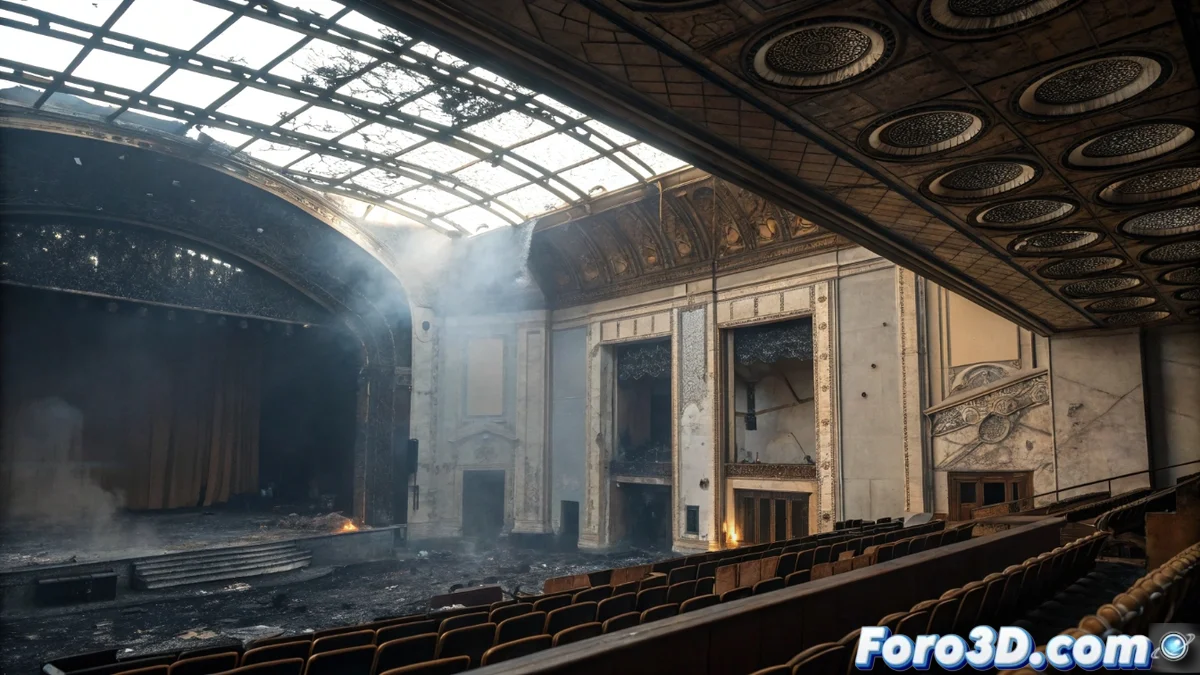
Forensic Investigation with 3D Technology in the Great Imperial Theater Fire
The Great Imperial Theater tragedy has mobilized the best specialists in digital forensics to unravel the causes of the disaster using cutting-edge three-dimensional technologies. 🏛️🔥
Digital Documentation of the Post-Fire Scene
High-precision laser scanning teams have captured millions of data points that form a faithful representation of the building's current state. This three-dimensional point cloud allows examination of carbonization patterns and determination of critical zones with millimeter accuracy.
Capture and Analysis Methodology:- Terrestrial laser scanning with subcentimetric resolution for complete documentation
- Generation of textured 3D models showing degrees of deterioration
- Comparative analysis between original and current structural elements
"The precision of the initial data obtained through 3D scanning forms the fundamental basis for the entire subsequent investigative process" - Digital Forensics Team
Structural Reconstruction and Damage Assessment
Using specialized software like CloudCompare, investigators transform point clouds into analyzable structural models. This process reveals critical deformations and allows evaluation of the residual strength of each affected architectural component.
Technical Analysis Performed:- Identification of structural collapse origin points
- Evaluation of carbonization levels in different materials
- Comparison with original plans to determine alterations
Fire Dynamics Simulation
The use of Fire Dynamics Simulator digitally recreates flame propagation considering multiple environmental and structural variables. Smokeview complements this process by visualizing temperature and smoke evolution in simulated real time.
Simulation Parameters:- Analysis of combustible materials present in the theater
- Evaluation of ventilation systems and their influence
- Verification of fire protection systems' operation
Critical Findings and Lessons Learned
The investigation has revealed the paradoxical effectiveness of the safety systems: while the automatic sprinklers worked flawlessly in secondary areas, the main fire spread unobstructed across the stage. This case demonstrates that the most advanced technology is useless when not strategically implemented. 💡🚒