Innovations in 3D SLA Printing for Industrial Environments
Stereolithography has evolved remarkably, integrating artificial intelligence and automation to optimize industrial processes. Among the available solutions, certain models stand out for their ability to adapt to demanding sectors such as aeronautics or precision manufacturing. These technologies not only improve efficiency but also redefine quality standards.
Technological Alternatives in Additive Manufacturing
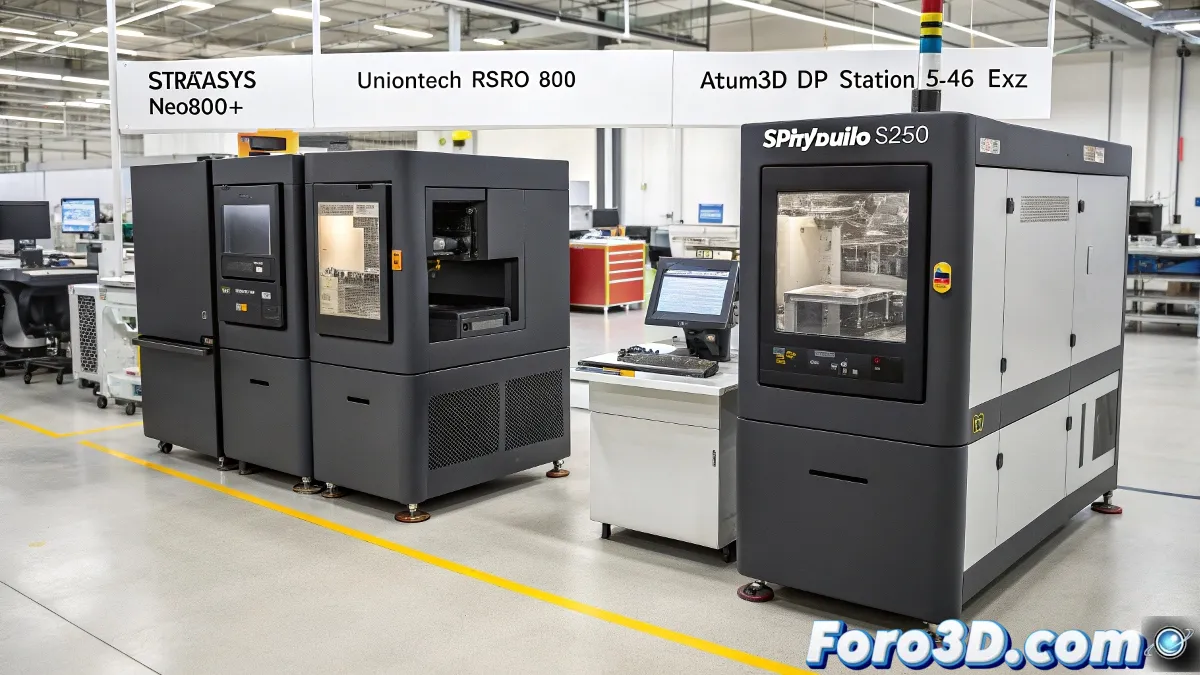
Beyond the most well-known equipment, the market offers options with innovative approaches. The UnionTech RSPro 800, for example, combines a patented optical system with advanced thermal control, ideal for structural prototypes. On the other hand, the Atum3D DLP Station fuses DLP and SLA techniques, achieving exceptional detail in tiny parts.
"The integration of AI in 3D SLA printers is not a luxury, but a necessity to ensure precision in large-scale productions," state sector experts.
Key Factors When Selecting an SLA Printer
- Precision vs speed: Some models prioritize micrometric resolution, while others optimize manufacturing time.
- Automation: Systems like the Sprybuild S250 enable continuous production with minimal intervention.
- Scalability: Compatibility with digital workflows determines its adaptability to Industry 4.0 environments.
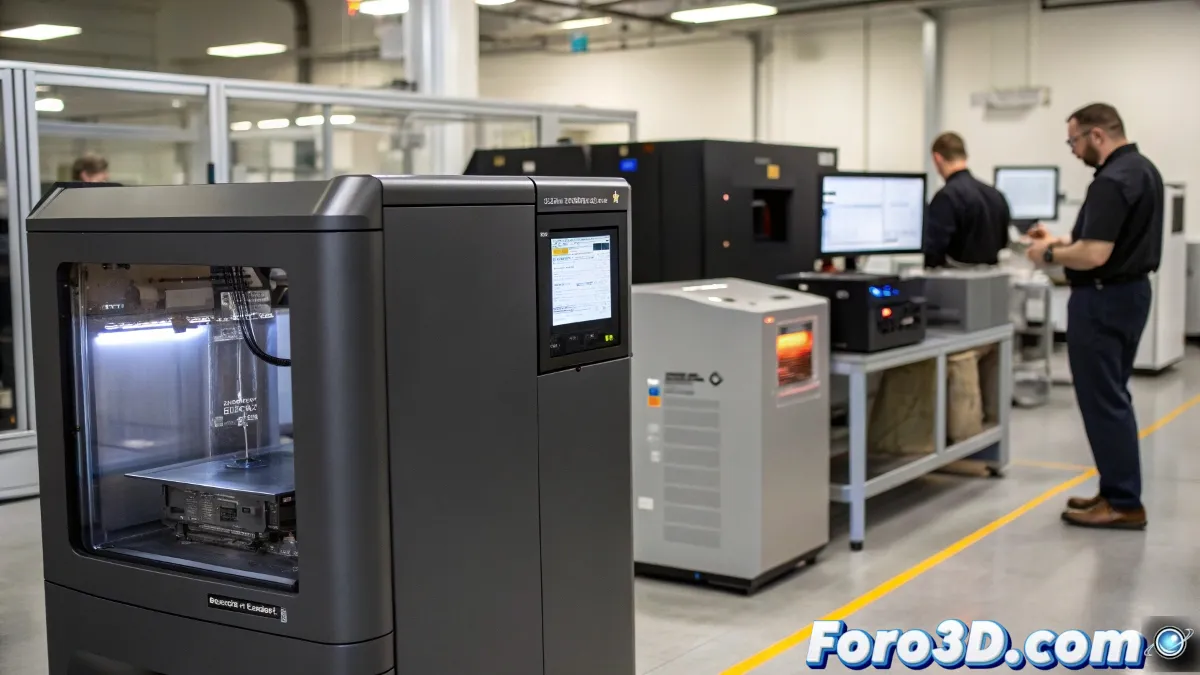
Artificial intelligence emerges as a critical differentiator, especially in equipment that dynamically adjusts parameters to correct imperfections. This capability, present in advanced models, reduces waste and improves consistency in long runs.
Future Trends in Industrial Stereolithography
The current landscape suggests increasing specialization, where mass customization and sustainable materials gain relevance. The convergence between IoT, predictive analytics, and additive manufacturing paves the way toward smart factories, where 3D SLA printers will operate as interconnected nodes in digital ecosystems.