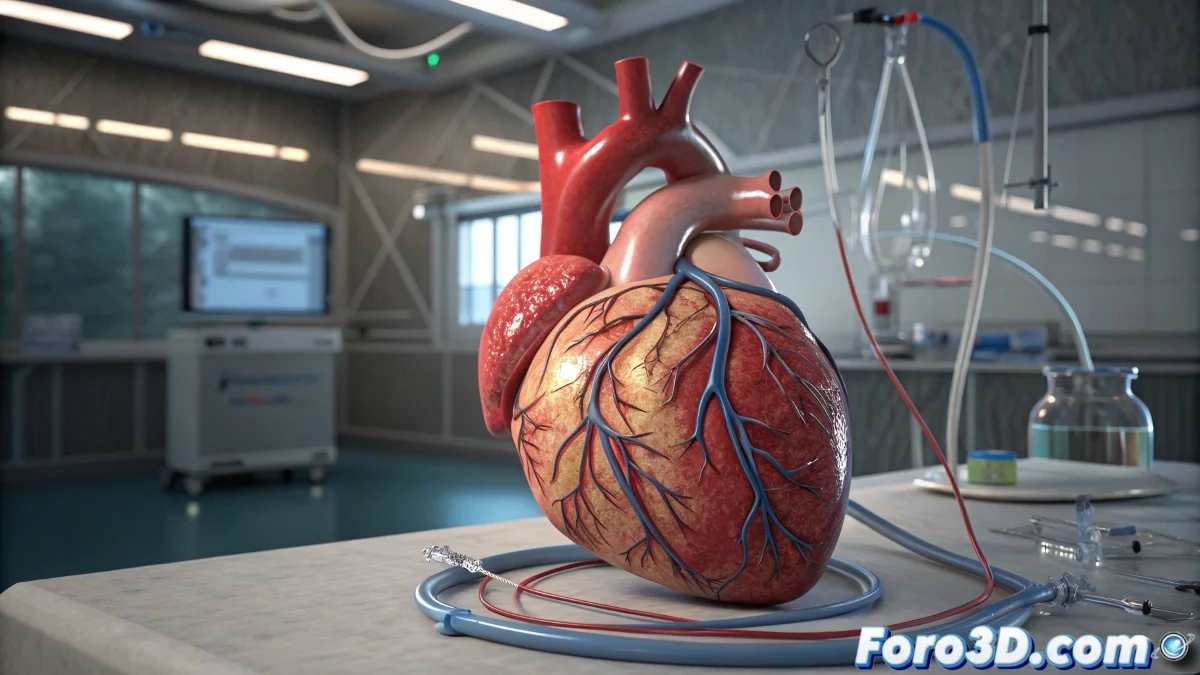
When Medicine and 3D Beat at the Same Rhythm
The recent advance of reviving donated hearts 💓 opens incredible possibilities for 3D medical visualization. This tutorial will guide you to recreate a functioning organ outside the body, perfect for educational or scientific projects... without needing to book an operating room slot.
Step 1: Precise Anatomical Modeling
In 3ds Max we start with:
- Detailed medical references
- Organic modeling of heart chambers
- Complete vascular system
A well-modeled digital heart is like the real one: it must function even when viewed from the inside.
Step 2: Animating Life
For realistic heartbeat:
- Morpher deformers for contractions
- Muscular tissue simulation
- Procedural blood flow
Step 3: The Life Support System
External connections:
- Modeling of flexible tubes
- Physical simulation of hoses
- Translucent materials for liquids
Step 4: Medical Texturing
With Substance Painter:
- Realistic tissue textures
- Visible capillaries and veins
- Wet effects and shines
Step 5: Scientific Rendering
For the professional finish:
- Precise surgical lighting
- Render with V-Ray/Corona
- Medical post-production
The result will be so impactful that you might even make some surgeon's heart beat faster... though in this case, it would be better if they take it easy 😉.