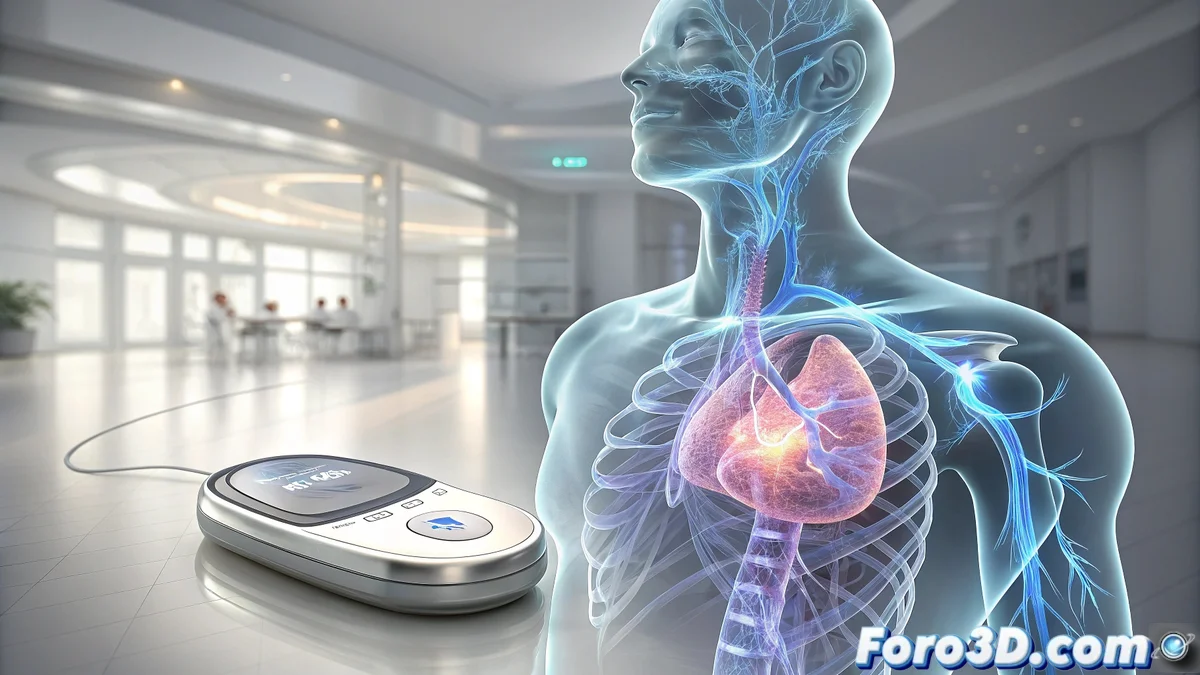
When 3D Technology Allies with Medicine
Visualizing complex medical advances is essential to understand and communicate them. 💉 Creating a device that automatically regulates glucose is a scientific achievement, and explaining its internal workings can be a challenge. Houdini becomes an invaluable tool here, allowing artists and technicians to build a clear and dynamic visual representation of how this implant would interact with the human body. This is not an engineering model, but a powerful visual communication tool.
Building the Device Layer by Layer
The process begins with the procedural modeling of the implant's casing. Using SOP nodes in Houdini, clean and precise geometry can be created to represent the device's external shape. 🏗️ The key is to work non-destructively, allowing proportions to be adjusted or details like connection ports to be added flexibly. Separating the model into components (casing, lid, internal reservoir) facilitates the animation of its mechanisms later.
An effective visualization simplifies complexity without sacrificing conceptual precision.
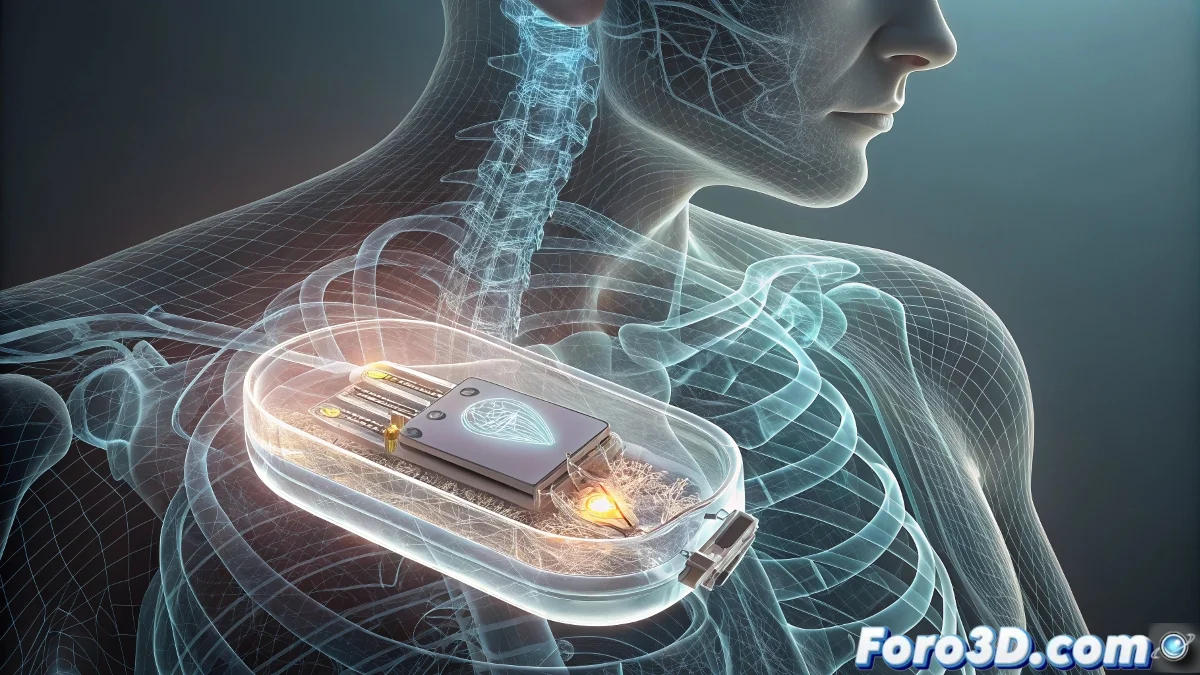
Simulating the Internal Magic: Insulin Flow
The most fascinating part is visualizing the active process. Using particle systems (POP Networks), the insulin flow from the internal reservoir to the microchannels can be simulated. 🌊 By adding color and size attributes to the particles, a visual narrative can be created: blue particles at rest that turn yellow and active when the device releases the substance. A simple animated movement of a "valve" can control this flow, making the explanation intuitive.
- Anatomical Environment: Create stylized layers of skin and tissue with Subsurface Scattering shaders.
- HUD Interface: Add a graphical screen that displays real-time glucose levels.
- Clinical Lighting: Use cold and precise lighting to highlight the device's details.
Composition for a Clear Narrative
The final animation must tell a story. A wide shot shows the implant in its anatomical context, while a close-up reveals the internal release mechanism. 🎥 Synchronizing the particle animation with a graph on the device's HUD reinforces the connection between the action and the data. The final render with Karma, applying a degree of depth of field, gives the visualization a professional and cinematic finish.
It's a curious detail that, after so much effort to achieve clinical realism, the insulin flow simulation might resemble a chocolate fountain. 🍫 That said, such a therapy would undoubtedly have a 100% adherence rate among patients.