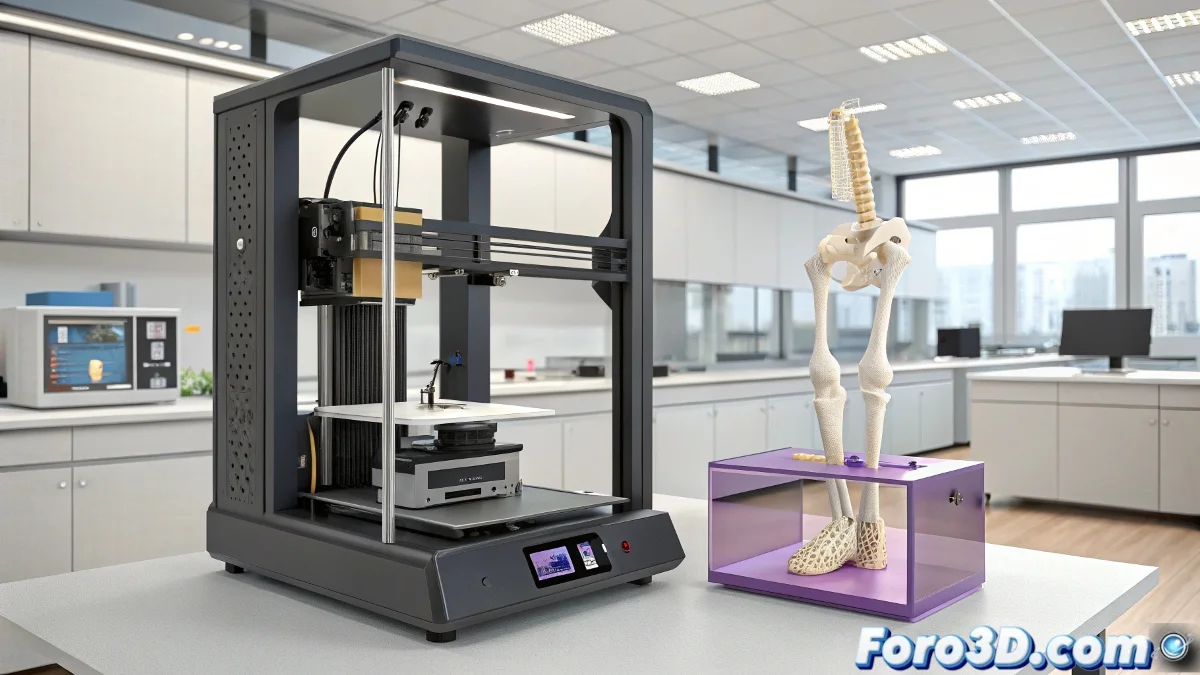
The 3D Resin That Knows When to Be Hard and When to Be Soft
A team from the University of Texas has created what could be called the chameleonic material of 3D printing. 🦎 Using a special resin and two types of light (violet and ultraviolet), they can manufacture objects that combine rubber-like flexible zones with rigid plastic-like parts, all in a single continuous piece. The result? Materials that perfectly mimic the transitions of natural tissues, without weak points at the joints.
Biological Inspiration and Luminous Technique
Researcher Zak Page and his team solved the eternal problem of hybrid materials:
- Violet light: transforms the resin into a soft and flexible material
- Ultraviolet light: hardens the resin like rigid plastic
- Gradual transitions: without breaking points, like in real tendons and bones
From Prosthetics to Electronics: Surprising Applications
The demonstrations are as impressive as they are practical:
- A functional knee joint with flexible ligaments and rigid bones
- Stretchable electronic circuits with gold wires that don't break when bent
- Faster and more precise process than previous techniques
"This technology could make prosthetics feel more natural than ever... though they still won't know how to do yoga on their own"
Flexibility with a Sense of Humor
Thanks to this breakthrough, we will soon be able to have devices that adapt to the body as well as an elastic to the waist after Christmas. 🎄 But the most ironic thing is that, while materials learn to be flexible, many humans still fail to touch our toes without bending our knees. Maybe we should ask the 3D printer to make us a new spine... with adjustable hardness option, of course. 😉