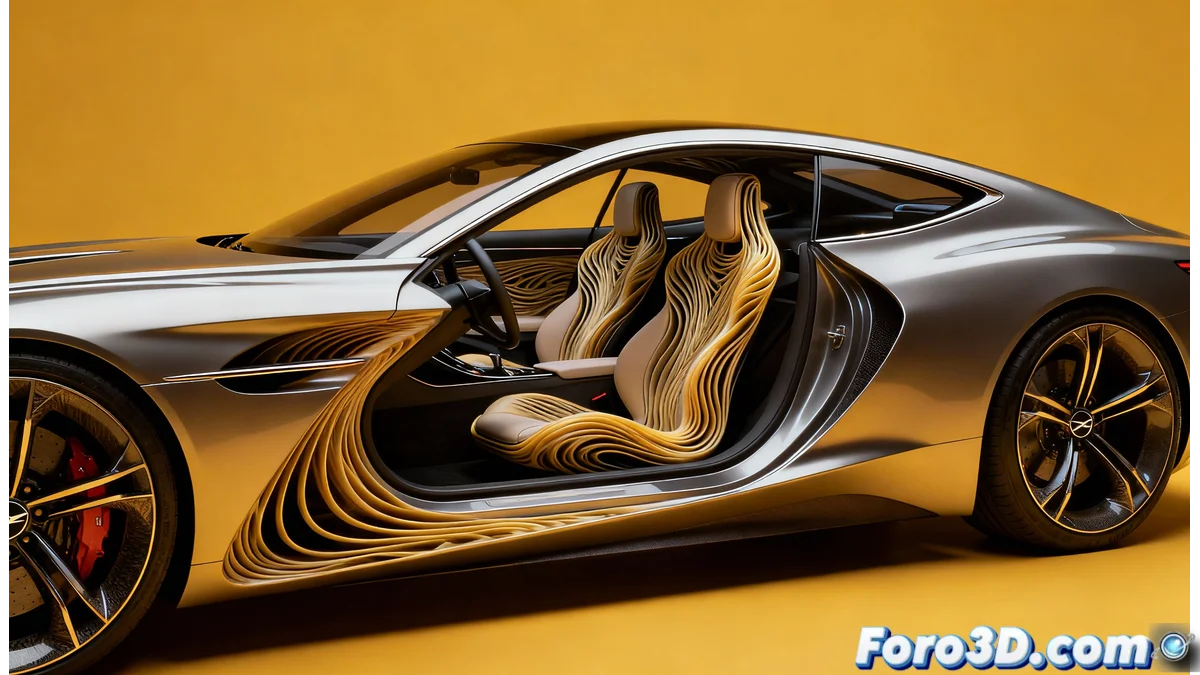
3D Printing Transforms Automotive Design with the Genesis X Gran Berlinetta Vision GT
Additive manufacturing is redefining the limits of automotive design through the Genesis X Gran Berlinetta Vision GT prototype, a conceptual hypercar created specifically for the Gran Turismo video game. This vehicle incorporates a bionic approach throughout its structure, where each element seems to evolve naturally, optimizing both aesthetics and performance through advanced 3D printing techniques 🚗.
Continuous Flow Interior Architecture
The interior of the Genesis X Gran Berlinetta Vision GT features organic lines that intertwine to form a cabin where the driver's seat is structurally integrated with the chassis. This fusion eliminates abrupt transitions between components, creating an environment that feels alive and in perpetual motion, leveraging the geometric freedom provided by 3D printing to place material only where strength or functionality is required.
Key features of the bionic design:- Fluid lines that mimic natural shapes and improve aerodynamics
- Intelligent material distribution to reduce weight and increase efficiency
- Total integration between structural elements and interior components
3D printing enables the creation of structures that were previously impossible to manufacture, fusing beauty and functionality in a single process.
Seat Structurally Unified with the Chassis
The driver's seat is not a separate piece, but an extension formed from the chassis itself, produced in a single printing operation with high-performance composite materials. This structural solution reduces weight and increases torsional rigidity, improving the connection between the driver and the body for a more immersive and responsive driving experience, both in virtual simulators and real-world applications.
Advantages of structural integration:- Significant weight reduction by eliminating joints and additional supports
- Greater torsional rigidity to improve response in corners and acceleration
- More direct connection between the driver and the vehicle's dynamics
Future of Mobility and Digital Manufacturing
With this level of innovation, all that's left is for them to also print the registration permit to allow road tests, although with its aerodynamic and futuristic design, perhaps flying is a more appropriate option. This prototype not only showcases the potential of 3D printing in the automotive industry, but also sets a new standard for the integration of advanced technologies in conceptual vehicle design ✨.