3D Printing for Restoring and Preserving Cultural Heritage
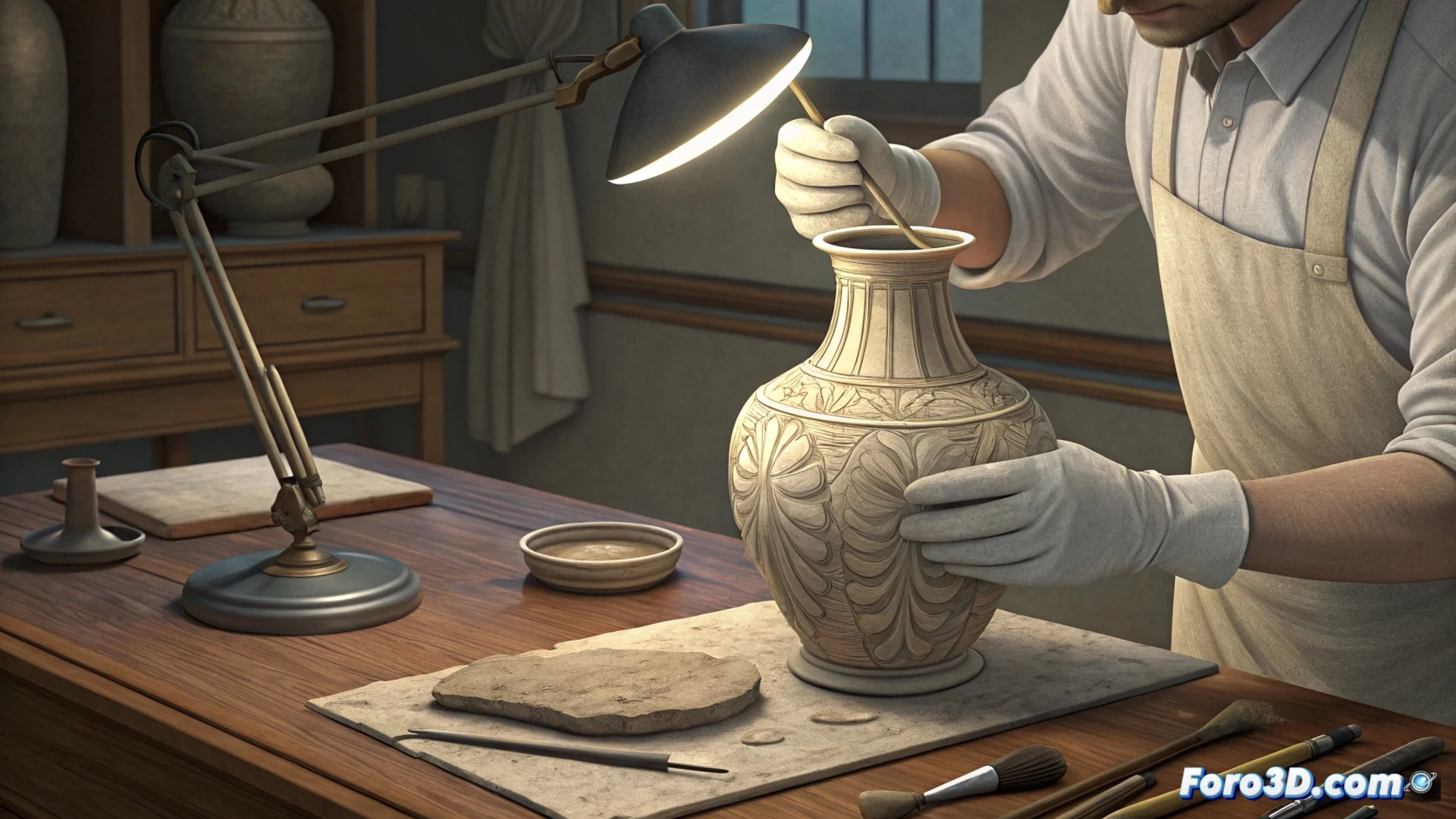
Additive manufacturing technology is integrated into restoration workshops to produce components that replace lost or damaged parts in works of art and historical artifacts. This method allows intervening without touching the authentic fragments, preserving their original value. 🏛️
Fusing Digital Scanning with Additive Manufacturing
The process begins by digitizing the object with a high-precision 3D scanner. Specialized software processes this data to generate a virtual model of the missing part, often extrapolating the geometry from symmetry or files of similar pieces. Subsequently, the printing material is selected, which can be photopolymer, nylon, or a mineral-filled composite to achieve a similar appearance and weight to the original. The printing is executed layer by layer, achieving a millimeter-perfect fit. 🔍
Key steps in the workflow:- Digitize the broken piece or empty space with 3D scanning technology.
- Process the data to design the virtual model of the missing part.
- Select a printing material that mimics the properties of the original.
- Manufacture the replica layer by layer with a high-resolution 3D printer.
The greatest challenge is not always replicating the shape, but finding a filament that matches the patina of centuries, a detail that specialists value and debate.
Selecting Materials and Respecting Restoration Ethics
Choosing the right material is fundamental; it must be stable, reversible, and easily distinguishable from the original under scientific examination. Many institutions use resins that are tinted to blend visually, but differ to the touch or under ultraviolet light. This ethical approach ensures that the modern intervention is not confused with the ancient work. The printed piece is attached with reversible adhesives, ensuring that future restorers can remove it if necessary. ⚖️
Essential criteria for materials:- They must be stable and not degrade over time.
- The intervention must be reversible, using adhesives that allow disassembly.
- The new material must be able to be distinguished clearly from the original with scientific methods.
- Its appearance must integrate visually without deceiving the observer.
The Impact and Future of Technology in Conservation
This methodology allows completing works in a previously unthinkable way, keeping the integrity of the historical piece intact. By combining digital techniques with ethical restoration principles, it opens a path to preserve our legacy for future generations, using modern tools with the utmost respect for the past. The debate between purists and technologists enriches the field, ensuring that each intervention is as careful as it is innovative. 🔧