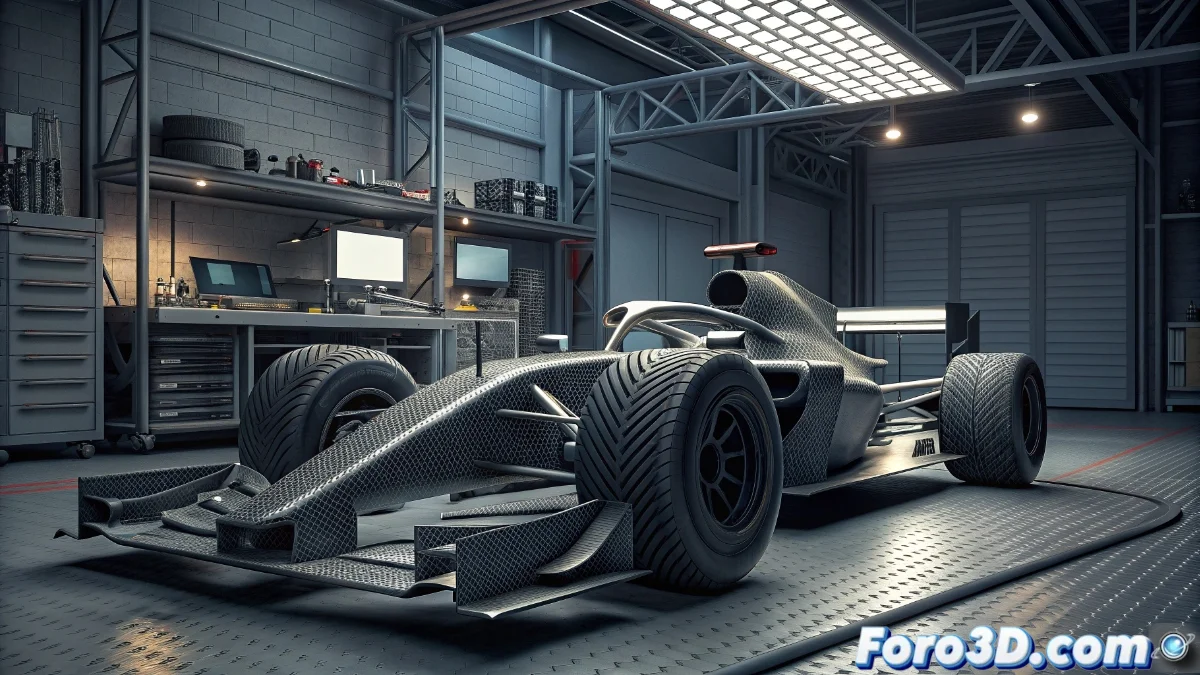
3D Printing Revolutionizes Formula 1 with High-Performance Components
In the world of elite motorsport competition, additive manufacturing technology has become a fundamental pillar for the development of racing cars. Legendary teams like Mercedes, Red Bull Racing, and Scuderia Ferrari systematically employ 3D printing to create components that optimize on-track performance, radically transforming traditional design and production processes 🏎️💨.
Innovation in Aerodynamic Components and Validation
Scale model manufacturing through 3D printing allows engineers to perform precise evaluations of aerodynamic behavior before committing resources to conventional production tooling. This methodology exponentially accelerates development cycles, enabling multiple iterations that perfect airflow around the vehicle.
Key applications in aerodynamics:- Rapid manufacturing of winglets, diffusers, and side skirts for wind tunnel testing
- Design concept validation with millimeter tolerances that ensure data reliability
- Reduction of development times from weeks to just days through accelerated prototyping
"The ability to iterate quickly with 3D printing gives us a decisive advantage every season" - Head of Aerodynamics at an F1 team
Structural Components and Regulatory Response
Beyond aerodynamic development, industrial 3D printing produces parts that must withstand extreme competition conditions. From cooling systems to electronic support structures, these components combine minimum weight with maximum strength, meeting rigorous safety and performance standards.
Critical operational advantages:- On-demand production of certified parts that comply with updated technical regulations
- Immediate adaptation to regulatory changes through redesign and manufacturing in hours
- Continuous optimization of complex geometries impossible to manufacture traditionally
Strategic Impact on Competition
The strategic implementation of additive manufacturing technologies represents a differentiating advantage in a sport where thousandths of a second decide outcomes. The agility to respond to technical and regulatory challenges makes 3D printing an indispensable technological asset that redefines the limits of engineering in Formula 1 🏆.