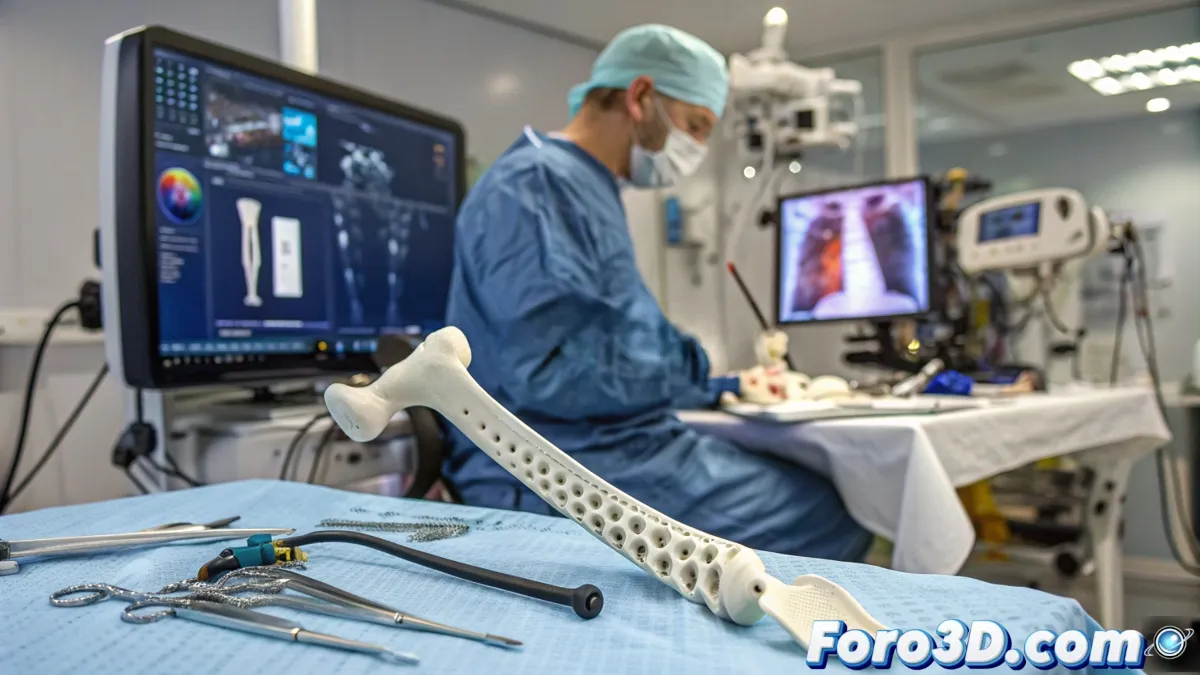
An orthopedic surgeon at UCLA has used 3D printing to optimize the results of a complex surgery on a patient with a clavicle injury. This innovative approach allowed the creation of a three-dimensional model of the patient's healthy clavicle, which served as a guide to repair the injured part. The approximate cost of this model was $1,000.
Personalized Medicine in Action
Jens Rosmus, a 54-year-old patient from Southern California, suffered a motorcycle accident that caused an injury to his left clavicle. After his bone did not heal properly, his mobility was severely limited. Thanks to 3D technology, surgeons were able to plan the operation with precision, fully restoring his shoulder mobility and allowing him to resume sports activities.
The Rise of 3D Printing in Medicine
The use of 3D-printed models to plan surgical interventions is gaining ground in the United States. According to the National Institute of Health, 95% of surgeons consider these tools very useful in their procedures. Additionally, more than 100 hospitals across the country have 3D printing centers, underscoring the growing use of this technology in medicine.
Practical Advantages for Patients
Dr. Andrew Jensen, who performed the surgery, highlighted several advantages of using 3D models in these interventions. Among the most important benefits are the reduction in anesthesia time, the decrease in medical complications, and the reduction in infection risk due to less exposure of the incision to air. This type of advancement not only improves the patient experience but also optimizes the use of hospital resources.
Positive Impact on the Patient's Quality of Life
Jens Rosmus commented that the surgery results were transformative. "I feel much more flexible and excited to get back to sports," he expressed. The restoration of his mobility allowed him to regain a significant quality of life, as well as the ability to enjoy activities he is passionate about. This case exemplifies how 3D printing technology can profoundly change modern medicine.
The Future of Personalized Surgery
This procedure is just one example of the potential of 3D printing in medicine. By creating customized models based on each patient's anatomy, this technology promises more precise and effective treatments. Over time, its use is expected to expand, benefiting more people worldwide.