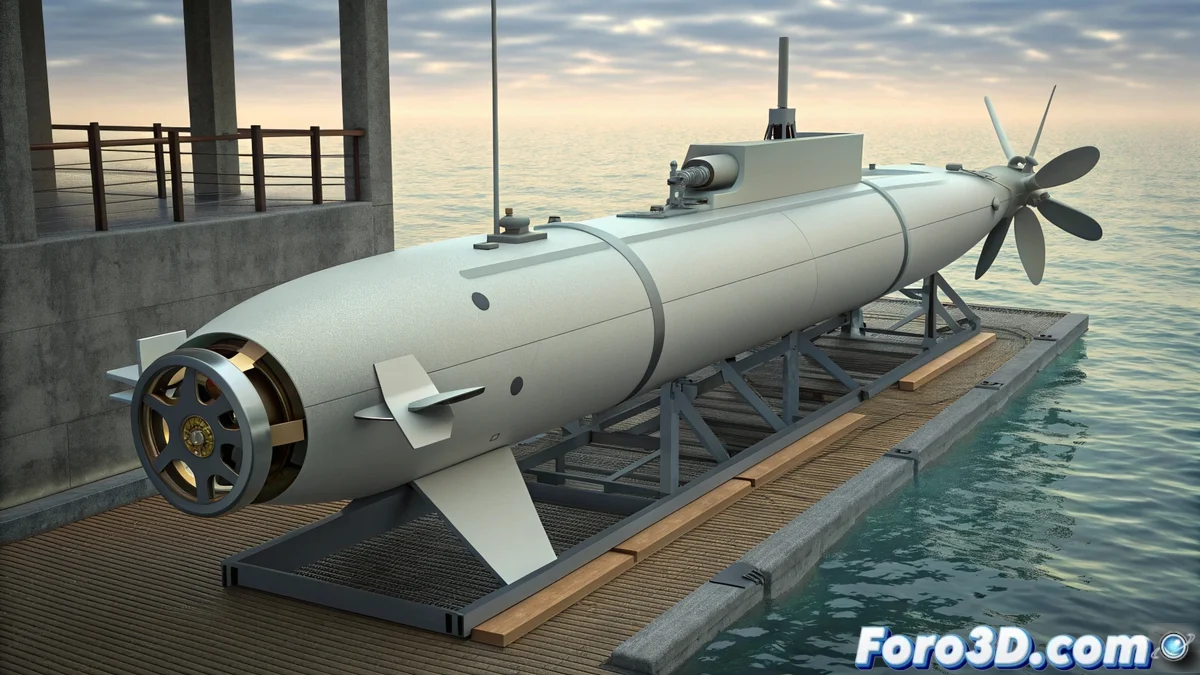
3D Printing Revolutionizes Autonomous Underwater Vehicles
Additive manufacturing is radically changing how drones for ocean exploration are conceived and built. Companies like OceanScan with their REMUS models implement this technology to produce critical parts that were previously unfeasible. 🚤
Custom-Made Marine Components
By using 3D printers, engineers directly manufacture sensor housings, propellers, and the chassis that holds the electronics. This method overcomes the limitations of traditional techniques, allowing much more elaborate and efficient internal and external shapes.
Key advantages of 3D printing in this field:- Create organic and complex geometries that minimize water resistance.
- Integrate multiple functions into a single piece, eliminating assemblies.
- Use specific materials that resist corrosion and marine pressure.
The next time an underwater drone finds a treasure, remember that its propeller probably came from a printer and not from a pirate forge.
Optimizing Performance in Water
Achieving smooth water flow around the vehicle is paramount. 3D-printed parts are designed digitally to achieve this laminar flow, reducing drag and saving battery energy. Additionally, lightening the total weight extends autonomy and increases the capacity to carry scientific instruments.
Examples of optimization:- Propellers with intricate airfoil profiles, printed as a single component for more efficient propulsion.
- Internal lattice structures that are lightweight yet maintain rigidity.
- Aerodynamic housings that protect sensors without altering overall hydrodynamics.
Accelerating the Innovation Cycle
One of the greatest advantages is the speed to iterate. If a mission requires a new sensor mount or a different hydrodynamic profile, designers adjust the CAD model and can have a functional prototype in hours. This allows vehicles to be quickly adapted for tasks like mapping the seabed or inspecting underwater pipelines and cables. Agile development is now a reality in ocean engineering. 🌊