The digital thermometer that industrial 3D printing needed
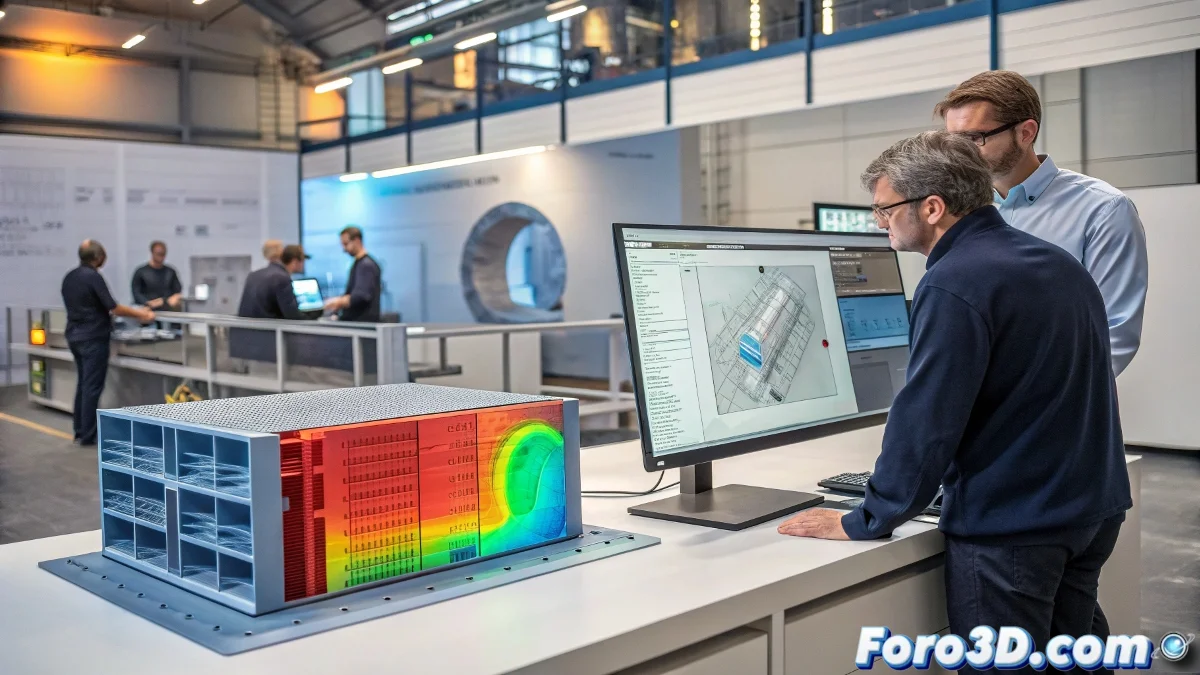
Aibuild is redefining the rules of the game in additive manufacturing with a system that anticipates thermal problems before they occur, like a meteorologist for industrial 3D printers 🌡️🖨️. Its integrated FEA simulation solution could mark the end of the trial-and-error era in large formats.
How the thermal magic works
The predictive workflow that changes everything:
- Automatic analysis of the 3D model
- Mesh generation for FEA simulation
- Intuitive visualization of thermal gradients
- Intelligent adjustment of key parameters
Benefits that melt obstacles
Competitive advantages of this approach:
- Reduction of up to 40% in wasted material
- Automatic optimization of printing speeds
- Prevention of deformations due to thermal stress
- Direct integration with industrial machines
"In LFAM, heat is both your best ally and your worst enemy. Finally, we can tame it with algorithms instead of sweat and infinite patience." - Industrial applications engineer
The technological ecosystem behind it
Tools that power the revolution:
- Specialized FEA engine for additive manufacturing
- AI for parameter recommendations
- High-performance cloud computing
- Unified design-to-print interface
What's coming: The hot future of 3D printing
Next steps in predictive simulation:
- Expansion to more materials and technologies
- Coupling with structural simulations
- Complete automation of thermal compensations
- Integration with digital twins
While the industry awaits the global launch, one thing is clear: thermal control will no longer be a matter of intuition or experience, but of precise algorithms that turn heat into data and data into perfect parts. 🔥➡️❄️ An evolution that promises to make industrial 3D printing a process as predictable as it is necessary for the manufacturing of the future.