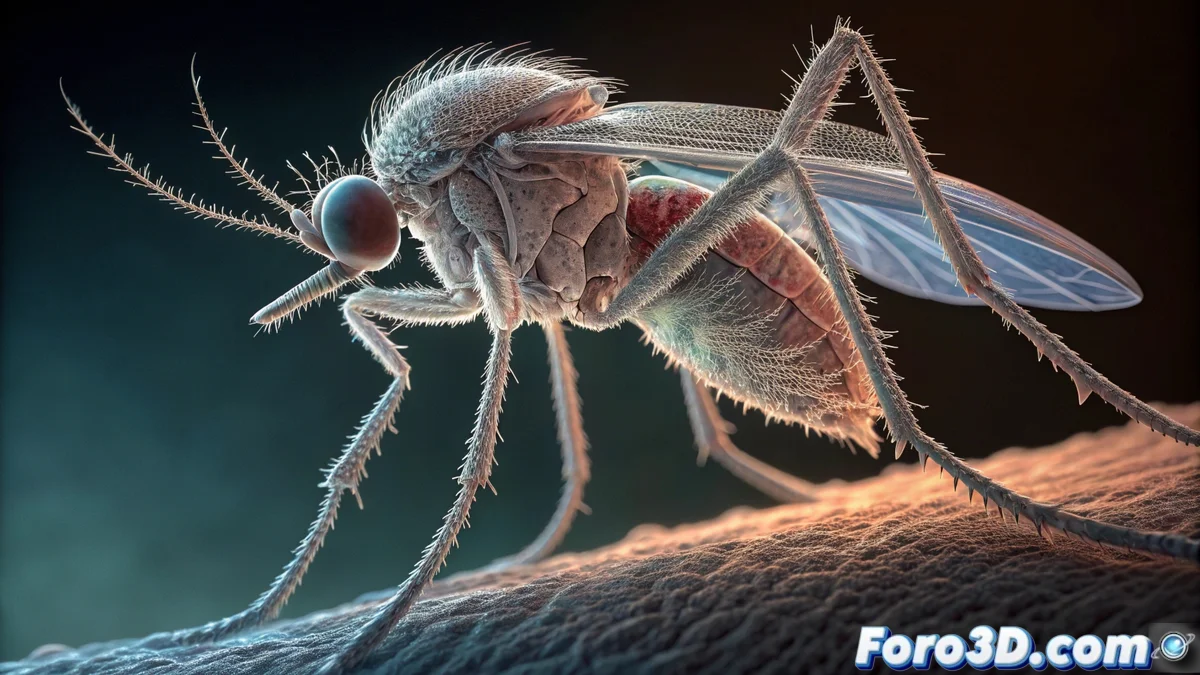
3D Printing Replicates the Complex Structure of the Mosquito Proboscis
A group of scientists has turned to additive manufacturing to create an artificial replica of the mosquito's sophisticated mouthparts. This biomimicry project seeks to unravel the secrets of a natural high-precision instrument. 🦟
A Multifunctional Organ Printed in 3D
The proboscis is not a simple needle, but an integrated system of microcomponents. 3D printing allows recreating its architecture at real scale, something that conventional manufacturing methods cannot achieve with such fidelity. This physical replica is key to analyzing its functioning.
Key Components of the Replicated Proboscis:- Injection Channel: To introduce saliva with substances that prevent blood from clotting.
- Suction Channel: Specifically designed to extract the fluid efficiently.
- Cutting and Support Structures: A combination of flexible and rigid parts that work together to pierce.
Recreating this complexity at real scale with traditional methods is extremely difficult, making 3D printing a valuable tool for this study.
Experimenting with a Physical Model
With the printed model, researchers can perform tests that would be unfeasible with a live mosquito. They can simulate how it penetrates materials that mimic biological tissues and precisely measure the forces involved.
Advantages of the Printed Model for Research:- Allows verifying how the different parts interact during the complete biting process.
- Facilitates determining the exact role of each component, from initiating the perforation to completing the extraction.
- Offers total control over the experiment conditions, eliminating unpredictable variables.
The Future of Biomimetic Research
This work not only helps understand a natural mechanism but also demonstrates the potential of 3D printing in scientific research. The next logical step could be to scale up the model to better appreciate its intricate design, reminding us of the amazing engineering behind such a common insect. The study continues to decipher completely how this organ achieves its goal so effectively.