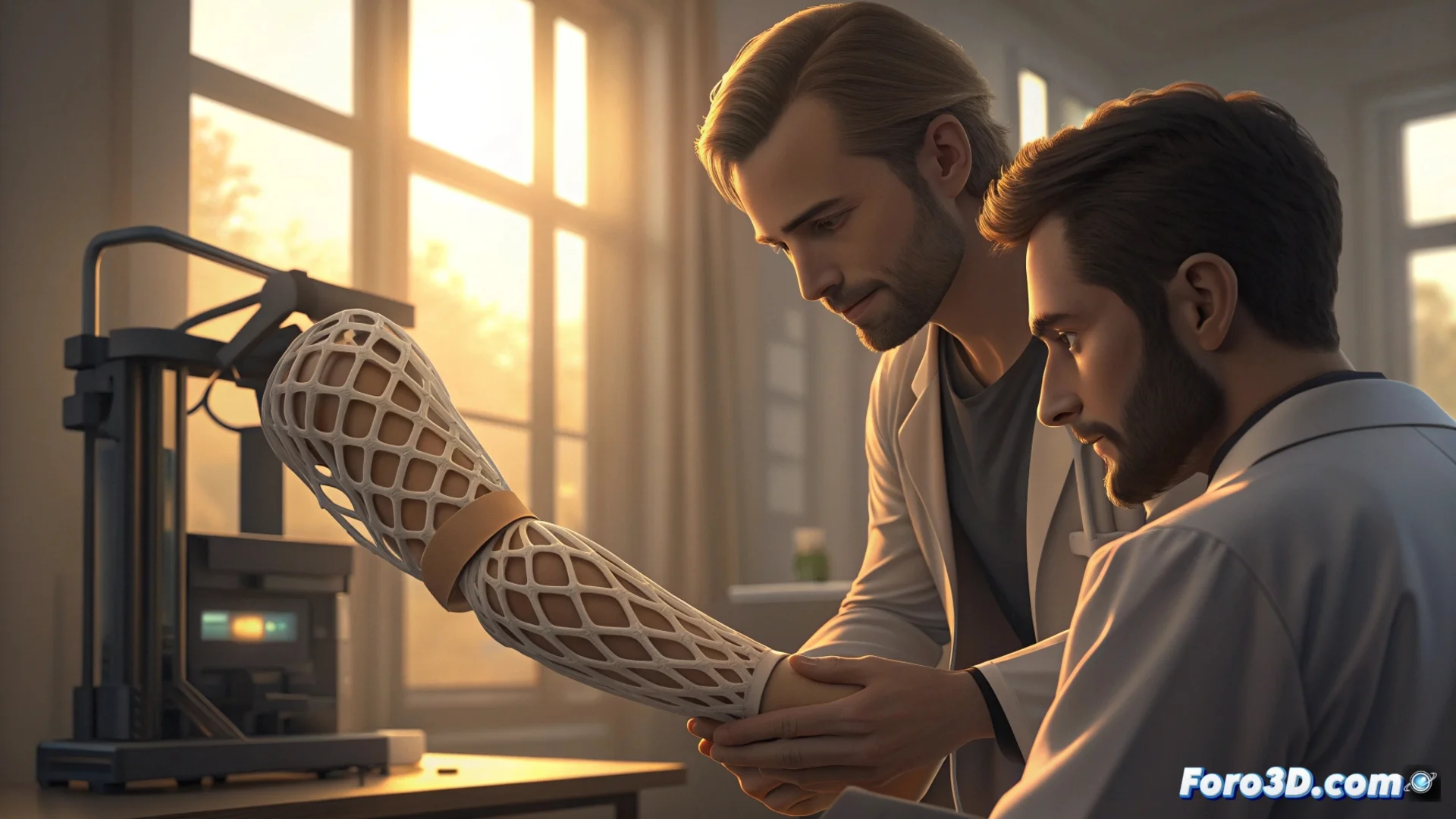
3D Printing Customizes Technical Aids in Physiotherapy for 2026
For the year 2026, it is expected that 3D printing technology will be fully integrated into physiotherapy clinics, transforming how technical aids are provided. Therapists, along with specialized technicians, manufacture on-demand orthoses, adapters, and ergonomic handles that fit precisely to each person's unique anatomy. This approach eliminates long waits and reduces costs, while facilitating modifications to the supports as the patient progresses. 🦾
A Workflow that Merges Scanning and Digital Manufacturing
The process begins by digitizing the patient's body area using a portable 3D scanner. This data is imported into design software, where the professional adjusts templates or generates a new model. Functionality, comfort, and lightness are prioritized. After validating the design, it is printed layer by layer using biocompatible filaments, selecting between flexible or rigid materials to meet therapeutic requirements.
Key Advantages of Customization:- Reduce Times: Devices are manufactured in hours or days, not weeks.
- Iterate Quickly: Designs adapt to changes in muscle tone or inflammation.
- Improve Fit: Anatomical precision minimizes pressure points and discomfort.
The ability to produce a custom support in a matter of hours represents a paradigm shift in rehabilitation, offering dynamic support that grows with the user.
Direct Impact on Treatment Adherence and Outcomes
When a device fits perfectly, the user perceives it as more comfortable and is more likely to use it consistently. This adherence is essential to achieving therapy goals. Additionally, this technology democratizes access to custom aids that were previously economically unattainable for many.
Tangible Benefits for the Patient:- Increase Comfort and safety, reducing risks of injuries from poor fit.
- Enable Dynamic Adjustments that respond to the evolution of the physical condition.
- Facilitate Access to high-precision personalized solutions.
The Convergence of Disciplines: From the Clinic to the Digital Workshop
This advancement brings two worlds closer. Now, physiotherapists not only assess mobility but also discuss technical parameters such as the ideal filament temperature or printing settings. This fusion of clinical and technical knowledge is the foundation for creating the prostheses and orthoses of the future, more effective and accessible. 🔧