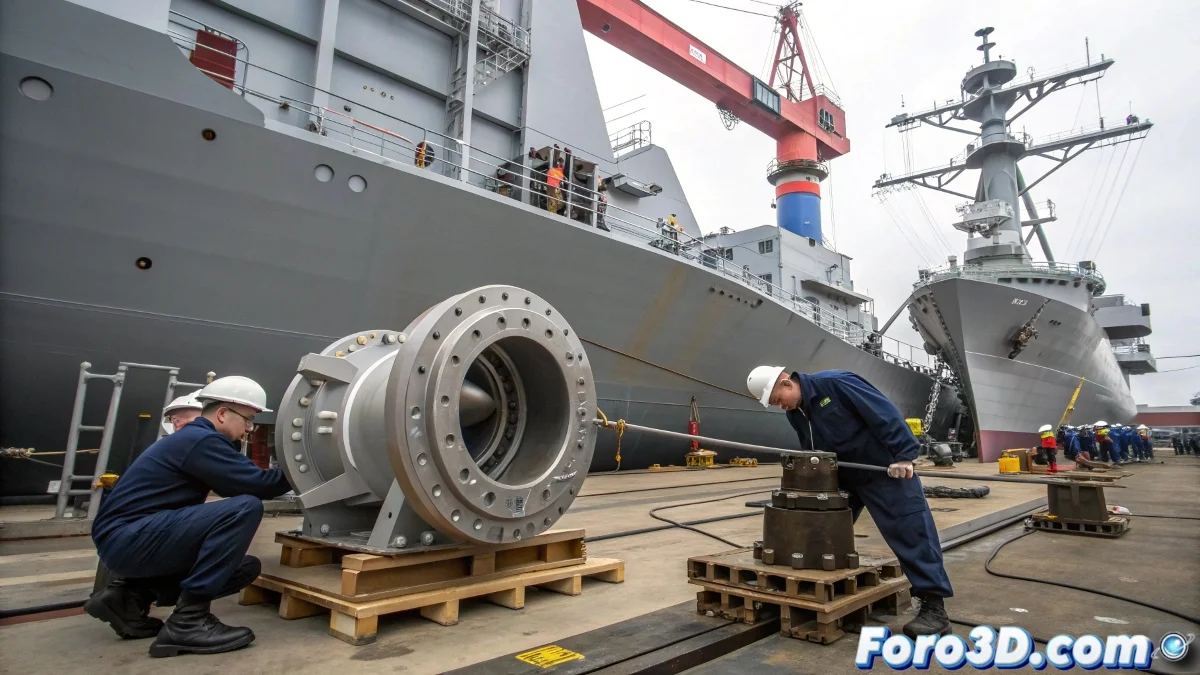
When 3D Printing Sails into Naval Maintenance
The navy has just demonstrated the formidable potential of 3D printing in the field of naval maintenance with a significant achievement: the successful replacement of a critical pump component on a destroyer using additive manufacturing. ⚓ The part, essential for the ship's hydraulic operation, was fabricated with millimeter precision using certified metallic materials for maritime use, marking a milestone in the application of advanced technologies for the operational sustainability of naval fleets.
This technological advance represents much more than a simple repair: it is a practical demonstration of how additive manufacturing can revolutionize traditional naval maintenance protocols. 🛠️ The ability to produce critical components on demand, directly in ports or shipyards, drastically reduces dependence on international supply chains and delivery times that traditionally measured in weeks or even months.
A paradigm shift that moves manufacturing from distant factories to the point of operational need.
Operational Advantages that Make Any Budget Float
The numbers speak for themselves: replacement via 3D printing allowed reducing production costs by more than 70% compared to traditional machining methods. 💰 Delivery time was compressed from weeks to just days, radically accelerating repairs and minimizing downtime for naval units. This efficiency translates not only into direct economic savings but also into greater operational availability of the fleet and a significant reduction in the logistical impact associated with transporting parts from external manufacturers.
The most notable benefits of this approach include:
- Drastic reduction in manufacturing and delivery times
- Substantial economic savings in component production
- Reduced logistical dependence on external suppliers
- Ability to manufacture customized parts on demand
Certified Quality and the Future of Naval Manufacturing
Far from being an improvised solution, the printed component underwent rigorous quality controls and functional tests before installation, ensuring its resistance and durability in demanding maritime environments. 🔍 3D printing technology allows reproducing complex geometries that optimize hydraulic system performance, surpassing in some cases the capabilities of traditional manufacturing methods. The success of this intervention opens the door to expanding additive manufacturing to other critical components of combat ships, helping to keep the fleet operational more quickly and efficiently.
At this rate of innovation, destroyers could repair their critical systems faster than sailors find their morning coffee. ☕ A modern irony that demonstrates how technology not only improves operational efficiency but also sets new standards for what is possible in 21st-century naval maintenance.