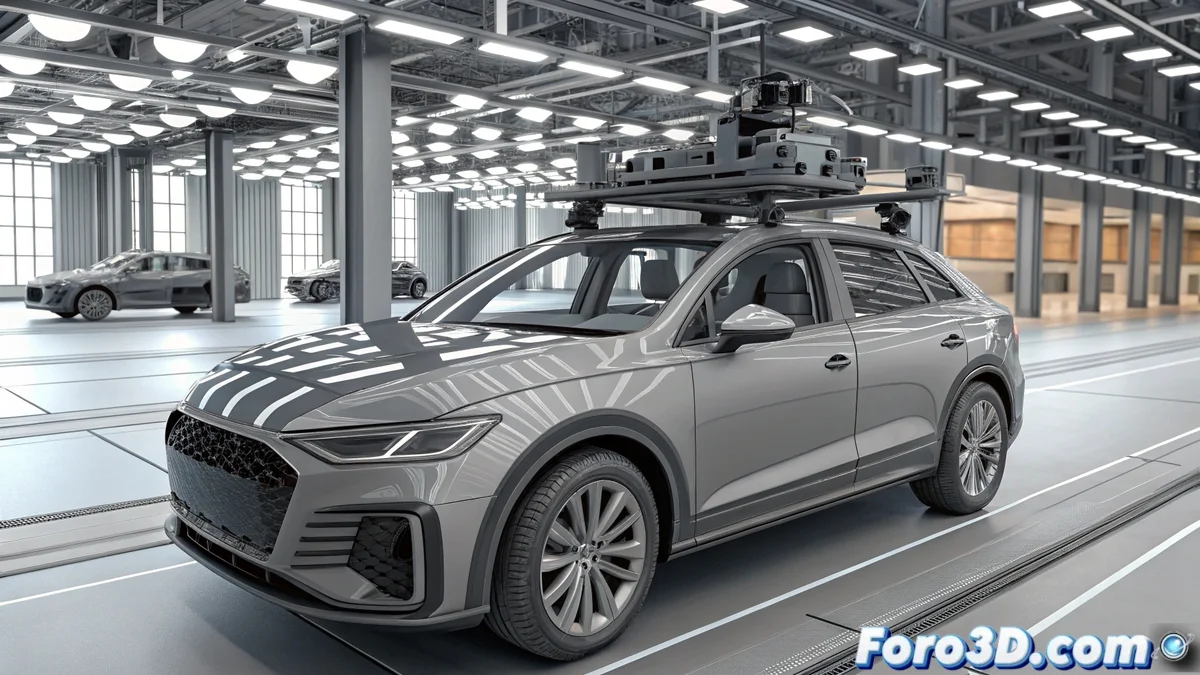
3D Printing Manufactures Housings for Autonomous Car Sensors
For an autonomous vehicle to perceive its surroundings, it needs a multitude of electronic eyes: LIDAR, cameras, and radars. Mounting these sensors with the precision they require is an engineering challenge. 3D printing with polymeric materials emerges as the key solution for manufacturing the supports and housings that make it possible, integrating them securely and discreetly into the bodywork. 🚗
Millimeter Precision for Perfect Perception
Leading companies like Mobileye and Waymo use additive manufacturing to produce sensory integration components. The technology allows creating customized geometries that ensure the exact positioning of each device, something critical for its operation. These parts not only secure but also protect the sensors from vibrations, impacts, and adverse weather conditions.
Key Advantages of 3D Printed Polymers:- Dimensional Stability: Advanced materials maintain their shape and tolerances under thermal and mechanical stress.
- Geometric Freedom: Complex shapes can be designed that would be prohibitive with molds or traditional machining.
- Rapid Iteration: The cycle of developing and testing new mounting designs for perception systems is accelerated.
The 3D printed sensor housing ensures it has the best view, without a pothole misaligning its electronic gaze.
Customize for Each Vehicle and Each Sensor
Each autonomous vehicle architecture is unique. 3D printing meets this need by manufacturing housings that adapt to the specific curvature of the roof, pillars, or bumper. This serves a dual purpose: technical and aesthetic. The components are disguised so that the vehicle retains a conventional and aerodynamic appearance.
Predominant Processes and Materials:- SLS (Selective Laser Sintering): Ideal for durable parts with good mechanical properties, without the need for supports.
- FDM/FFF with Special Filaments: Uses materials like ABS, Nylon, or fiber-reinforced composites to withstand the elements.
- On-Demand Manufacturing: Reduces inventories and allows designs to be updated without long delays, crucial in a fast-evolving sector.
The Future of Sensory Integration
While autonomous driving software processes data to make decisions, its physical hardware must be anchored with absolute precision. 3D printing is consolidating as the ideal method for manufacturing these critical anchors. By ensuring the constant alignment and protection of the sensors, this technology not only builds housings but lays the physical foundation for reliable and safe autonomous driving. 🔧