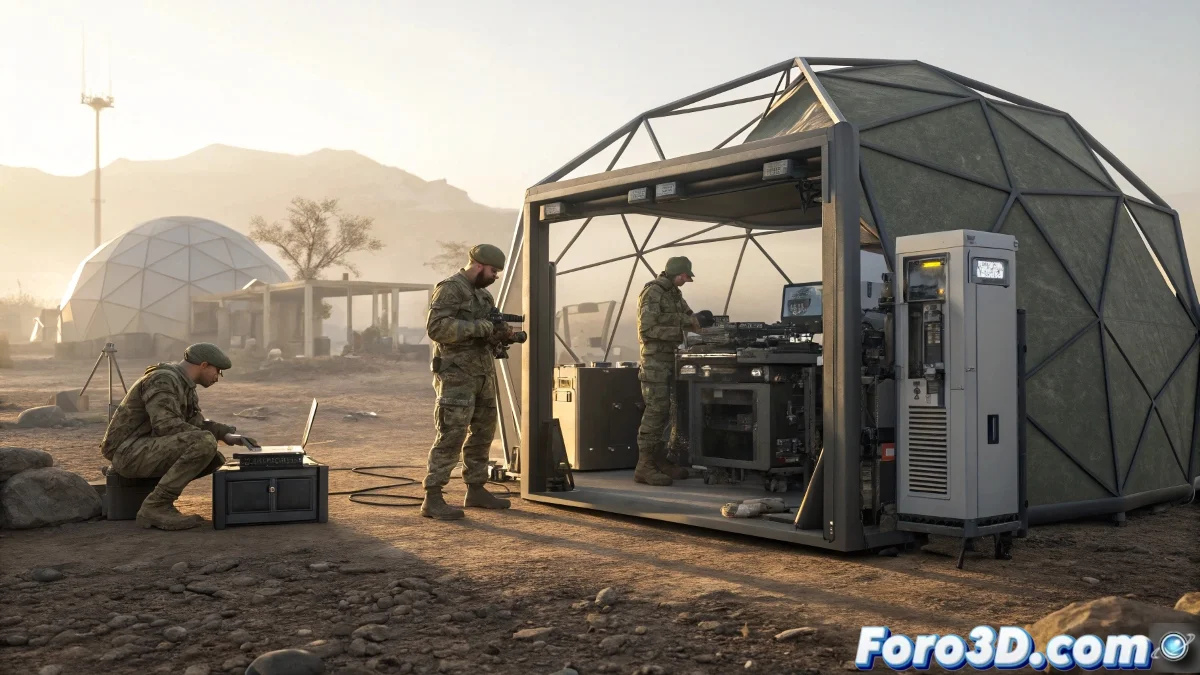
Military Logistics Revolution: How 3D Printing is Transforming the Battlefield
The battlefield landscape is undergoing a radical transformation thanks to additive manufacturing. The US Army has begun to deploy 3D printers in units close to the front lines, enabling on-demand production of drones, spare parts, and critical components. 🚁⚔️
"What previously required months of waiting in the supply chain is now resolved in hours directly in the operational zone"
3D Printing as a Strategic Weapon
This logistical innovation represents a paradigm shift:
- Reduction of vulnerabilities in supply chains
- Ability for immediate adaptation to changing needs
- Possibility to customize equipment for specific missions
The latest advances include:
- Printing complete drones in less than 24 hours
- Manufacturing repair parts for armored vehicles
- Development of prototypes for specialized equipment
3D Design that Saves Lives
For 3D modelers, this military application means:
- Functional geometries over aesthetics
- Focus on strength and efficiency
- Optimization for specific materials
While in the civilian world we perfect photorealistic renders, military engineers work with:
- Structural stress simulations
- Failure point analysis
- Design for manufacturing in extreme conditions
The Immediate Future: Field-Printed Electronics
Upcoming developments include:
- Electronic circuits printed directly
- Communication systems manufactured on-site
- Smart components with integrated sensors
So the next time you complain that your 3D printer isn't calibrating well, think about those military technicians trying to print a drone rotor while bullets whistle around them. That's real pressure for a good first layer. 💥🖨️
Long-Term Strategic Implications
This technology is redefining traditional warfare concepts:
- Operational self-sufficiency in remote areas
- Reduction of logistical costs
- Tactical advantage through rapid adaptation
What began as rapid prototyping in the rear guard has become a strategic pillar of modern warfare. And although we hope you'll never have to apply this knowledge, it demonstrates how far 3D design can go when the stakes are highest.