A New 3D Printing Method Inspired by Nature
Researchers from the Beckman Institute for Advanced Science and Technology have developed a revolutionary 3D printing method called growth printing. This technique, detailed in the journal Advanced Materials, allows creating polymer parts at a speed of 1 millimeter per second, without the need for molds or expensive equipment associated with traditional manufacturing methods. Inspired by the natural growth of plants like bamboo, this process opens new possibilities in the world of manufacturing.
A Fast and Efficient Process
The method, known as Frontal Ring-Opening Polymerization (FROMP), consists of heating a liquid resin (dicyclopentadiene) to 70°C at a central point, which triggers a chemical reaction that expands outward and solidifies the material. This self-sustaining process is approximately 100 times faster than desktop 3D printers and consumes a minimal amount of energy, making it highly efficient.
Shaping the Material Like Blown Glass
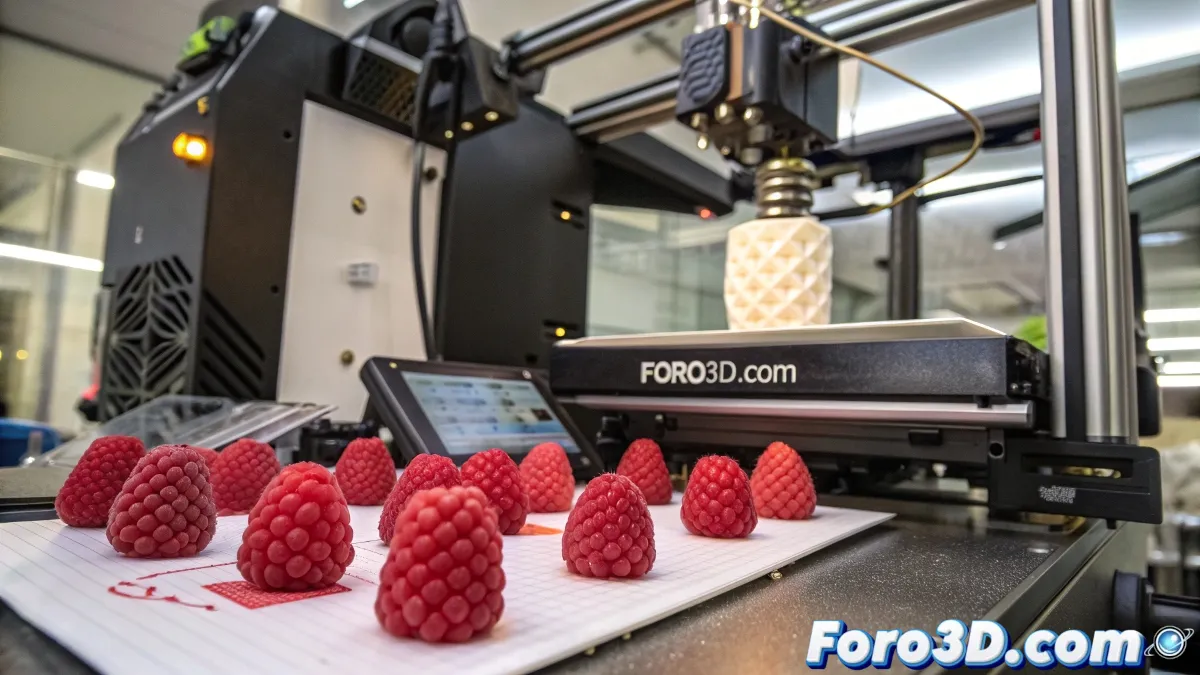
One of the most fascinating features of this technique is the ability to manipulate the material while it solidifies. Researchers can lift, dip, or rotate the emerging piece to create various shapes, similar to how blown glass is worked. This has enabled the creation of symmetrical objects like pineapples, raspberries, and pumpkins, demonstrating the method's versatility.
"Growth printing is not only faster, but also offers a unique way to create complex objects efficiently."
Promising Applications in Industry
Professor Sameh Tawfick, project leader at the University of Illinois Urbana-Champaign, sees great potential for this technology in manufacturing large polymer-based products, such as wind turbine blades. Funded by the U.S. Department of Energy, the project aims to offer a more economical and practical alternative to traditional methods like injection molding, especially for large-sized parts.
Limitations and Future Challenges
Although the technique is innovative, it is not without limitations. Currently, it works best with axisymmetric shapes and faces challenges when trying to create more complex geometries, such as perfect cubes or intricate curves. However, researchers are confident that, over time, these barriers can be overcome and the applications of this technology expanded.
- Speed: 100 times faster than conventional 3D printers.
- Efficiency: Minimal energy consumption and no need for molds.
- Versatility: Ability to manipulate the material during solidification.
In summary, this advancement not only represents a faster and more efficient alternative to traditional methods, but also inspires new ways of thinking about object manufacturing. By imitating natural processes and combining chemistry with engineering, growth printing could revolutionize entire industries, offering more sustainable and scalable solutions for polymer part production.