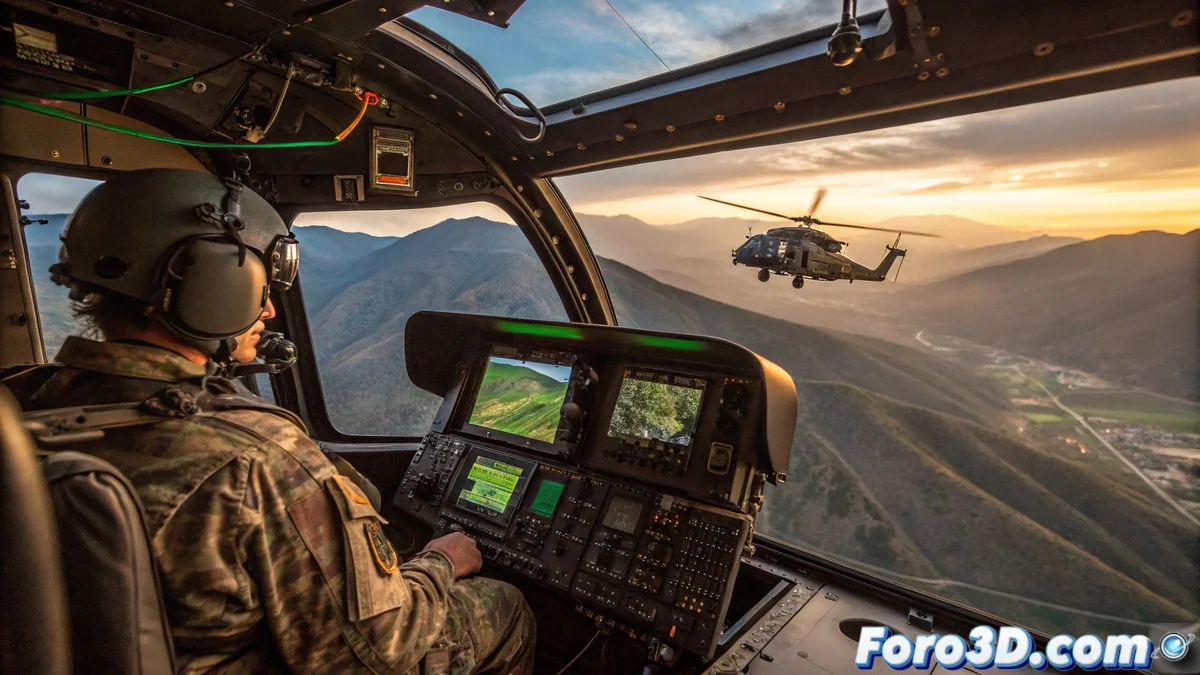
The Flying Factory That Changes the Rules of Military Engagement
US troops have taken additive manufacturing to literal heights by implementing operational 3D printing inside Black Hawk helicopters during active missions. This innovation allows producing parts for drones while in flight, eliminating the need to land or rely on traditional supply chains. A logistical breakthrough that completely transforms the concept of maintenance and repair in operational environments.
Technology That Defies Gravity and Vibrations
The real technical challenge was not just printing in motion, but maintaining dimensional precision under extreme conditions of vibration and acceleration. The specialized printers incorporate active compensation systems that read the helicopter's movements and adjust the extruder and platform position in real time. The result is parts that meet strict military standards despite the hostile environment.
Key Components of the System
- Compact printers with vibration isolation
- Motion sensors for active compensation
- Modeling software like SolidWorks and Fusion 360
- Real-time quality control
Revolution in Field Logistics
This capability represents a paradigm shift in how maintenance of critical equipment is approached during operations. Where a damaged drone previously meant a mission aborted or postponed, now teams can manufacture specific spare parts during transit. The logistical independence achieved drastically reduces downtime and increases the operational autonomy of deployed units.
Immediate Operational Advantages
- Immediate repairs without returning to base
- Customization of parts for specific missions
- Reduction of spare parts inventory
- Greater resilience in prolonged operations
A demonstration of how digital manufacturing can transcend controlled environments to become a critical tool in the most challenging conditions imaginable.
For engineers and additive manufacturing specialists, this development represents the culmination of years of advances in portability and robustness of 3D printing systems. The ability to produce functional components in motion opens possibilities that go far beyond the military realm to emergency and exploration applications 🚁.
And while soldiers print critical parts hundreds of meters in the air, the drones are probably filming them for the making of... because in the digital era, even military missions have behind-the-scenes, even if they're flying ones 😅.