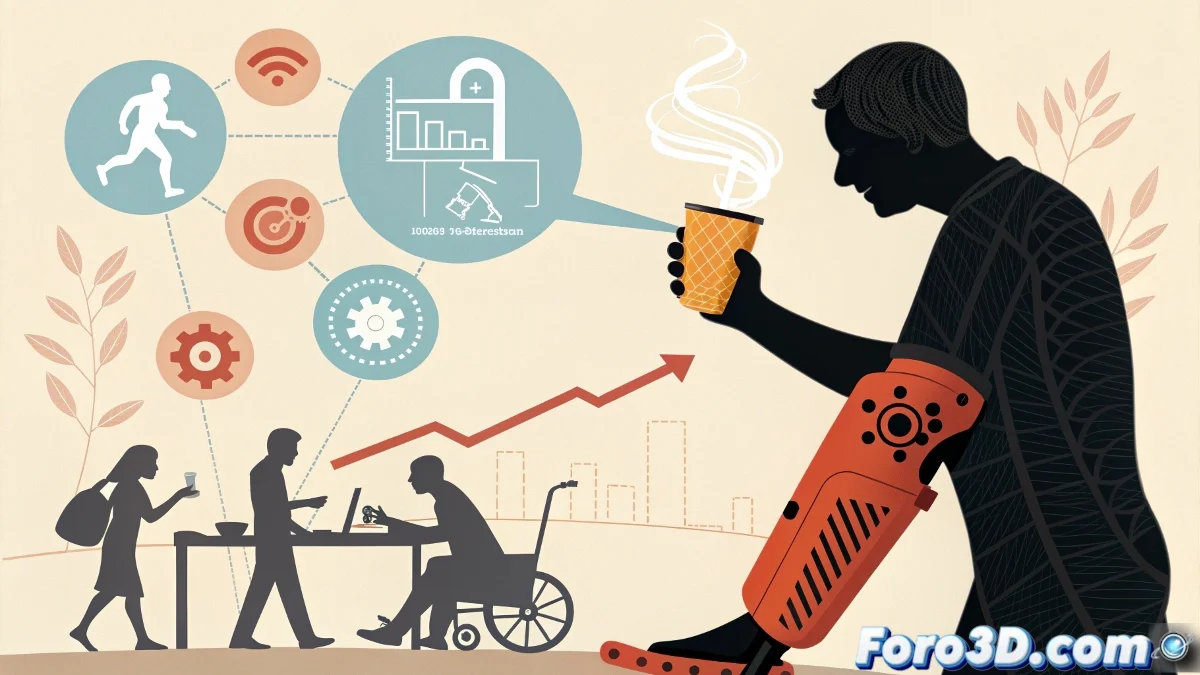
When Technology Meets Human Need
3D printing is proving to be much more than a rapid prototyping tool or technological entertainment, positioning itself as a transformative solution for people with disabilities. Through customized designs and accessible manufacturing, this technology is closing accessibility gaps that seemed insurmountable for decades. A bridge between technological innovation and human need that is changing real lives.
Democratization of Technical Aids
What previously required costly customized manufacturing processes and multiple specialist visits can now be resolved with home 3D printers and open-source designs. The ability to create prostheses, adapters, and mobility aids that perfectly fit each user's individual needs represents a radical change in how we approach disability. Customization is no longer a luxury, but a standard feature.
Applications that Transform Daily Life
- Upper and lower limb prostheses
- Adapters for cutlery, pencils, and tools
- Customized components for wheelchairs
- Adapted equipment for sports and recreation
The Collaborative Design Ecosystem
Platforms like Thingiverse, MyMiniFactory, and specialized communities have created a vibrant ecosystem where designers, engineers, and users share continuous improvements. This open-source philosophy accelerates innovation and ensures that designs evolve based on real feedback from the people who use them daily.
Software in Service of Accessibility
- Fusion 360 for complex parametric designs
- Tinkercad for quick and accessible approximations
- Blender for organic modeling and adaptations
- 3D scanning software for perfect adjustments
A demonstration of how technology, when oriented with human purpose, can create solutions that transcend the technical to touch the deeply personal.
For the maker and 3D designer community, these projects represent the opportunity to apply technical skills to create direct and measurable social impact. The satisfaction of seeing one's own design tangibly improving someone's quality of life is a powerful reminder of the transformative potential of this technology ♿.
And that's how we end up with printers that can create functional biomechanical hands for a fraction of the traditional cost, while we still struggle with the first layer adhering correctly to the print bed... because technology advances in leaps and bounds, but the small technical details always persist 😅.