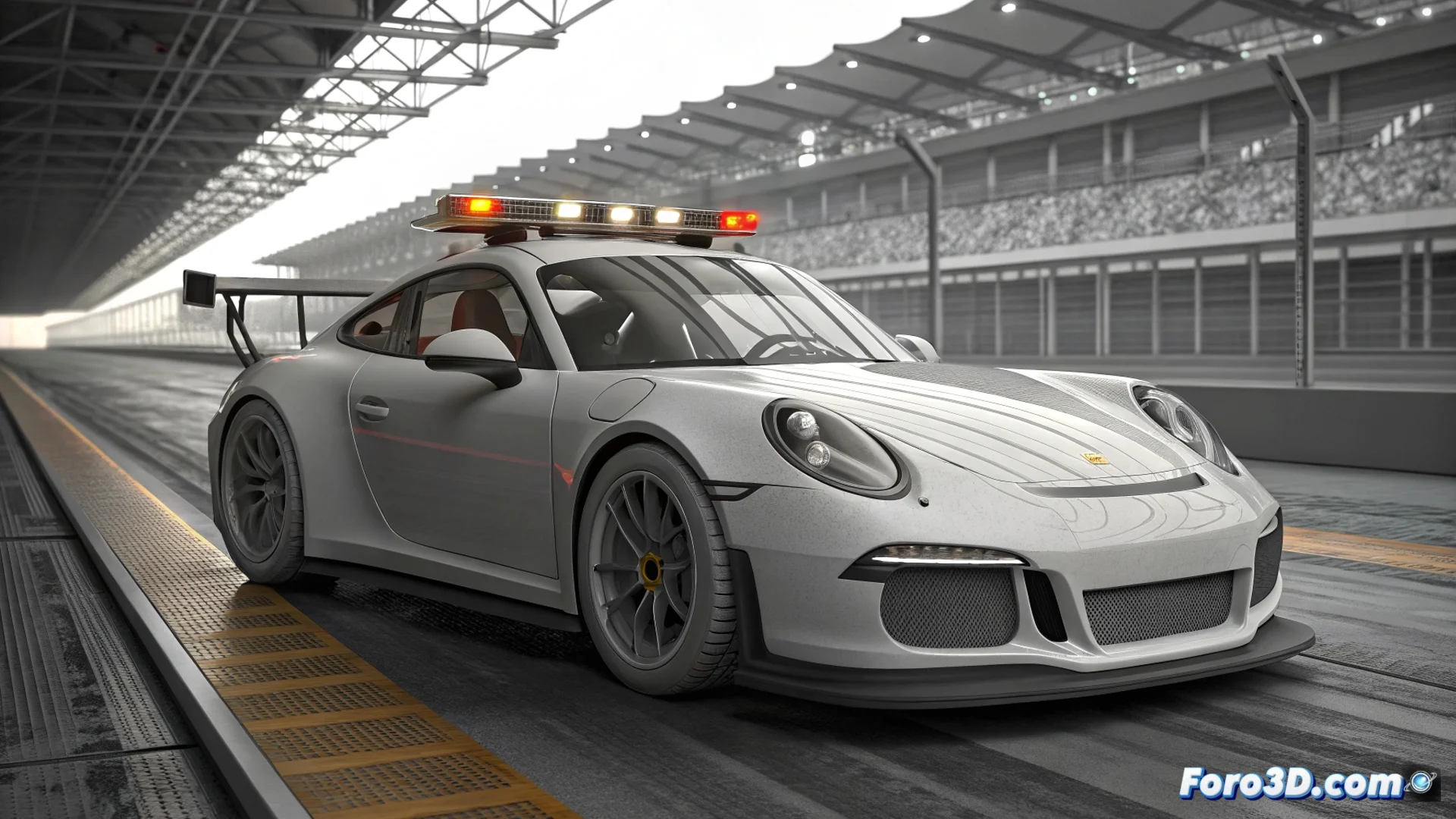
3D Printing Customizes the Porsche Supercup Safety Car
In the demanding world of the Porsche Mobil 1 Supercup, additive manufacturing technology has become a key ally. The safety vehicles, based on the Porsche 911 GT3 Cup, now mount their special equipment using supports created with 3D printing, a solution that respects the racing car's essence to the maximum 🏁.
Integrating Equipment Without Compromising Performance
The main challenge was to install emergency lights, cameras, and communication systems without altering aerodynamics or adding superfluous weight. The 3D printed supports, designed to measure, solve this by fitting perfectly to the vehicle's existing structure. This method ensures secure fixation and reduces track vibrations, all while complying with the competition's strict regulations.
Key Advantages of Using 3D Printing:- Complex and Adaptive Design: Geometries are created that make the most of every available space inside the cockpit and on the bodywork.
- Agile Prototyping: Accelerates the development cycle, from idea to the final piece ready for use.
- Lightweight and Resistant Parts: Additive manufacturing allows optimizing the structure to achieve maximum robustness with minimum weight.
In an environment where every millisecond counts, a desktop 3D printer has become as crucial as a racing tire.
Optimizing Functionality with Custom Designs
The total customization offered by 3D printing is its greatest strength. The technical team can design and produce components that fit optimally, something difficult to achieve with traditional methods. This not only improves aesthetic integration but also ensures that the additional equipment does not penalize the safety car's agility or speed.
How the Porsche 911 GT3 Cup's Performance is Maintained:- Unaltered Airflow: The printed supports have a minimalist design that does not interfere with the vehicle's original aerodynamics.
- Controlled Weight: Being parts created only with the necessary material, unwanted mass addition is avoided.
- Clean and Secure Mounting: Each component is firmly fixed, eliminating risks during high-speed travel.
An Indispensable Tool in the Paddock
This case demonstrates how 3D printing transcends rapid prototyping to become a final production method in top-tier competition. It allows quick response to specific needs, extreme customization, and above all, preserving the pure performance of a racing machine. Additive manufacturing is no longer just a complement; it is a fundamental piece of the toolbox in motorsport's elite 🔧.