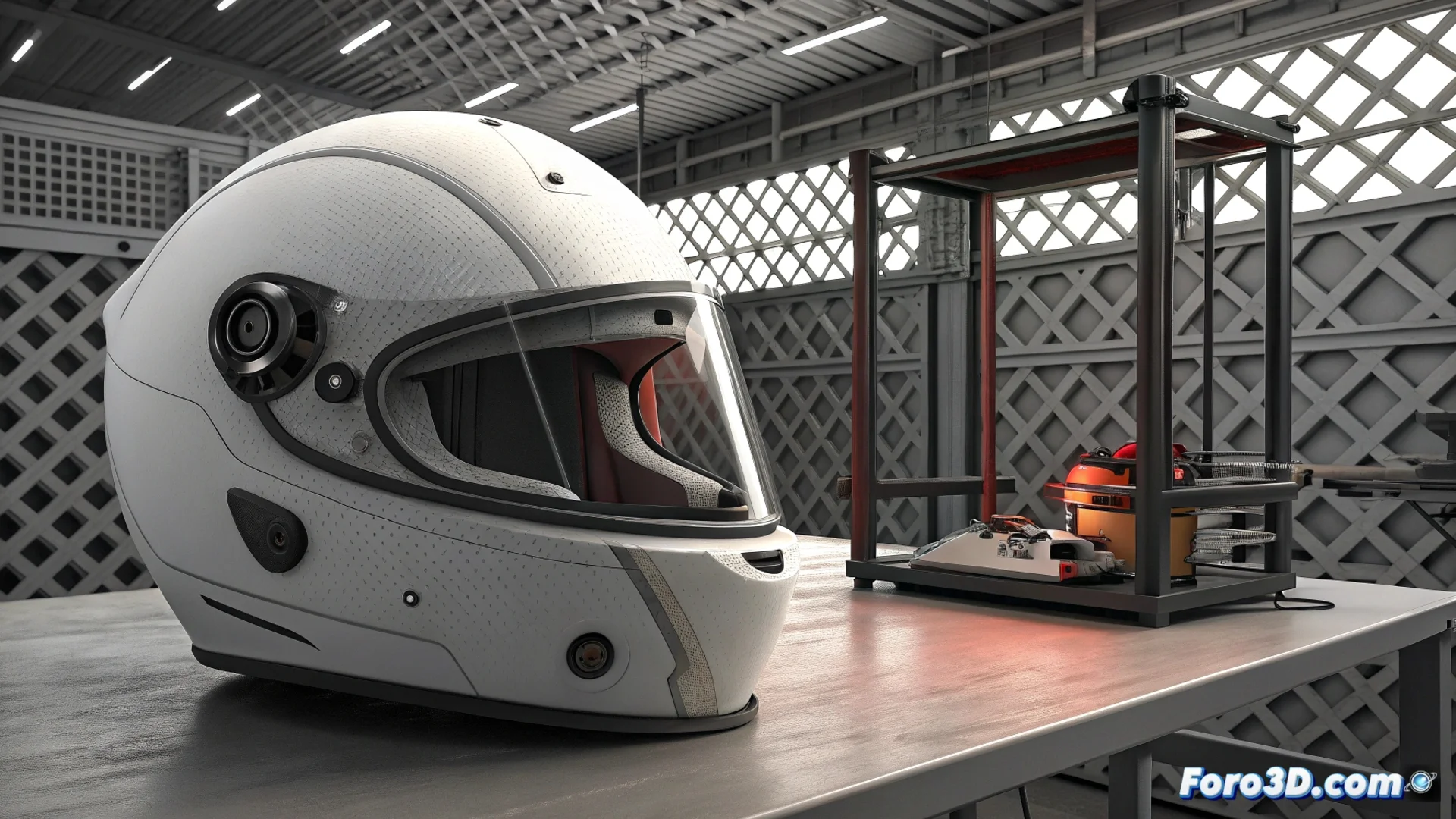
3D Printing Customizes Formula 1 Helmets
Additive manufacturing is decisively integrated into the process of making helmets for the top tier of motorsport. This innovative method replaces manual techniques that were less precise and slower, allowing the creation of unique protective gear for each driver. 🏁
From 3D Scanner to Perfect Mold
The first step is to digitalize the driver's anatomy. Their head is scanned in three dimensions to generate an exact digital model. This file is used to 3D print a mold that fits perfectly to the user's shape. Official suppliers like Bell Racing use this technique to ensure that every helmet offers maximum protection and comfort from the very first moment.
Key advantages of the process:- Millimetric precision: The anatomical fit is superior to traditional methods.
- Speed in development: The cycle from design to final product is accelerated.
- Total customization: Each unit is manufactured for a specific driver.
3D printing allows for quickly testing different designs and adjusting them before producing the definitive version.
Functional Components Made with Additive Manufacturing
Beyond the molds, 3D technology directly manufactures parts that are integrated into the helmet. Internal components are produced to manage airflow and prevent the visor from fogging. External elements, such as small deflectors or spoilers, are also created to optimize aerodynamics.
Parts manufactured with 3D printing:- Internal ventilation systems: They control air and improve the driver's comfort.
- External spoilers and deflectors: They reduce drag and improve stability at high speeds.
- Test prototypes: For agile evaluation of new designs.
Materials That Pass the Most Demanding Tests
All materials used must comply with the FIA's strict regulations. High-precision resins are used for the molds. Final components, such as grilles, are printed with polymers that withstand impacts and high temperatures. These compounds undergo flammability and deformation tests to ensure safety on the track. The ability to iterate designs quickly with this technology is a key advantage for developing safer and more efficient helmets, although the adrenaline in the first corner will always test any gear. 🚗💨