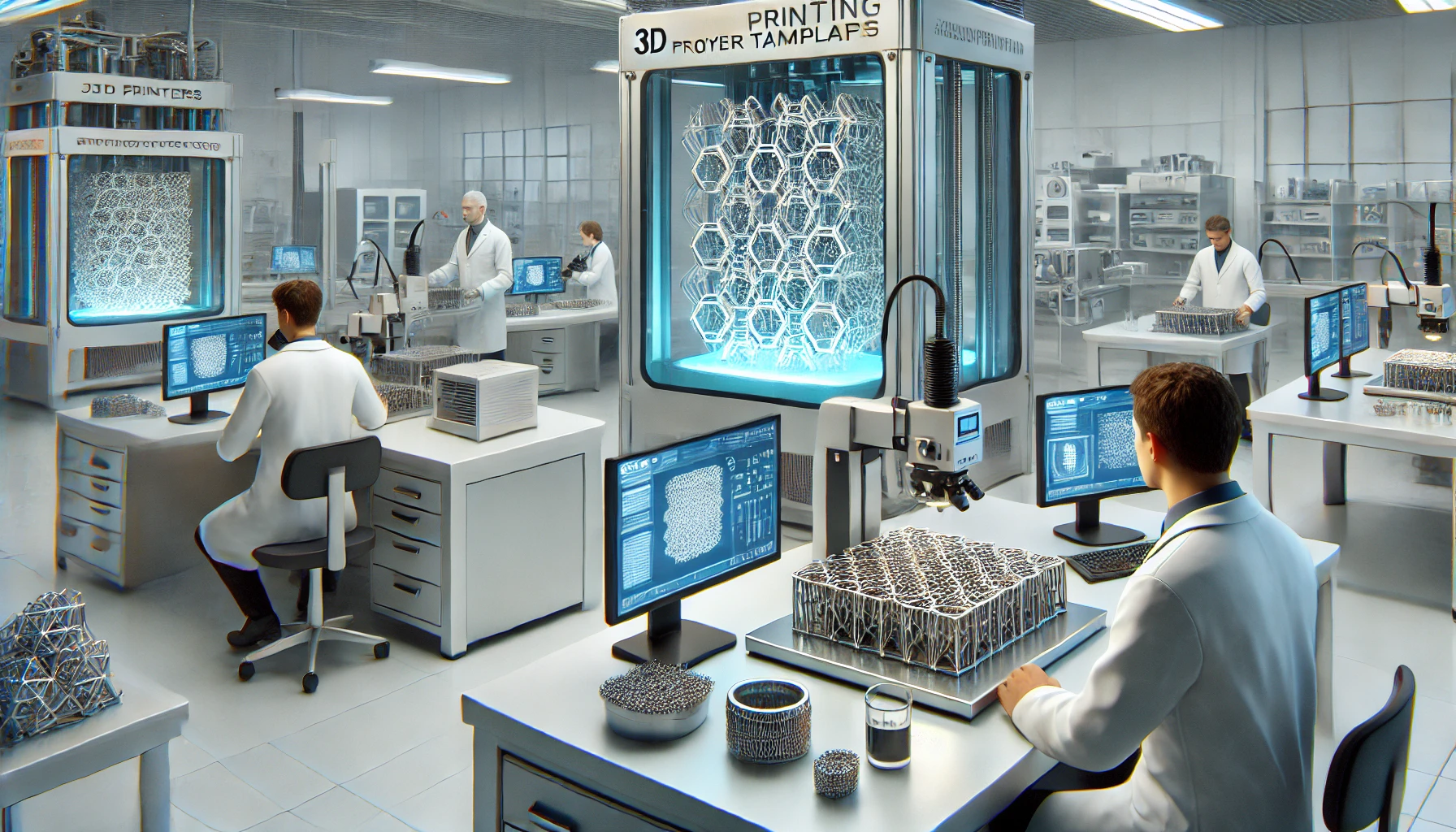
The combination of 3D printing and electroforming has given rise to a new manufacturing method that enables the creation of complex metal structures with a high level of precision. This hybrid process uses fused filament fabrication (FFF) to generate polymeric masks that guide metal deposition through an electrochemical process, ensuring exact control over the geometry of the final component.
High Resolution with 3D Printing and Conductive Substrates
To achieve a high level of detail in the polymeric masks, a Prusa i3 Mk3S printer equipped with a 0.25 mm nozzle was used. These masks were printed on 4-inch silicon wafers coated with titanium and titanium oxide, materials that acted as conductive substrates in the subsequent electroforming process.
“The synergy between 3D printing and electroforming enables the manufacture of metal parts with unprecedented precision.”
Optimized Materials for Adhesion and Dissolution
After various tests, it was determined that acrylonitrile styrene acrylate (ASA) was one of the most suitable materials for the process. This polymer exhibited:
- High adhesion with a strength of 4.3 MPa.
- Easy dissolution in solvents after electroforming.
- Ability to create nickel structures with heights between 500 micrometers and 2 millimeters.
The process was carried out in a nickel sulfamate electrolyte bath at a constant temperature of 52°C, allowing controlled growth of the metal structure.
Applications in Plasma Generation
To demonstrate the applications of this technique, "L-shaped electrodes" with optimized tip designs were manufactured for use in streamer discharge plasma generators. These electrodes were tested with voltages between 0 and 6 kV to evaluate their efficiency in plasma generation.
Advantages and Challenges of Hybrid Manufacturing
This manufacturing approach offers multiple advantages over traditional methods, especially in the production of complex shapes that would be difficult to achieve with conventional machining techniques. Among its benefits are:
- Cost reduction in the production of detailed metal structures.
- Greater flexibility in the design and customization of components.
- Less material waste compared to subtractive techniques.
However, researchers noted that uneven metal distribution during the electroforming process remains a challenge, requiring precise control of operating parameters to ensure uniform deposition.
A Promising Future in Metal Manufacturing
The combination of 3D printing and electroforming opens new possibilities in advanced metal manufacturing, with applications in sectors such as aeronautics, electronics, and medicine. With future optimizations in process control, this hybrid technology has the potential to revolutionize the manufacture of high-precision metal components.