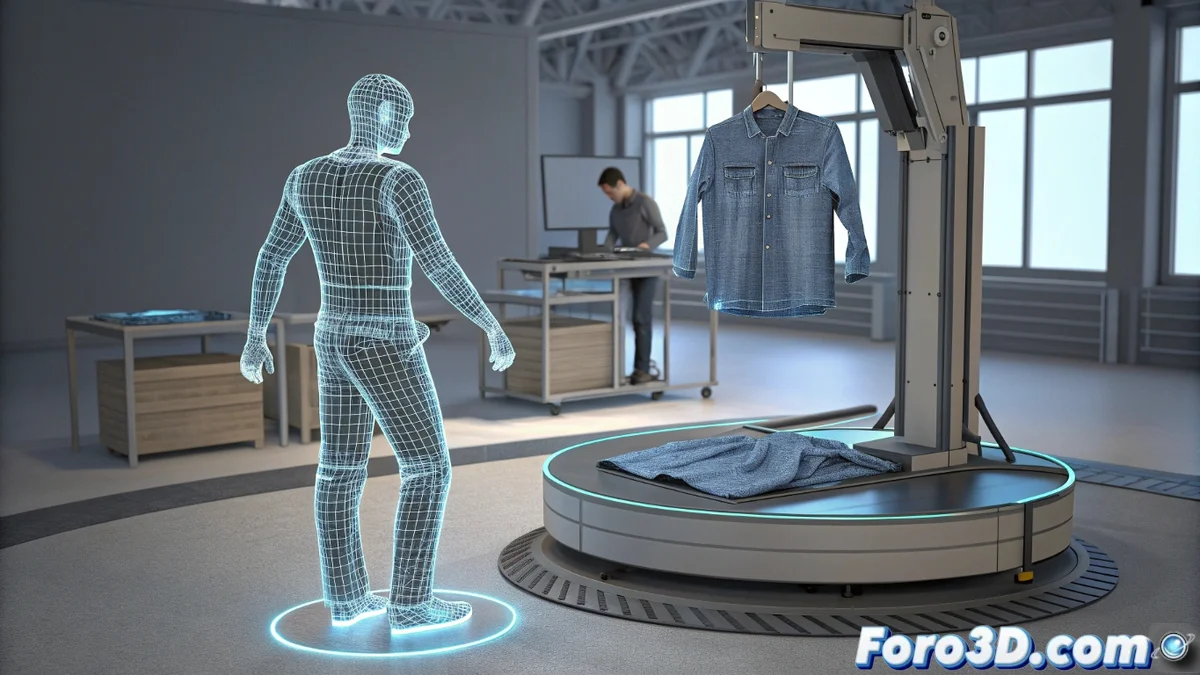
3D Printing and Body Scanning Reinvent Clothing Manufacturing
The way to produce clothing is changing radically by integrating digitization technologies and additive manufacturing. Scanning the body in 3D and printing garments allows creating items that fit exactly to the individual anatomy, leaving behind the generic sizing system. 🚀
A Unified Digital Workflow
This method fuses three key stages into a single continuous process. First, a 3D scanner captures the person's dimensions and posture. Then, a computer program processes that data to design a unique digital pattern. Finally, a laser cutter or a 3D printer with a textile head manufactures the pieces, which are sewn to obtain the finished garment.
Key advantages over traditional manufacturing:- Solves the problem of poor fit, especially in garments like jeans, where comfort is crucial.
- Allows users to experiment with exclusive designs, without being limited to brand collections.
- Drastically reduces textile waste because only what is necessary is manufactured on demand.
Extreme personalization is not a luxury, but the solution to the discomfort of clothes that don't fit.
Overcoming Technical and Practical Challenges
For this technology to work at scale, it is necessary to optimize the handling of complex fabrics like stretch denim. Additionally, the scanning process requires the person to remain still, a minor logistical challenge compared to the benefits obtained.
The future of fashion is built layer by layer:- 3D body data becomes the new standard for measuring.
- On-demand manufacturing transforms the textile industry's supply chain.
- 3D printing with textile materials evolves to be faster and more versatile.
A New Era for Dressing
This approach not only personalizes clothing, but redefines how it is conceived and made. By focusing on the individual and using only the strictly necessary material, it advances toward more inclusive, creative, and sustainable fashion. The perfect fit stops being a search to become the starting point. ✨