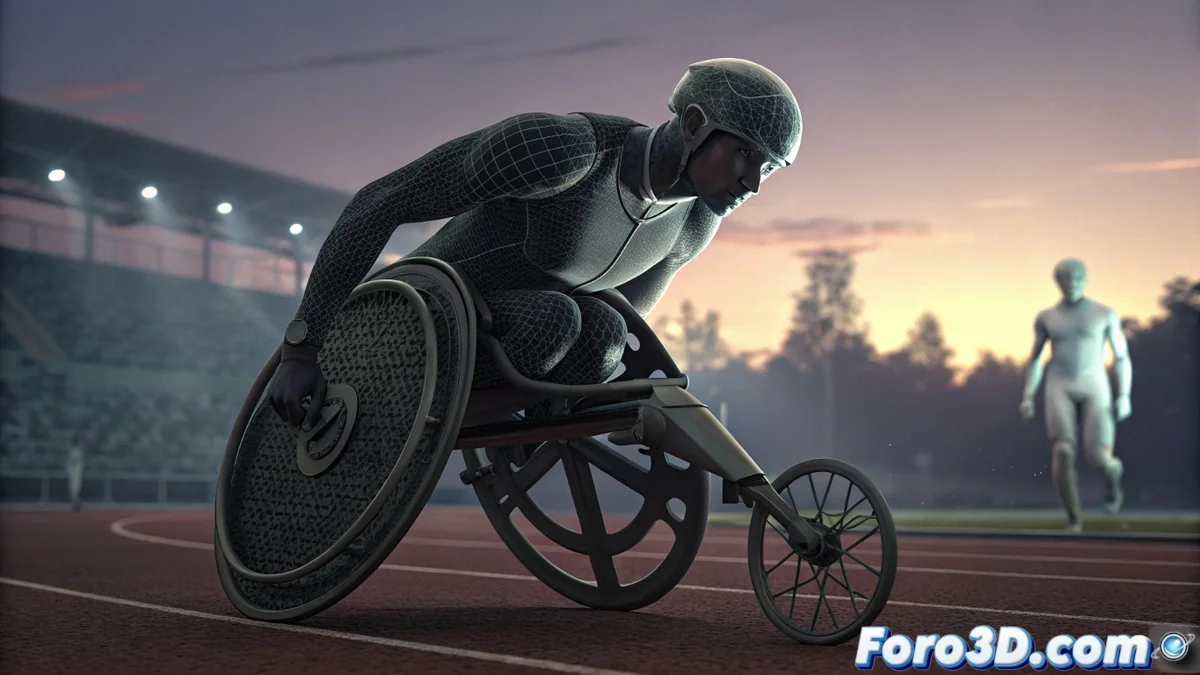
3D Printing and Adapted Sports: Custom Competition Wheelchairs
Additive manufacturing is redefining the limits of performance in Paralympic and adapted sports. Beyond simple customization, it enables the engineering of competition wheelchairs that are perfect biomechanical extensions of the athlete. This process, which fuses digital and physical technology, begins with the precise capture of the athlete's body and culminates in equipment that optimizes every gram and every angle for victory. 🚀
The Creation Process: From Anatomy to the Ultimate Chassis
The methodology is based on an integrated digital workflow. First, a high-definition 3D scanner records the competitor's unique posture, considering not only their resting form but also the dynamic gestures of their discipline, such as shooting in basketball or propulsion in races. This data feeds into computer-aided design (CAD) software where topological optimization is applied. This algorithm calculates the ideal material distribution, creating organic and ultra-lightweight structures impossible to manufacture with traditional methods. 3D printing, using techniques like DED (Directed Energy Deposition) for metals or continuous carbon fiber printing, materializes these complex designs into a single piece or with minimal joints.
Technological Pillars of the System:- Biometric Capture: 3D scanning that generates an exact digital avatar of the athlete, the basis for all ergonomic design.
- Generative Engineering: Use of artificial intelligence to explore thousands of design variants and select the most efficient in weight, stiffness, and aerodynamics.
- High-Performance Additive Manufacturing: Printing with aerospace-grade materials like titanium alloys or carbon fiber composites, offering exceptional strength-to-weight ratios.
The competitive advantage is no longer measured solely in training, but in the millimeter perfection of a design file and the precision of an industrial 3D printing machine.
Transformative Benefits for the Athlete
The improvements provided by a digitally custom-made wheelchair are quantifiable and revolutionary. The mass reduction, sometimes by several kilograms, translates into faster acceleration and lower energy expenditure. Perfect ergonomics eliminates pressure points, preventing ulcers and overuse injuries, which is crucial for health and career longevity. Additionally, the wheelchair becomes a feedback tool: small design adjustments, quickly iterated and printed, allow fine-tuning performance based on the athlete's sensation, creating total symbiosis between human and machine.
Direct Impact on Performance:- Propulsive Efficiency: Perfect alignment and fit maximize force transfer from the arms to the wheels, reducing parasitic movement.
- Discipline-Specific Customization: A design specific for fencing (low and stable) differs radically from that of a marathoner (light and aerodynamic).
- Agility and Handling: Optimized weight distribution and directional stiffness improve turning ability and response in direction changes.
The Future of Adapted Competition
This technology not only seeks to break records but also to democratize access to elite equipment and promote sports inclusion. As 3D printing costs decrease and materials advance, its adoption will expand. The future lies in integrating sensors into the printed chassis to collect real-time performance data, and in the use of more sustainable biomaterials. We are witnessing a paradigm shift where technology becomes the great equalizer, allowing the athlete's talent and dedication to shine without the limitations of standard equipment. 🏆