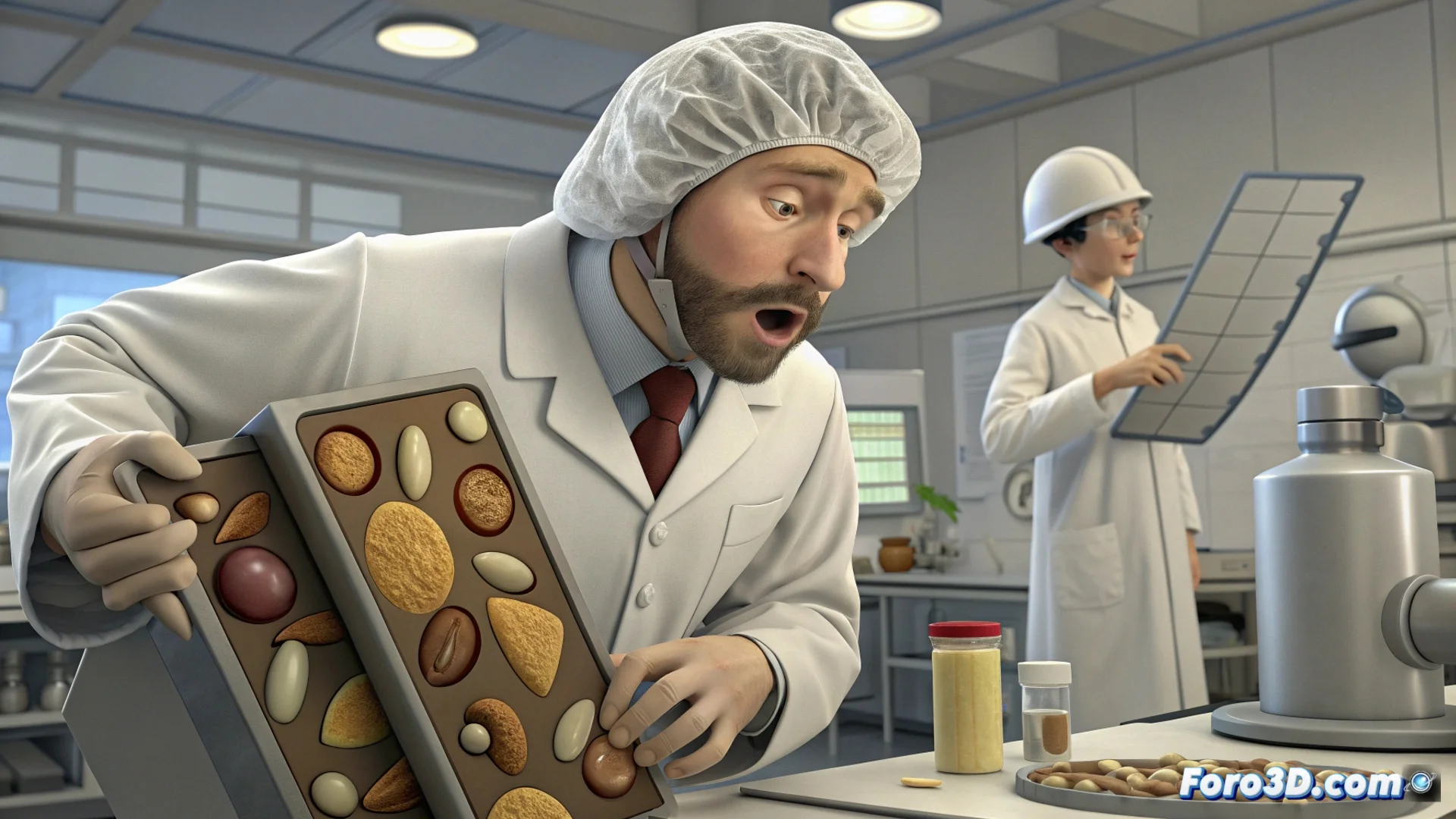
3D Printing Analyzes the Microstructure of Turrón and Marzipan
Additive manufacturing techniques now serve to explore iconic foods like turrón and marzipan on a microscopic scale. Through micro-computed tomography, 3D digital models are obtained that reveal previously hidden secrets about their internal composition. 🔍
Visualizing and Touching the Hidden Architecture
By 3D printing these microestructures at a large scale, researchers can physically perceive how the food is organized. It is directly verified how the volume and shape of the air pores determine whether a turrón is softer or crunchier. It is also observed how fat disperses in marzipan, which influences how it melts when eaten. This knowledge allows artisans to adjust their methods with objective data.
Key Advantages of 3D Analysis:- Reveals the exact distribution of almond particles and binding dough.
- Allows evaluating how voids affect hardness and freshness.
- Facilitates understanding the relationship between structure and sensory response.
3D printing acts as a bridge between the art of confectionery and food engineering.
Optimizing Recipes with a Scientific Basis
The goal is not to modify the traditional flavor, but to better understand and control the production process. By measuring how the internal structure responds to factors like ambient humidity or temperature changes, more consistent formulas can be developed. The aim is for each piece to maintain its optimal quality for longer. 🎯
Practical Applications of the Study:- Create more stable recipes without changing the basic ingredients.
- Predict and improve the durability of the final product.
- Provide master confectioners with a precise diagnostic tool.
The Future of Analytical Confectionery
It is possible that soon an artisan will review a 3D model of their recipe on their screen, adjusting parameters like porosity with the precision of a materials engineer. This fusion of tomography and tradition represents a significant advance for producing foods with controlled and reproducible quality. The technology allows preserving the essence while perfecting the execution. 🍯