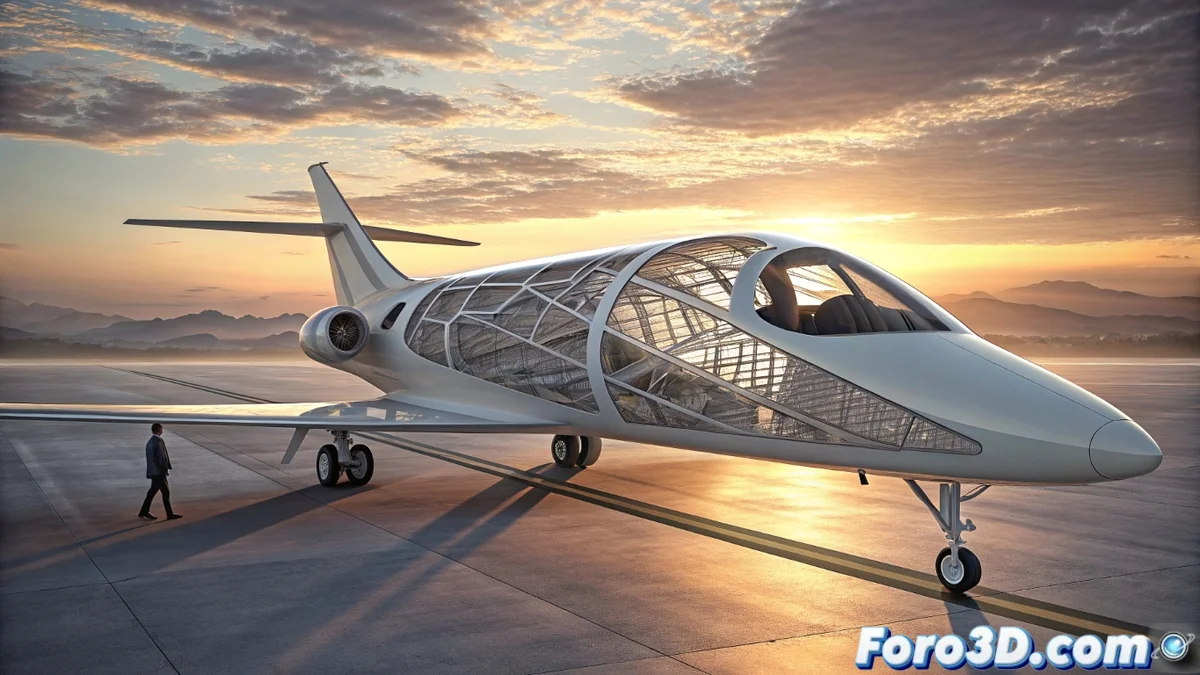
3D Printing Accelerates the Development of the Eviation Alice Electric Aircraft
In the race to decarbonize air transport, additive manufacturing positions itself as a technological pillar. A clear example is the Eviation Alice, a passenger aircraft designed to operate entirely on electric power for regional routes. This technology allows engineers to produce prototypes quickly, significantly shortening development timelines. 🛩️
Prototyping with Design Freedom
Using 3D printing gives the design team unprecedented flexibility. They can iterate on complex geometries and explore shapes that would be prohibitively expensive or directly unfeasible with traditional manufacturing techniques. This agility is crucial for innovating in a highly competitive sector.
Key Components Manufactured Additively:- Aerodynamic parts that define and optimize airflow around the fuselage and wings.
- Housings and thermal management systems for lithium-ion battery banks, essential for electric propulsion.
- Interior elements that integrate structural and aesthetic functions into a single piece, eliminating assemblies.
Additive manufacturing is not just for prototypes; it is a strategic tool for lightening critical components and validating concepts before investing in expensive tooling.
Validate Tangibly and Mitigate Risks
Creating physical prototypes quickly allows for integration and functionality tests in early stages. Engineers can assemble these components with other systems and subject them to tests in wind tunnels to verify their aerodynamic and structural performance.
Advantages of the 3D Printing Validation Process:- Allows for fit checks and early detection of interferences between systems.
- Facilitates evaluating aerodynamics and strength with high-fidelity physical models.
- Helps optimize designs before committing resources to serial manufacturing tools for final composite or metal parts.
A Direct Impact on Efficiency
The ultimate benefit of applying this technology is reducing the total weight of the aircraft. Every gram saved translates directly into greater range for the electric propulsion system, a vital parameter for the commercial viability of these planes. Thus, while 3D printing democratizes the creation of everyday objects, in projects like the Eviation Alice it is used to build the future of sustainable flight, where efficiency and innovation go hand in hand. ⚡