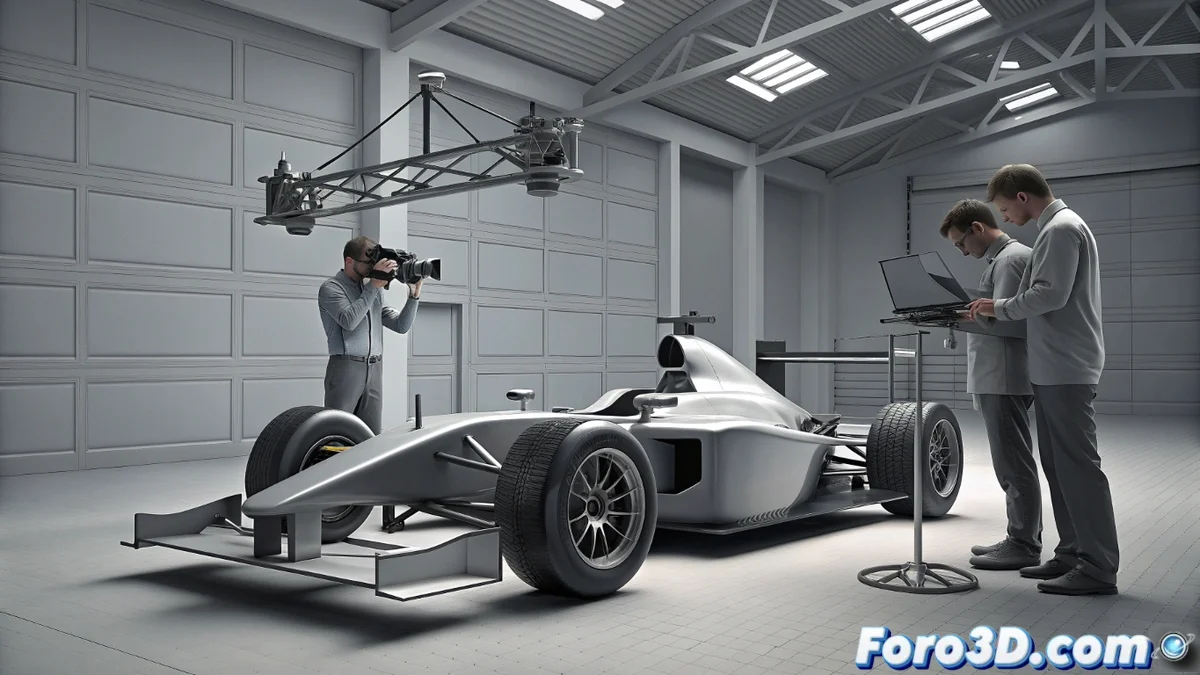
3D Printing Accelerates Development in the Indy Autonomous Challenge
In the arena of autonomous single-seaters, where software dictates the trajectory, the physical hardware must evolve at an unprecedented speed. Here, additive manufacturing has become the indispensable ally for engineers, allowing them to iterate designs at a pace that conventional methods cannot match. 🏎️⚡
Iterate at the Speed of Thought
The development cycle in this competition is extremely compressed. Teams need to test and modify components constantly. With 3D printing, a design conceived in the morning can be mounted on the vehicle for afternoon testing. This agile workflow is fundamental to perfecting every aspect of the car, from electronics to bodywork, in a battle where every hundredth of a second counts.
Key Advantages of the Agile Process:- Radical Reduction in Timelines: What traditionally took days of machining is now done in a matter of hours.
- Geometric Freedom: Complex and internal shapes can be manufactured that would be impossible or very costly with other techniques.
- Total Customization: Each piece is tailored to the millimeter to the specific needs of the chassis and vehicle systems.
While the autonomous driving algorithm learns, the 3D printer is already producing the next iteration of the component that could make the difference.
Sensor Supports: Precision and Thermal Management
The heart of the autonomous system is its perception. A set of LiDAR, cameras, and radars requires mounts of absolute precision. 3D printing enables the creation of supports that integrate perfectly with the chassis geometry and position each sensor at its optimal angle. But their function goes beyond holding; these supports often incorporate internal channels for managing wiring and, crucially, active cooling systems. Maintaining a stable temperature in the sensors is essential for them to function reliably under the demanding track conditions.
Critical Components Manufactured with Additive:- Sensorized Supports: Lightweight and rigid structures that ensure perfect alignment of perception devices.
- Integrated Cooling Ducts: Channels within the supports that direct air or liquid to dissipate heat generated by the sensors.
- Aerodynamic Covers and Fairings: Pieces that protect the sensors without altering the airflow around the vehicle.
Optimize Airflow and Dissipate Heat
Aerodynamics and thermal management are two sides of the same coin in high performance. Teams use 3D printing to quickly materialize designs optimized in CFD simulations. Winglets, deflectors, and custom air intakes are tested on the track in very short cycles. Similarly, heat exchangers and custom coolant ducts are manufactured to direct flow to critical points, such as processing units or battery packs. This ability to produce unique and complex parts provides a tangible advantage in validating new configuration ideas. 🌀❄️