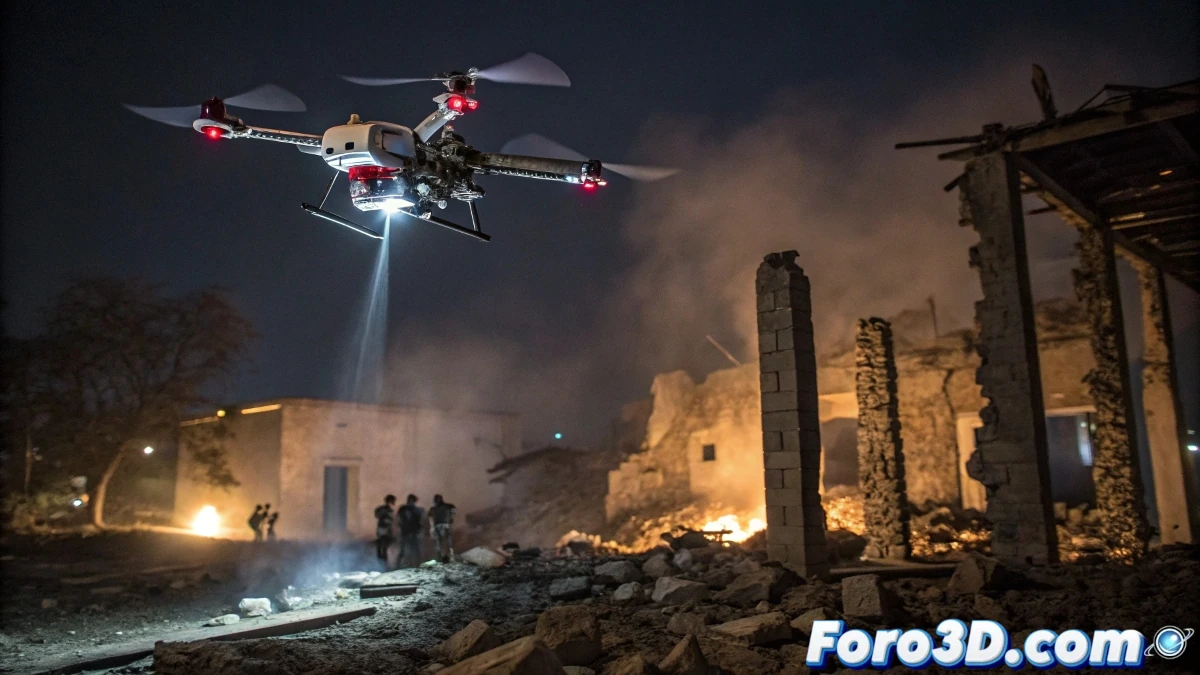
Innovation in Rescue Drones with 3D Printing
In disaster scenarios, response speed makes the difference between life and death. Recently, a prototype drone manufactured using 3D printing has been presented, specifically designed for search and rescue operations. This solution stands out for its affordable cost, ease of maintenance, and adaptability to complex environments.
Adaptive Technology for Critical Situations
The drone incorporates standard market components, including satellite navigation systems and advanced flight control. Its multimodal vision capability allows it to operate in any lighting condition, switching between visible and infrared spectrum. The optional integration of thermal sensors expands its utility in low-visibility scenarios.
"The true innovation lies in democratizing access to rescue technology through open design and digital manufacturing"
Key Advantages of the Modular Design
- Printable structure that reduces production costs
- Interchangeable components for immediate repairs
- Customization according to specific terrain needs
- Compatibility with various sensors and accessories
Philosophy of Shared Knowledge
The plans and technical specifications are publicly available, allowing humanitarian organizations and emergency teams to replicate or improve the design. This collaborative approach represents a model where open technology becomes a tool for social impact.
Evolution Perspectives
This development points to a growing trend in rescue equipment: specialized, affordable, and adaptable devices. The combination of additive manufacturing, accessible electronics, and open design could redefine disaster response protocols in the next decade.
- Reduction of response times in inaccessible areas
- Precise detection of victims in adverse conditions
- Strategic transport of basic medical supplies