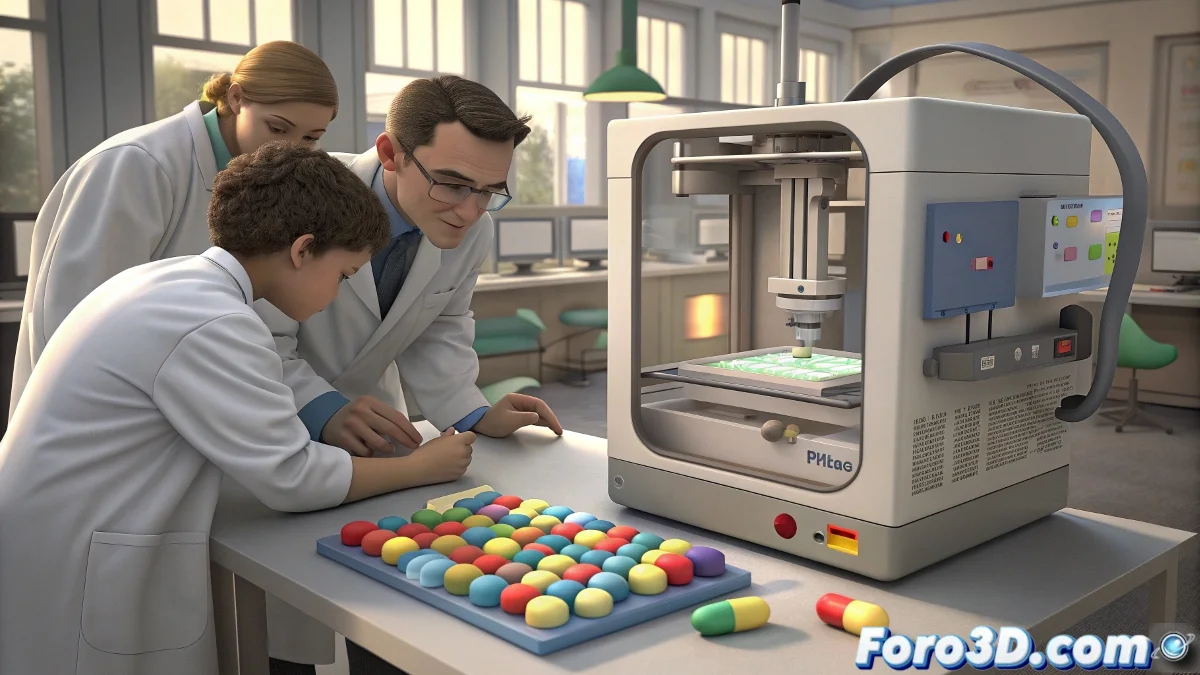
Revolution in Pediatrics: Custom 3D-Printed Medications for Children
A researcher at Texas A&M University has presented significant advances in the development of custom 3D-printed medications for children 🩺. This innovation seeks to adapt doses, shapes, and flavors of drugs to improve adherence to pediatric treatment and reduce risks associated with traditional dosing. 3D printing allows for the manufacture of custom tablets, precisely adjusting the amount of active ingredient based on the child's age, weight, and medical needs, solving one of the biggest challenges in pediatric medicine. Because the health of the little ones deserves precision and exceptional care 💊.
Customization and Precision: Each Child, Their Medication
3D printing enables the production of tablets that exactly match each child's individual needs—doses based on weight, age, and metabolism—eliminating errors from splitting pills or approximate calculations 🎯. Additionally, the technology makes it possible to create medications in attractive shapes (animals, stars, hearts) and with pleasant flavors that mask the bitterness of the active ingredients. This not only improves acceptance but also transforms the treatment experience from something dreaded into something engaging. Because a child who doesn't fight against the medicine is a child who heals better.
3D printing allows for precisely adjusting the amount of active ingredient based on the child's age, weight, and medical needs.
Advantages Over Conventional Medicine: Safety and Consistency
Traditional production methods—such as manual splitting of tablets—introduce risks of inaccurate dosing or contamination ⚠️. With additive manufacturing, each dose is produced digitally with perfect consistency, ensuring the child receives exactly what was prescribed. The speed of the process also allows for real-time adjustments if the patient's needs change, something impossible with traditional mass production. In pediatrics, where every gram counts, this precision saves lives.
Impact on Hospitals and Pharmacies: On-Demand Production
The research points to a future where hospitals and pharmacies have specialized 3D printers to produce customized medication on demand 🏥. This would reduce waiting times for critical treatments, improve availability for rare diseases, and allow for zero stock of obsolete medications. Imagine a pharmacy printing the exact dose for a child with a unique condition while the parents wait—that's efficiency with a human face.
Practical Applications and Key Benefits
This technology will particularly benefit:
- Chronic diseases: Doses adapted to weight changes in diabetes or asthma.
- Rare diseases: Medications with non-commercial dosages.
- Children with disabilities: Easy-to-swallow or chewable forms.
- Polypharmacy: Combination of multiple drugs in a single form.
The Irony of Fun Medicine
Soon, children won't just ask for fun-shaped candies, but also their customized medicines in dinosaur or shooting star versions... though parents will probably still prefer they ask for broccoli in superhero shape 😅.