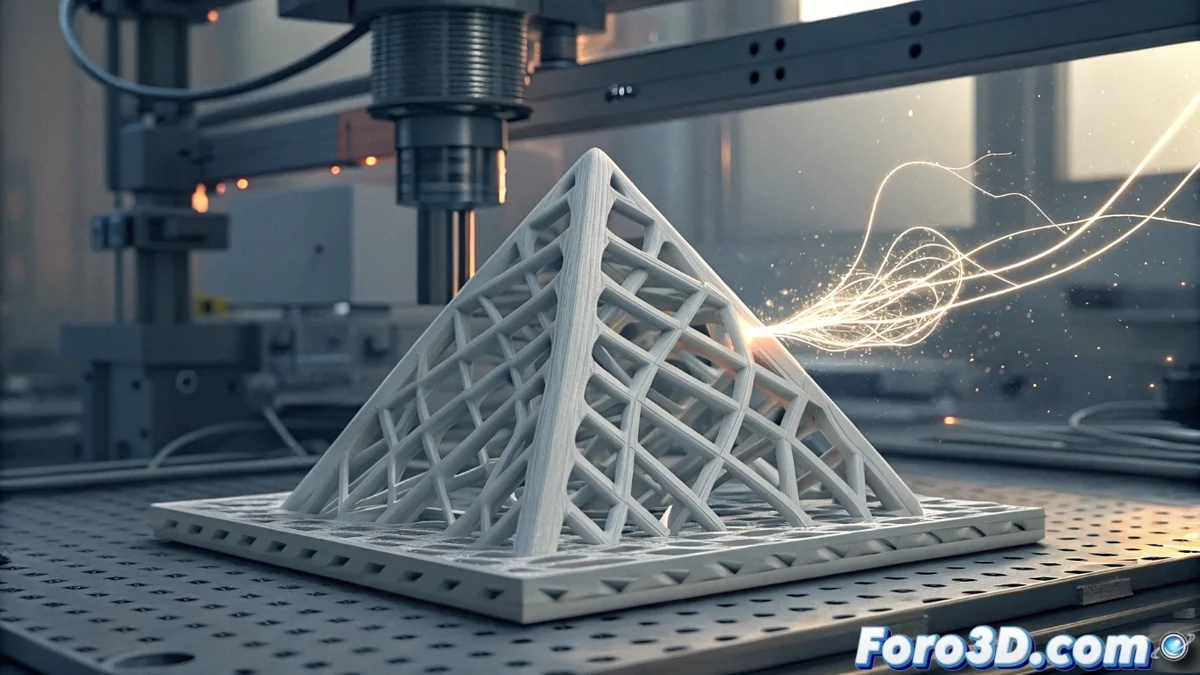
3D-Printed Material with Torsional Impact Absorption Revolutionizes Automotive Safety
An international team of scientists has created an innovative material manufactured using 3D printing that employs controlled torsion as the primary mechanism to dissipate impact energy, marking a milestone in advanced materials engineering 🌀
Revolutionary Applications in Vehicles
The implementation of this development in automotive structural components allows for the design of lighter vehicles without sacrificing protection, demonstrating the capacity to absorb up to 40% more energy than traditional materials during collisions. Manufacturers show special interest because it combines enhanced safety with weight reduction, favoring energy efficiency and reduced pollutant emissions 🚗
Key Advantages in Automotive:- Structures up to 25% lighter while maintaining structural integrity
- Superior protection for occupants during frontal and side impacts
- Significant reduction in fuel consumption and CO₂ emissions
"Controlled torsion represents the future of impact absorption, transforming destructive energy into safe rotational movement" - Research Team
Innovative Technical Features
The material is produced using advanced 3D printing with internal geometries specifically designed for torsional behavior, utilizing high-strength polymers combined with cellular patterns that direct deformation in a predictable manner. During impact tests, these structures distribute forces uniformly, avoiding stress concentrations that would cause catastrophic structural failures 🔧
Highlighted Technical Elements:- Internal geometries optimized through computational algorithms
- Combination of thermoplastic polymers with structural reinforcements
- Capacity for multidirectional redistribution of impact forces
Future of Development and Ongoing Research
Researchers continue optimizing geometric configurations and material compositions to maximize energy absorption efficiency, exploring new applications in sectors such as aeronautics and sports protection equipment. This approach demonstrates that, in engineering, rotating intelligently can be more effective than linear compression, preventing vehicles from deforming excessively after collisions 🛡️