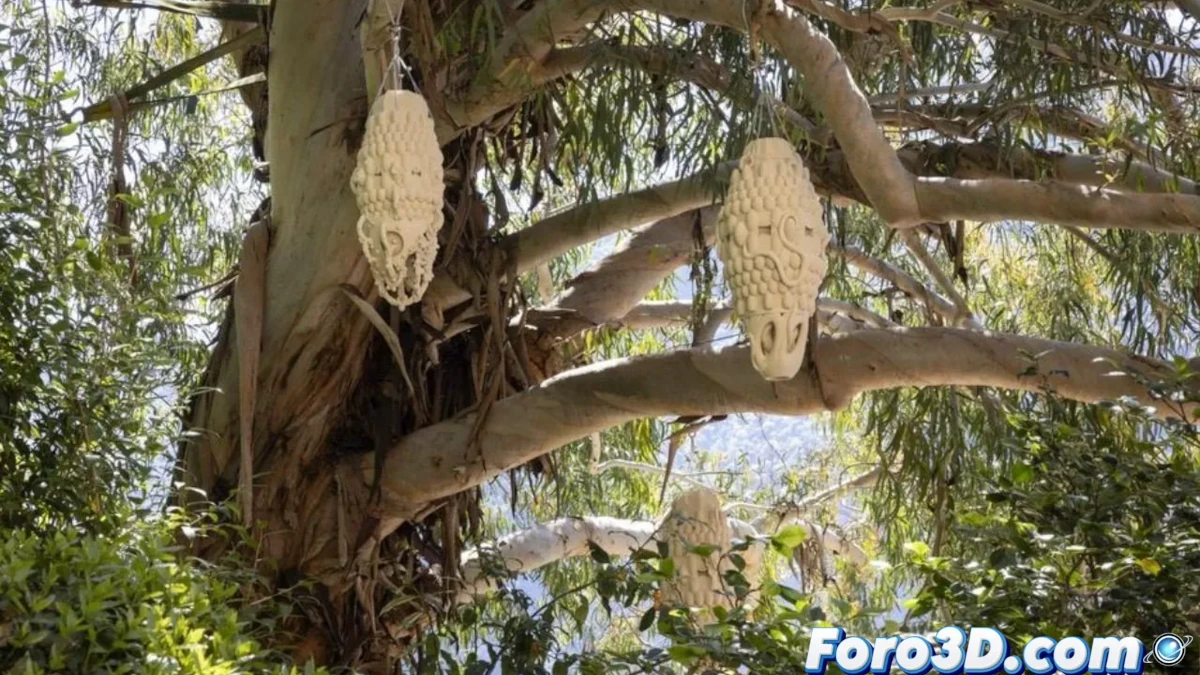
The integration of ecological design with 3D printing technology has given rise to innovative architectural projects aimed at promoting biodiversity. A clear example is the work of French artist Raphael Emine, who has developed 3D printed ceramic structures to provide shelter for insects and small animals.
Inspiration from Natural Habitats
The project, titled Les Utopies Entomologiques, is based on the observation of natural structures such as:
- Honeycomb cells, used by bees to store honey and protect their offspring.
- Webs, which serve as shelter and traps for arachnids.
- Mineral formations, with cavities that allow the life of small organisms.
The structures include tunnels, galleries, and balconies, generating functional spaces that facilitate the settlement of insects and other species inside. Additionally, the porosity of the ceramic allows air and moisture circulation, favoring its integration into the natural environment.
Installations in Maison Blanche Park
To date, two installations have been carried out in Marseille:
- Utopies Entomologiques I (2023): first series of structures placed in the park.
- Utopies Entomologiques II (2024): expansion of the project with optimized designs.
The pieces were manufactured using WASP's ceramic printing systems, such as the WASP 40100 LDM and the Delta WASP 2040 Clay, demonstrating the viability of this technology for outdoor installations.
A Positive Impact on Local Wildlife
The structures have been placed in the palm garden of Maison Blanche Park, where they can be installed on the ground or hung from trees. Initial observations indicate that various insects and small animals have already begun to use them, validating their functionality as ecological shelters.
A Design that Combines Aesthetics and Functionality
The structures not only fulfill an ecological function but also feature an artistic design inspired by:
- Biomorphic forms: based on organic patterns from nature.
- Baroque style: with ornamental details that enrich their appearance.
Additionally, the design takes into account the life cycles of insects, allowing the structures to adapt to seasonal changes and metamorphosis processes.
"3D printed ceramic structures offer new possibilities for the conservation of insects and small animals in urban environments."