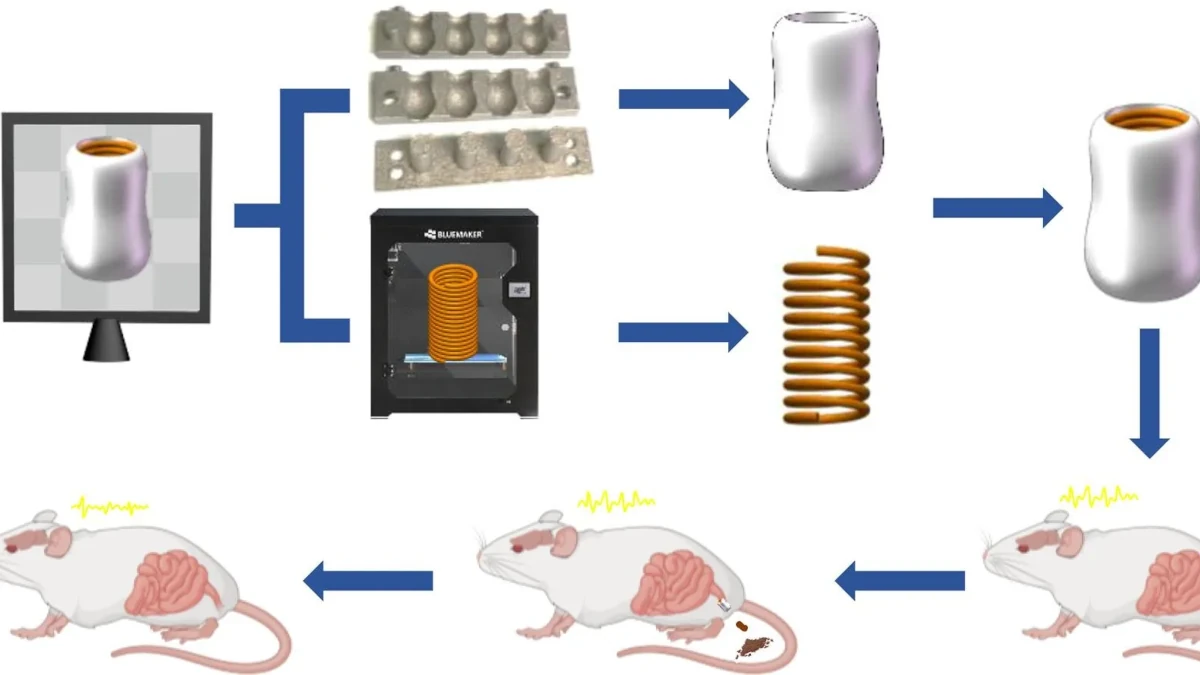
3D printing continues to revolutionize many fields, and medicine is no exception. A group of researchers has created a cannabidiol (CBD) suppository printed in 3D, specifically designed to treat epilepsy. This suppository has a hollow structure containing CBD and a spring inside, allowing the medication to be released slowly and more effectively than traditional oral treatments.
Why an Innovative Treatment is Needed
One of the main problems with CBD medications administered orally is what is called the "first-pass effect". This effect reduces the amount of CBD that reaches the body, decreasing its effectiveness. With the 3D-printed suppository, this problem is avoided, as the medication does not pass through the digestive system but is absorbed directly into the body, improving its efficacy.
Benefits and Tests
Tests conducted on rat models with epilepsy showed that the suppository can release CBD over several hours, helping to reduce brain damage and inflammation. Additionally, an improvement in the intestinal microbiota was observed, which could have additional benefits for the patient's overall health. This advancement could mean a more effective treatment with fewer side effects than traditional medications.
Test Results
- Reduction of brain damage
- Decrease in inflammation
- Improvement in intestinal microbiota composition
How the Suppository is Manufactured
The suppository is created using a combination of 3D printing and molding techniques. A special thermoplastic urethane filament is used for the internal structure, allowing the device to have the necessary shape and support. The outer casing is manufactured using a 3D-printed metal mold, which is then filled with a mixture of CBD and other materials to ensure controlled release of the medication.
Manufacturing Process
- Fused deposition modeling for the spring structure
- 3D-printed metal mold for the outer casing
- Mixture of CBD, polyvinyl alcohol, and polyethylene glycol to ensure medication release
A Revolutionary Application of 3D Printing in Medicine
This development is a clear example of how 3D printing can be applied innovatively in the pharmaceutical field. It is especially aimed at patients who cannot take medications orally, such as children or elderly people. The 3D-printed suppository for epilepsy is the first of its kind, opening new possibilities for treating this disease more efficiently.
"This advancement offers the possibility of creating personalized treatments tailored to each patient's needs, using 3D printing as the main tool."
With this new technology, 3D printing not only offers a more effective way to administer medications but also provides the possibility of creating personalized treatments tailored to each patient's needs.