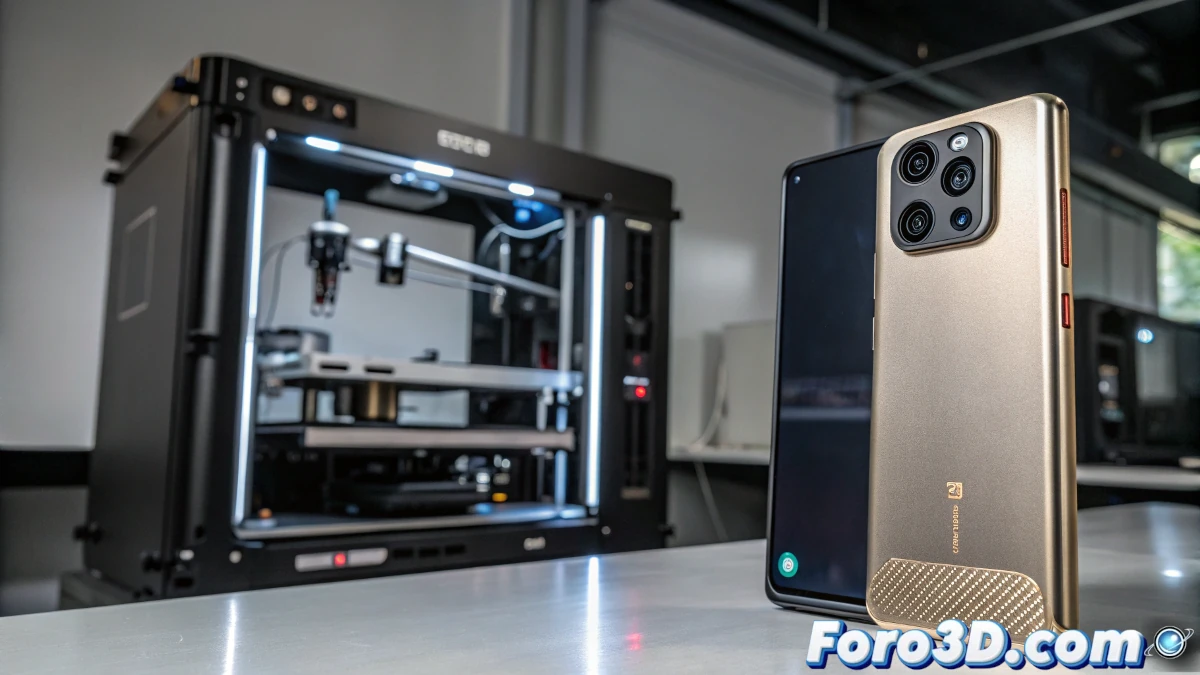
Xiaomi 16 Pro: The Revolution of 3D-Printed Frames
In a world where technological innovation advances by leaps and bounds, Xiaomi is preparing a radical change in smartphone manufacturing. According to analyst Ming-Chi Kuo from TF Securities International, the company's next flagship phone, the Xiaomi 16 Pro, will incorporate 3D-printed metal frames. This device, expected to launch in late 2025, could mark a before and after in the mobile industry.
Benefits of 3D Printing in Smartphones
The adoption of 3D printing in smartphone manufacturing is not just a novelty, but a solution with multiple advantages. This technology allows for the creation of hollow frame designs without compromising structural strength, which could significantly reduce the device's weight. Additionally, 3D-printed components offer better thermal management, a key aspect for high-performance devices like the future Xiaomi 16 Pro.
"3D printing could change the way smartphones are manufactured, offering lighter and more efficient designs." — Ming-Chi Kuo, analyst at TF Securities International.
Current Challenges of 3D Printing
Despite its advantages, 3D printing still faces significant challenges. Traditional manufacturing methods are more efficient in terms of mass production, which limits its large-scale adoption. However, experts like Kuo suggest that as the technology advances, more manufacturers could integrate this innovation into their processes. The key will be overcoming current limitations to make it economically viable.
- Weight reduction: Hollow frames without losing strength.
- Thermal improvement: Greater efficiency in heat dissipation.
- Custom designs: Greater flexibility in component creation.
Xiaomi's Present: The Xiaomi 15 Pro
While Xiaomi prepares the ground for its future Xiaomi 16 Pro, its current flagship model, the Xiaomi 15 Pro, continues to garner attention. Launched in China in October 2024, this device features a Snapdragon 8 Elite processor, a 2K OLED display at 120 Hz, three 50-megapixel cameras, and a 6,100 mAh battery with 90W fast charging. Soon, the Xiaomi 15 Pro will arrive in India on March 11, consolidating its presence in key markets.
A Change in Smartphone Manufacturing
The incorporation of 3D-printed components represents a significant change in smartphone manufacturing processes. Although the technology still faces limitations, its advantages in terms of weight reduction and thermal performance improvement could drive its adoption in the industry as it matures. Xiaomi, being one of the first to explore this path, could set a precedent for other manufacturers.
The Future of Mobile Technology
With the Xiaomi 16 Pro, the company not only seeks to innovate in design and functionality, but also to lead the transition to more advanced and sustainable manufacturing methods. If 3D printing proves its potential, it could become a standard in the industry, changing forever the way smartphones are manufactured.
In summary, the future of smartphones may be closer than we think, and Xiaomi is at the forefront of this technological revolution.