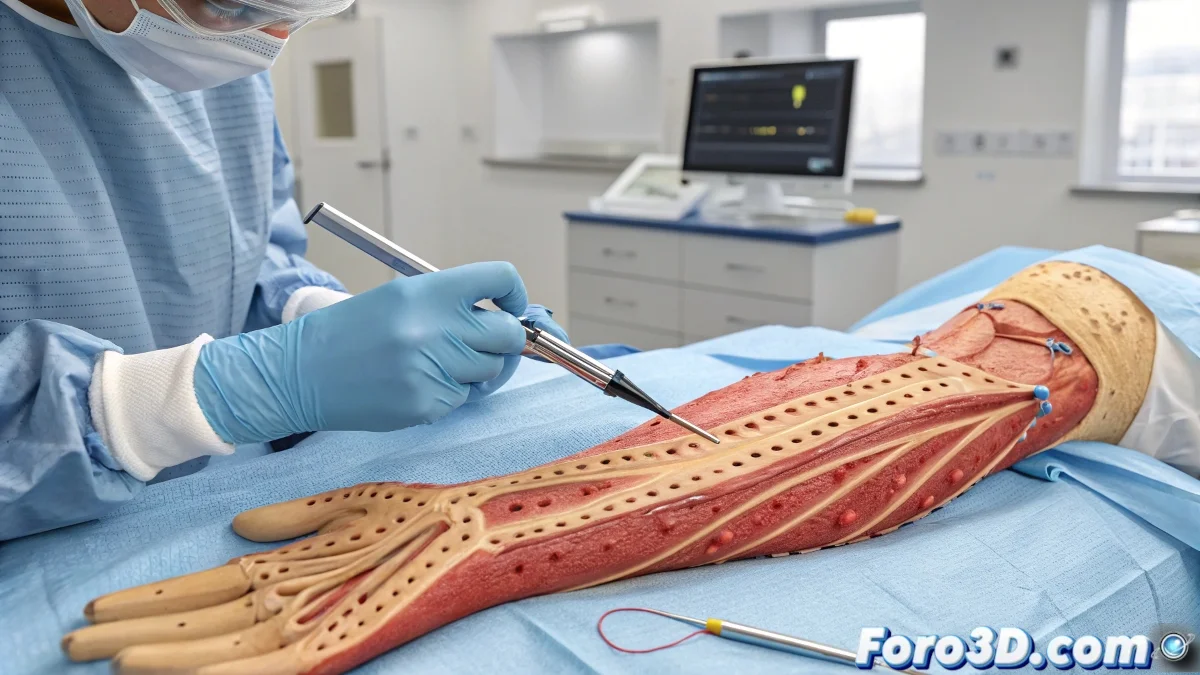
When 3D printing saves lives... even before reaching the operating room
The company 3DExpress has presented an innovation that could revolutionize medical training: 3D-printed artificial skin designed specifically for surgeon training. This material not only mimics the texture and elasticity of human skin, but also incorporates a system that simulates bleeding, providing students with an incredibly realistic hands-on experience. It's the equivalent of a flight simulator, but for the world of surgery. 🏥
The technology behind the realism
The secret of this synthetic skin lies in its multilayer manufacturing. Using 3D printing with special flexible polymers, the resistance and feel of human tissue is replicated. The true innovation, however, are the internal microchannels that contain a liquid simulating blood, allowing students to practice from basic incisions to complex suturing techniques and hemorrhage control in a completely safe and controlled environment.
A before and after in surgical education
The impact of this tool on medical training is profound. It offers key benefits that were impossible with traditional methods:
- Risk-free practice: Students can make mistakes and learn from them without endangering a patient.
- Tactile realism: The material's response under the scalpel and needle is very similar to real skin.
- Customization: Models with specific anatomies or pathological conditions can be printed to train specialized procedures.
This drastically shortens the learning curve. 📚
This tool significantly reduces the learning curve for surgical procedures, offering a safe environment to make mistakes and perfect skills.
The future of medical training
Beyond skin, this technology opens the door to 3D printing of more complex organs and tissues for simulation. Imagine practicing cardiac surgery on a printed heart that beats and bleeds realistically. This is the path to more ethical, accessible, and effective medical training, where confidence is built in the lab before reaching the operating room. 💡
In the end, this innovation demonstrates that technology can be a vital bridge to professional excellence. And you know, now future surgeons can cut without worrying about spilling coffee on the patient! 😉