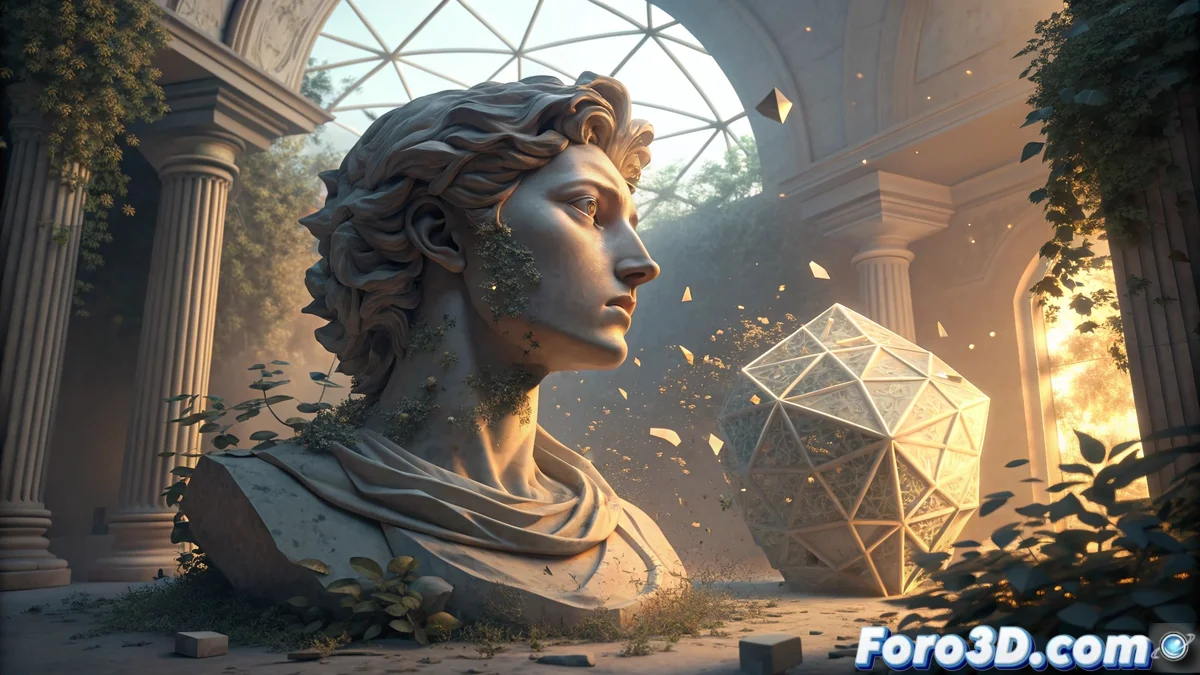
3D Modeling Errors as Drivers of Unique Artistic Style
In the fascinating world of three-dimensional modeling, what we initially perceive as technical errors frequently hides valuable creative opportunities 🎨. These apparent imperfections can be transformed into the foundations of a personal visual language that challenges conventional standards of digital design.
From Technical Glitches to Artistic Identity
When a shader behaves unexpectedly or the mesh topology presents anomalies, these phenomena open doors to unprecedented aesthetic explorations. Many artists discover that accidents during texturing produce visually captivating results that would be difficult to plan consciously, allowing the development of more authentic and personal expressions in digital art.
Creative Transformations from Common Errors:- Calculation issues in physical simulations generating impossible organic forms through traditional methods
- Unexpected rendering artifacts suggesting new approaches to ambient and atmospheric lighting
- Irregularities in UV mapping inspiring unconventional texturing techniques with distinctive character
True technical mastery does not consist of eliminating all errors, but in discerning which ones deserve to be preserved and developed as valuable aesthetic elements.
Imperfection as a Catalyst for Innovation
As we integrate these controlled accidental findings into our creative practice, we begin to build a unique visual vocabulary that transcends established conventions. Mesh subdivision problems can give rise to characteristic geometric styles, while deviations in global illumination can establish unique atmospheres impossible to replicate deliberately.
Areas Where Errors Generate Creative Advances:- Experimental texturing from projection mapping failures creating surfaces with unique personality
- Innovative geometric compositions arising from boolean and modeling operation errors
- Distinctive rendering styles developed from controlled sampling and aliasing artifacts
Revaluing the Creative Process
This perspective transforms 3D modeling from an obsessive pursuit of technical perfection to a constant exploration of expressive possibilities 💫. Each deviation from the expected result becomes an opportunity to discover new paths of visual communication. It is paradoxical how we spend hours polishing every vertex only to discover that the magic lay in that error we almost eliminated, demonstrating that sometimes the most powerful tool is knowing when to embrace imperfection.