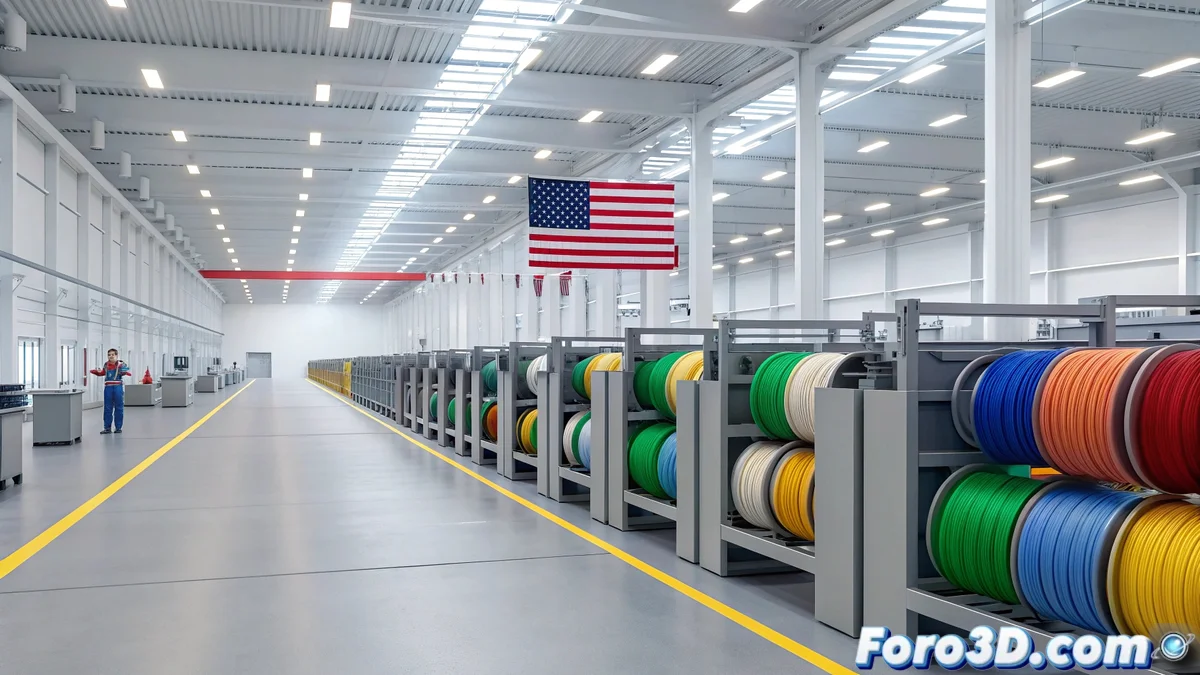
3D-Fuel Expansion Reduces Filament Prices in the United States
The company 3D-Fuel has carried out a significant expansion of its manufacturing capacity within U.S. territory, allowing it to significantly optimize its production processes and reduce its operating costs. This evolution in its industrial infrastructure is directly reflected in more competitive prices for its entire range of 3D printing materials, benefiting both home enthusiasts and industry professionals 🏭.
Impact on the Democratization of Materials
The price reduction implemented by 3D-Fuel represents a crucial step for the 3D printing community, as high-end materials that previously represented a considerable investment are now within reach of more users at more accessible costs. This strategy not only consolidates the company's position in the North American market but also democratizes access to specialized and standard filaments, removing economic barriers for designers, educational institutions, and small-scale startups.
Key Benefits for Different Users:- For independent creators: access to professional materials without compromising their budget 💰
- For educational institutions: ability to acquire larger volumes of filament for academic projects
- For small businesses: significant reduction in their production and prototyping costs
This price competitiveness, combined with the quality control maintained by the company, sets a new benchmark for what consumers can expect from the 3D printing materials sector.
Strategic Positioning in the Market
With this strategic move, 3D-Fuel positions itself as a more attractive alternative to other manufacturers, offering a value-price combination that is hard to beat. Users can now obtain filaments with advanced technical characteristics, including biodegradable options, composites, and specialized ones, without needing to make excessive expenditures.
Materials Now More Accessible:- Biodegradable and eco-friendly filaments 🌱
- Composites with technical reinforcements
- Specialized options for specific applications
Final Reflection on Market Evolution
This transformation in the materials landscape for 3D printing marks a turning point where quality and accessibility converge, allowing technologies previously considered elitist to reach a wider audience. The only exception that will maintain its high cost will continue to be those filaments we leave forgotten half-melted on the print bed after a print failure at 3 a.m. 😅.